Iran vows to close Strait of Hormuz as U.S. strikes kills at least 14 people
Shipping drops to single figures as Tehran threatens to block strait under Iranian terms after US strikes.

TEHRAN, IRAN — Iranian Parliament Speaker Mohammad Bagher Ghalibaf warned on Thursday that the Strait of Hormuz would open only under Iranian arrangements, not American threats, as the United States and Iran traded strikes for a second consecutive night. “Don’t flail around pointlessly, or you’ll sink even deeper: the Strait of Hormuz will only open with Iranian arrangements, not American threats,” Ghalibaf wrote on his X account.
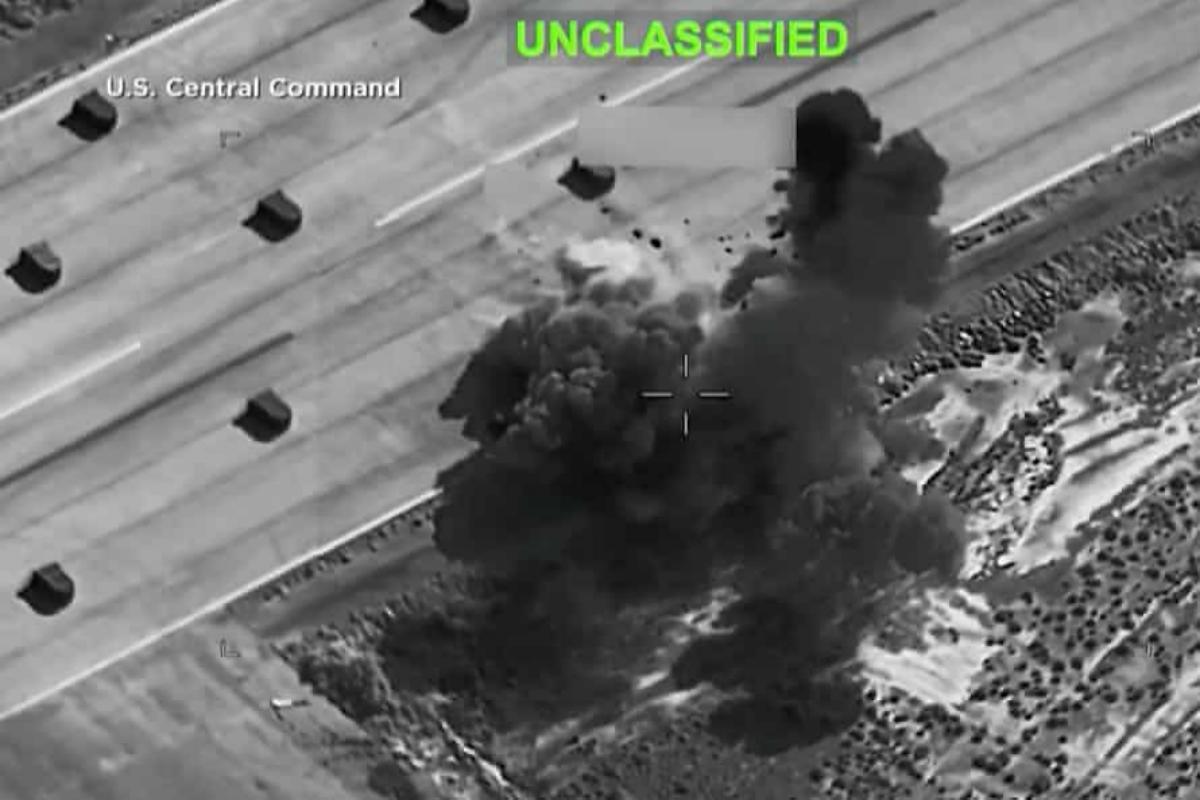
The U.S. Central Command said it struck 90 Iranian military targets, including air defense systems, coastal surveillance assets, missile and drone storage sites, naval capabilities, and military logistics infrastructure along Iran’s coastline. The strikes followed Iranian attacks on three commercial vessels in the Strait of Hormuz on Monday and Tuesday.
President Donald Trump declared the fragile ceasefire effectively over Wednesday, saying at a NATO summit in Ankara that dealing with Iran was “just a waste of time.” Iran’s health ministry said 14 people had been killed and 78 injured in US strikes across five provinces over the past two days.
Explosions were reported in the port cities of Bandar Abbas, Chabahar, and Sirik, as well as in Bushehr province. The Islamic Revolutionary Guard Corps launched retaliatory strikes on US military sites in Kuwait and Bahrain, calling it the “first phase of the punitive response against the American treaty-breakers.”
Mohammad Ghalibaf, who serves as Iran’s chief negotiator with the US, accused Washington of seriously violating the Islamabad Memorandum of Understanding signed last month.
He listed US breaches including disruption of Iranian vessel passage through the strait, threats of resuming military strikes, reimposition of oil sanctions, and attacks on southern Iran. “Let me put it plainly: if you strike, you’ll get hit,” Ghalibaf wrote on his X account. “The era of bullying and extortion is over.”
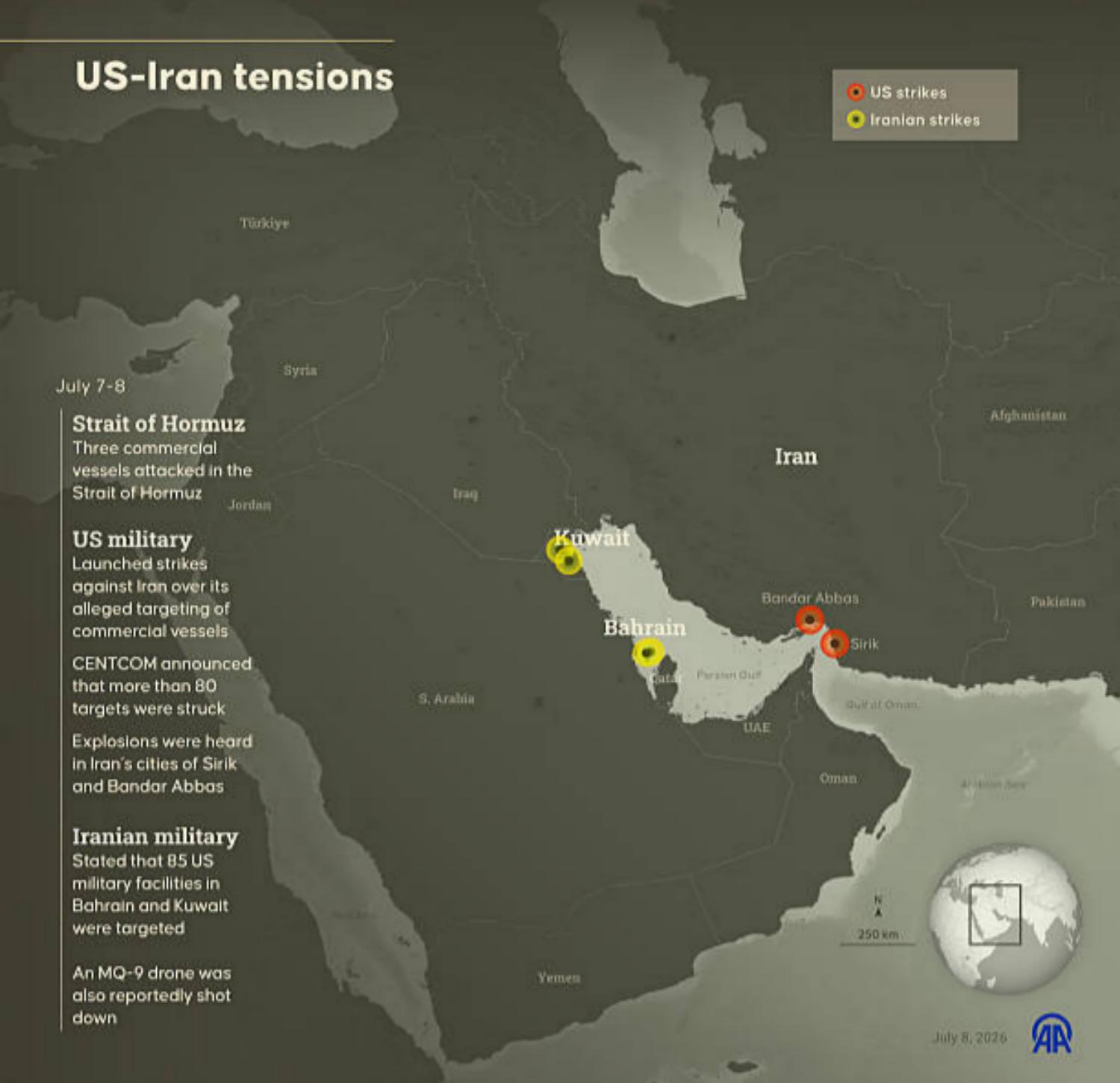

An infographic illustrating a dramatic escalation in US-Iran tensions following attacks on commercial vessels, detailing subsequent US Central Command strikes on over 80 targets in Iran in Ankara, Turkiye, on July 8, 2026. Photo: Mehmet Yaren Bogzun/Anadolu via Getty Images.
Shipping traffic through the Strait of Hormuz has plunged to a near-standstill. Vessel tracking data showed only two large vessels transiting the waterway, with traffic confined to the northern corridor off Iran’s coast. Phil Belcher, marine director at International Association of Independent Tanker Owners (Intertanko) said the number of ships using the southern route was now in “single figures.”
Belcher said daily traffic had dropped from about 70 ships a day a week ago to roughly 30, well below the pre-war average of 130 vessels. “This cycle of violence, this cycle of up-and-down, positive-negative news, it’s having an enormous impact both on business and on the seafarers themselves,” Belcher said.
The Islamabad Memorandum, brokered by Pakistan and signed electronically on June 18, had given the two sides sixty days to finalize a permanent peace agreement. “Threats and breaking promises are no longer cost-free,” said Ghalibaf.
The deal required Iran to reopen the Strait of Hormuz and the US to lift its naval blockade. Ghalibaf’s remarks suggested Tehran intended to retain significant control over commercial shipping despite mounting international pressure.