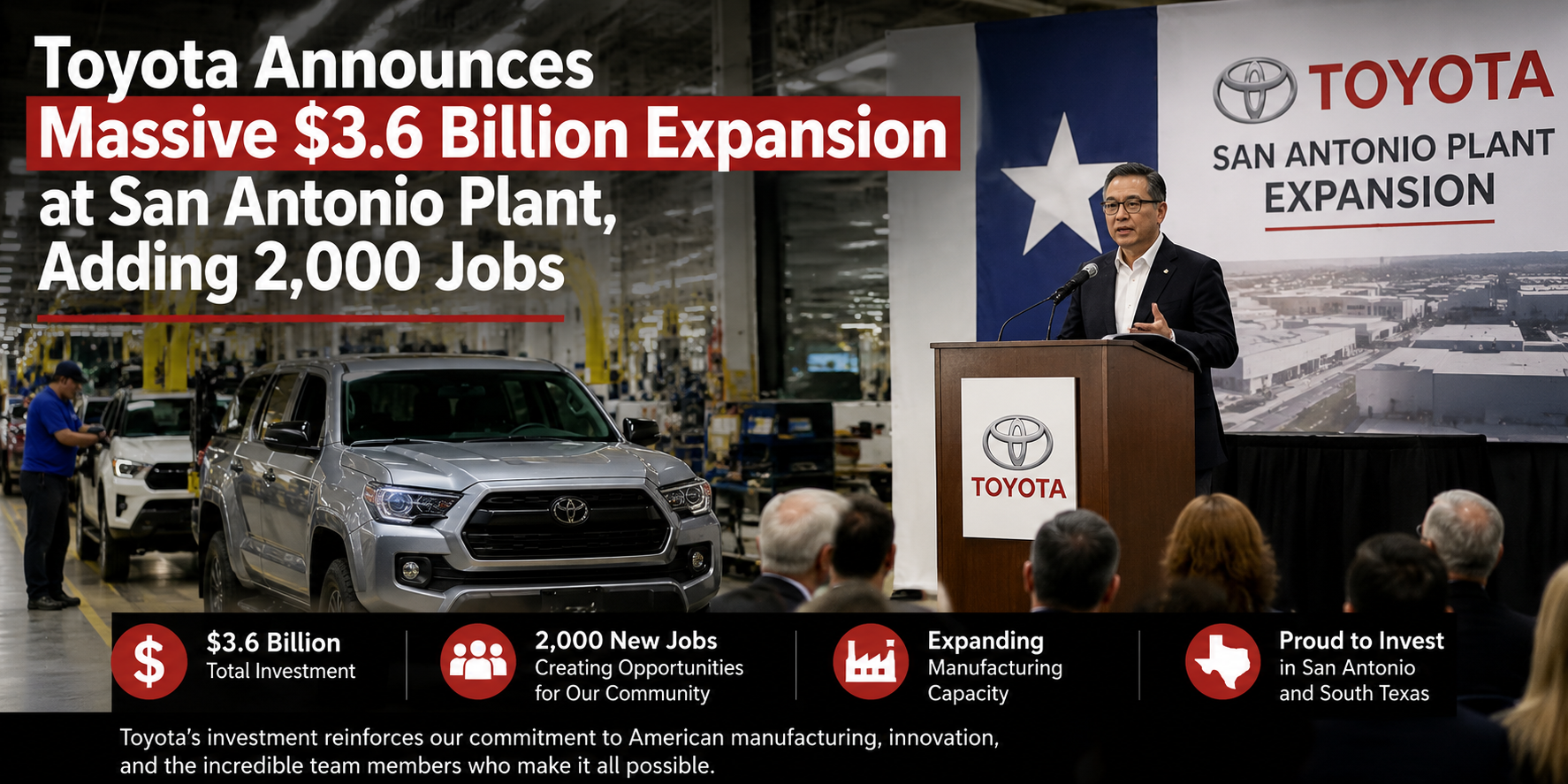
Toyota adds 2,000 jobs with $3.6 billion expansion of San Antonio plant
Toyota brings core mid-size truck assembly line from Mexico to Texas

SAN ANTONIO — Toyota announced a $3.6 billion San Antonio expansion this July, moving its Mexican truck line to Texas.
For Donald Trump, the political is personal, and any trade agreement made with other countries is a win or loss played out on the shop floor. The announcement by Toyota that it was investing a massive $3.6 billion in expanding its presence in San Antonio could not have been better news for Trump since it validated his radical protectionist view of politics. To Trump, the transfer of production of the Tacoma truck from Mexico to Texas was an outright triumph for the working American, who had been threatened to leave the country through harsh tariffs on imported goods. To Trump, all that economists can say about complicated supply chain adjustments is irrelevant.
To an individual whose reputation as a leader revolves around restoring the fortunes of American industries, this multi-billion-dollar about-face by Toyota stands testament to the capitulation of a global company to economic sanctions exerted by the United States. The expansion plan of the San Antonio campus, which will increase the number of employees by 2,000 in ten yearsÔÇÖ time, becomes an embodiment of what Trump envisions for American workers.
There is the existence of an extremely volatile and uneven confrontation between the coercive nature of the U.S. government’s regulations and the economic logic of an international automobile manufacturer. On one end is the U.S. government’s coercive trade policy, which uses tariffs to exert influence through economic nationalism. On the other end is Toyota Motor Corporation, which is compelled to abandon its economically sensible model of manufacturing cars in Mexico. At stake here is the future of North American supply chains and the informal rules of free trade, which clearly demonstrate that logistics have no choice but to give way to politics.
In its most human terms, this game of geopolitical chess takes its toll on the average citizen in very concrete terms of hard cash. Moving a huge production line across international borders is not merely a corporate tactic but also a $3.6 billion corporate earthquake. For an automaker to take such a financial hit in order to avoid being penalized with tariffs, all of those billions are bound to find their way back into the pockets of consumers. This means that regular drivers will see increased prices for mid-size pickup trucks such as the Tacoma. In addition to the consumer side of the story, this move has its human consequences in the form of 2,000 new jobs in San Antonio for American workers and the disruption of the lives of Mexican assembly-line workers.
“The region offers a skilled workforce, strong transportation infrastructure, an established supplier network, and a business-friendly environment. Those factors make it an ideal location for large-scale manufacturing,” said Dr Mitchelle Karbs, an automotive industry analyst.
The shift is in stark contrast to the major restructuring effort carried out by Toyota from 2020 to 2021, when it shut down Tacoma production at the San Antonio factory and moved it to the low-cost factories in Baja California and Guanajuato, Mexico, in order to focus solely on full-size trucks and hybrid SUVs such as Tundra and Sequoia at the San Antonio plant.
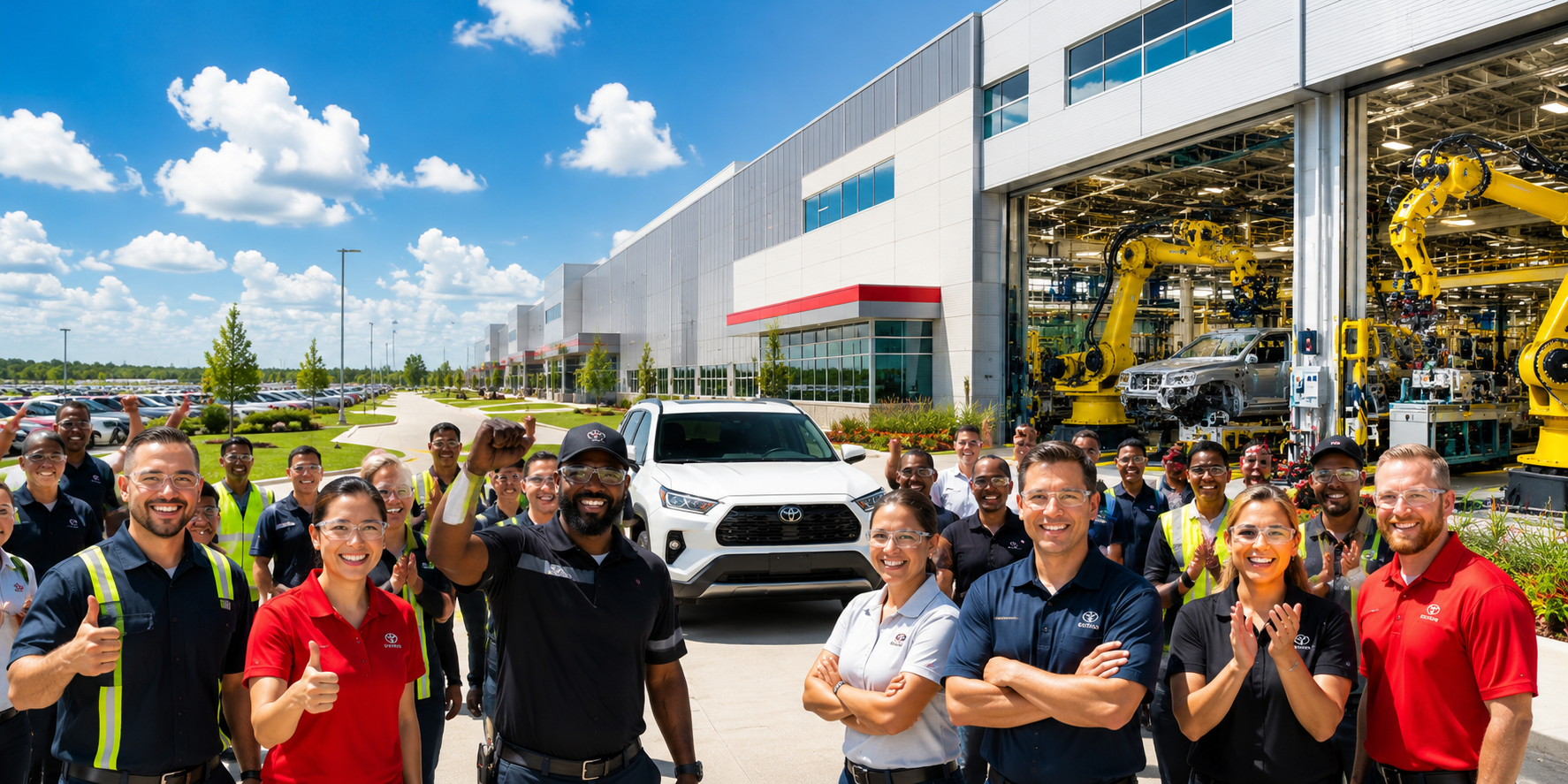

Toyota Employees gather outside a modern automotive manufacturing facility, symbolizing the workforce growth expected from Toyota's $3.6 billion investment in San Antonio, Texas on July 6, 2026 at 10:38 AM. Photo: Toyota
On the other hand, the entire landscape changed when the U.S. government decided not to renew the trilateral trade agreement, the United States-Mexico-Canada Agreement (USMCA), instead choosing to rely on an extremely volatile model of yearly reviews alongside the threats of 25 percent import tariffs. With the knowledge that international production can potentially become unprofitable, it is clear that ToyotaÔÇÖs $3.6 billion restructuring illustrates how international automobile companies have been pressured into forsaking their optimal international footprint for a domestic one.
The requirement for the domestic movement of production due to federal aggression through tariffs costing a total of $3.6 billion will affect common people because of possible high vehicle costs, at the same time putting additional burdens on local taxpayers and public services in terms of infrastructure, schooling, and utility challenges of having to accommodate 2,000 new jobs in San Antonio. The combination of corporate planning and government involvement poses significant issues of responsibility in relation to the sustainability of using trade fines as an economic growth model in the country and the secrecy of the ÔÇ£clawbackÔÇØ provisions included in the taxpayer incentives.
With the dust settled on the huge announcement from Toyota, the focus quickly moves to the implementation of and the upcoming landmarks in this enormous project. The local city authorities in San Antonio need to evaluate and approve several important zoning variances, environmental impact assessments, and construction licenses for the expansion of ToyotaÔÇÖs South Side plant before the hiring process for all 2,000 workers gets started.
However, this economic success story is being timed against a tight macroeconomic schedule because the required joint review of the United States-Mexico-Canada Agreement (USMCA) is scheduled for July 2026. This means that Toyota’s preemptive domestic push positions the company well in terms of regulations but opens it up to geopolitical criticism and oversight. In the coming years, Toyota will have to prove whether its $3.6 billion gamble pays off in securing itself against punitive tariffs or marks the beginning of the era when global supply chains become subject to political pressure.