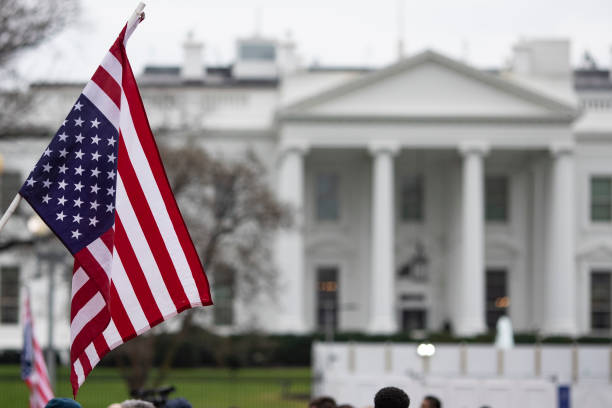
Trump Ties Saudi Civil Nuclear Deal to Abraham Accords Membership
Trump conditions US approval of a Saudi civil nuclear agreement on Riyadh joining the Abraham Accords, and rules out any enrichment of nuclear material.
WASHINGTON D.C. — Donald J. Trump conditioned US approval of a civil nuclear deal with Saudi Arabia on the kingdom joining the Abraham Accords, ruling out any enrichment of nuclear material.
The agreement, negotiated between the US Department of Energy and Saudi Arabia, would cover only non-military uses like those already held by Iran and the United Arab Emirates, Trump said. He tied final approval directly to Riyadh normalizing relations with Israel through the accords.
“The United States is not opposed to Civil (Non-Enriched) Nuclear Facilities,” Trump said in the post, adding that the deal “will be approved, but is totally subject to Saudi Arabia joining the very respected and successful Abraham Accords.”
The linkage raises the stakes for a diplomatic prize that has eluded US negotiators for years, binding a technology-sharing arrangement to the most consequential unresolved question in Middle East diplomacy.
Here is the full post on Truth Social: “The Civil Nuclear Deal (There will be no enrichment of material!) being made between the United States Department of Energy and Saudi Arabia, which pertains only to non-military use such as the ones that Iran and UAE (and others) already have, will be approved, but is totally subject to Saudi Arabia joining the very respected and successful Abraham Accords. The United States is not opposed to Civil (Non-Enriched) Nuclear Facilities. Thank you for your attention to this matter! Trump” on July 23, 2026 at 7:52 AM ET.
This is the first message released by Trump today. On average, Trump produces roughly 27 posts per day since his inauguration on January 20, 2025.
The move fits a broader pattern in Trump’s recent messaging, with 52 of his 474 posts over the last 30 days focused on foreign policy.
The stakes reach beyond nuclear power. Saudi Arabia gains access to US nuclear technology and a pathway to build reactors for electricity and desalination, while Israel secures a landmark normalization with the Arab world’s most influential state. The condition also hands Washington leverage, because the kingdom cannot obtain the reactors without a political concession it has resisted. That ties energy infrastructure to a broader regional realignment.
The ban on enrichment addresses the core proliferation worry. Enrichment and reprocessing are the pathways that can turn a civil program into a weapons program, and the deal excludes them entirely. That mirrors the terms of India’s civil nuclear framework, which permitted broad cooperation while excluding sensitive enrichment and reprocessing items even under safeguards, according to wikipedia.org.
Civil nuclear agreements govern cooperation for the peaceful use of nuclear energy, covering technology transfer, materials, and safety standards under international oversight. The US State Department administers such agreements, known as 123 Agreements, which set the terms for exporting nuclear material and equipment, according to state.gov.
For the average US reader, the arrangement signals deeper American involvement in shaping who controls sensitive energy technology abroad. It also commits US firms and the Department of Energy to a long-term role in the Saudi power sector, with implications for jobs and export revenue in the domestic nuclear industry.
This kind of grand bargain has happened before. The US-India Civil Nuclear Agreement of 2008 traded broad nuclear cooperation for India placing 35 civilian installations under International Atomic Energy Agency safeguards, according to indianembassyusa.gov.in. That deal took more than three years and required amending US law and a waiver from the 48-nation Nuclear Suppliers Group.
The next decision rests with Saudi leadership on whether to join the Abraham Accords, and with the US Department of Energy and Congress on final approval. A date for either has not been announced.
Tying nuclear cooperation to a political condition isn’t the first time Washington has bargained access to atomic technology for strategic gains. In 2005, President George W. Bush and Indian Prime Minister Manmohan Singh reached a July 18 joint statement that reshaped US-India relations, according to wikipedia.org. The US House passed the enabling bill on September 28, 2008, and the Nuclear Suppliers Group granted India a waiver on September 6, 2008. That made India the only nuclear-armed state outside the Non-Proliferation Treaty permitted to trade in civilian nuclear goods. The deal became a lasting cornerstone of the US-India partnership and cemented Bush’s legacy in South Asia.
NewsFindr Chart Maker
Photo by Zenger real-time database of all Truth Social posts.
Zenger analysis
Photo by Zenger analysis
OpenTopoMap / Natural Earth – Saudi Arabia
OpenTopoMap / Natural Earth – Iran
Photo by OpenTopoMap / Natural Earth – Iran
OpenTopoMap / Natural Earth – United Arab Emirates
OpenTopoMap / Natural Earth – Israel
Photo by OpenTopoMap / Natural Earth – Israel
OpenTopoMap / Natural Earth – India
Photo by OpenTopoMap / Natural Earth – India


