Trump Thanks Bulgaria’s Radev After Parliament Backs US Air Base for Iran Operations

Trump Thanks Bulgaria’s Radev After Parliament Backs US Air Base for Iran Operations

Trump praises Bulgaria's Prime Minister Rumen Radev after lawmakers vote 136-13 to let the US military use Bezmer Air Base against Iran, despite direct threats from Tehran.

Richard Miniter
First Published: July 25, 2026, 3:53 AM ET

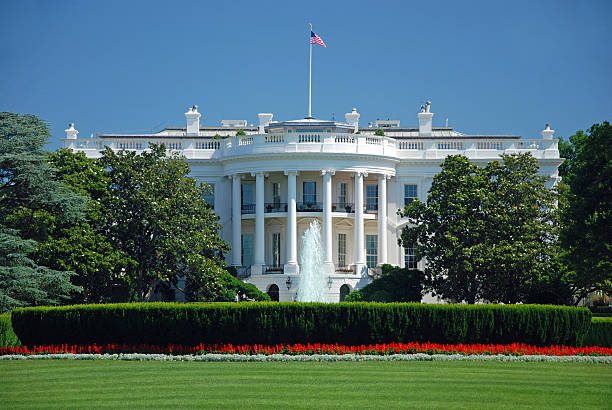
Donald J. Trump thanked Bulgaria’s Prime Minister Rumen Radev after the country’s Parliament approved US military use of a Bulgarian air base to support operations against Iran.

Lawmakers voted 136-13, with two abstentions, to authorize the temporary deployment of up to eight US KC-135 aerial refueling aircraft and about 250 American personnel at the Bezmer Air Base from July 24 through Oct. 1, according to newsmax.com. Tehran had warned that the move would make Bulgaria “an accomplice” to US military action.

Here is the full post on truthsocial: “Thank you Prime Minister Radev! Bulgaria Backs Trump, Approves US Air Base Support Despite Iran Threats: https://www.newsmax.com/newsfront/bulgaria-united-states-iran/2026/07/23/id/1.3 million/” on July 24, 2026 at 1:01 PM ET.

This is one of many messages released by Trump today. On average, Trump produces about 15 posts per day since his inauguration on January 20, 2025.

The move fits a broader pattern in Trump’s recent messaging, with 53 of his 451 posts over the last 30 days focused on foreign policy.

Trump amplified the vote by mentioning the source (see newsmax). The 2006 US-Bulgaria Defense Cooperation Agreement requires parliamentary approval for new operational use of the joint facility, according to newsmax.com. Radev’s government sought to reassure the public that the deployment would keep Bulgaria out of direct combat.

“It is categorically out of the question for military operations in the Middle East to be conducted from Bulgarian territory,” Radev said. The American tanker aircraft would serve only logistical refueling missions outside Bulgarian airspace, he said, according to newsmax.com.

Bulgarian Defense Minister Dimitar Stoyanov stressed that the base would host no offensive weapons and that Sofia had secured assurances from Washington. “We requested and received guarantees from our strategic partner aimed at minimizing the risks to our national security,” Stoyanov told lawmakers, according to newsmax.com. He added that the deployment “does not make Bulgaria a party to the military actions.”

The vote hands the Trump administration a diplomatic win as several Western European allies resist requests to support US operations against Iran. France, Germany, and Italy have expressed reluctance to become more directly involved, while Poland and now Bulgaria have aligned more closely with Washington, according to newsmax.com. Eastern European governments increasingly view the United States as the essential guarantor of regional stability against Russia and Iran.

Bulgaria carries its own stake in the alignment. It is one of only three European Union countries, along with Cyprus and Romania, whose citizens still require visas for short-term US travel, according to newsmax.com. Radev has faced domestic pressure not to align with Washington even as his government presses for visa waiver status.

For an American reader, the decision widens the roster of NATO bases available for refueling missions in a widening Middle East conflict. It spreads operational risk across allied territory rather than concentrating it on a single hub.

This is not the first time Washington has leaned on Eastern European partners for basing rights. Poland, Romania, and Bulgaria have hosted rotating US forces and missile-defense sites since the Bucharest NATO summit expanded the alliance’s eastern presence in prior years, according to newsmax.com.

The next decision rests with the deployment timeline itself, which runs through Oct. 1, 2026, when the authorization expires unless Bulgaria’s Parliament extends it. A date for any renewal vote has not been announced.

Bulgaria’s alignment with a great power against a Middle Eastern adversary echoes older chapters of its history. The country entered World War I on the side of the Central Powers in 1915, seeking territory in Macedonia. It mobilized more than 1.2 million troops before defeat in 1918 forced it to cede land under the Treaty of Neuilly. Its wartime bet on a distant power reshaped the nation’s borders for a generation.

NewsFindr Chart Maker
C2PA

NewsFindr Chart Maker

Photo by  Zenger real-time database of all Truth Social posts.

Zenger analysis
C2PA

Zenger analysis

Photo by  Zenger analysis

OpenTopoMap / Natural Earth - Bulgaria
C2PA

OpenTopoMap / Natural Earth – Bulgaria

Photo by  OpenTopoMap / Natural Earth – Bulgaria

OpenTopoMap / Natural Earth - Iran
C2PA

OpenTopoMap / Natural Earth – Iran

Photo by  OpenTopoMap / Natural Earth – Iran

OpenTopoMap / Natural Earth - Germany
C2PA

OpenTopoMap / Natural Earth – Germany

Photo by  OpenTopoMap / Natural Earth – Germany

OpenTopoMap / Natural Earth - Italy
C2PA

OpenTopoMap / Natural Earth – Italy

Photo by  OpenTopoMap / Natural Earth – Italy

OpenTopoMap / Natural Earth - Poland
C2PA

OpenTopoMap / Natural Earth – Poland

Photo by  OpenTopoMap / Natural Earth – Poland

OpenTopoMap / Natural Earth - Cyprus
C2PA

OpenTopoMap / Natural Earth – Cyprus

Photo by  OpenTopoMap / Natural Earth – Cyprus

OpenTopoMap / Natural Earth - Romania
C2PA

OpenTopoMap / Natural Earth – Romania

Photo by  OpenTopoMap / Natural Earth – Romania


Research