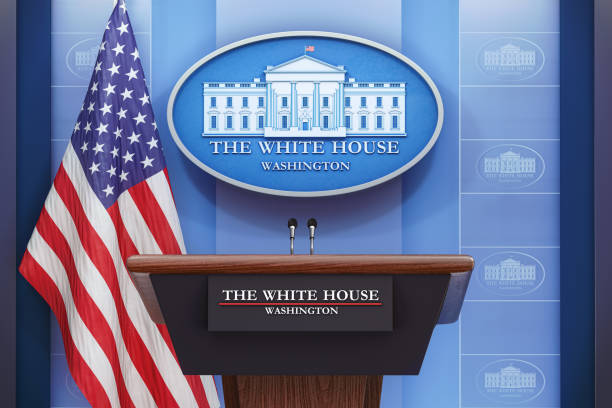
Trump Urges Republicans to End Senate Filibuster First

Trump Urges Republicans to End Senate Filibuster First

Trump warns that the party which terminates the filibuster first will survive and thrives, and says a Democratic win would turn America into a Third World nation.

Richard Miniter
First Published: July 27, 2026, 5:29 AM ET

Donald J. Trump urged his party to abolish the Senate filibuster before Democrats do, warning that the first mover would dominate American politics.

The filibuster, a Senate procedure that requires 60 votes to advance most legislation, has blocked bills from both parties for decades. Trump framed the rule as a race, arguing that whichever side scraps it first will lock in a lasting advantage.

Here is the full post on truthsocial: “Whichever Party Terminates the Filibuster FIRST will be the Party that survives and thrives. If the Dumocrats win this race, however, America will rapidly become nothing more than a Third World Nation! Trump” on July 27, 2026 at 9:16 AM ET.

This is the first message released by Trump on this subject today. On average, Trump produces roughly 15 posts per day since his inauguration on January 20, 2025.

The move fits a broader pattern in Trump’s recent messaging, with 11 of his 461 posts over the last 30 days focused on Government Reform.

The stakes reach every corner of federal policymaking. Ending the filibuster would let a Senate majority pass legislation with 51 votes, clearing the path for sweeping bills on taxes, immigration, health care and energy. The majority party of the moment would benefit, while the minority would lose its most powerful tool to slow or stop legislation.

The filibuster has narrowed before without vanishing entirely. Senate Democrats eliminated the 60-vote threshold for most executive and judicial nominations in 2013. Senate Republicans extended that change to Supreme Court nominees in 2017, allowing the confirmations of three justices during Trump’s first term. The legislative filibuster, the version Trump targets, has survived every recent push to remove it.

Asking whether this has happened before yields a clear answer. It has not happened at the level Trump proposes. No Senate majority has abolished the filibuster for general legislation, even when leaders of both parties floated the idea during earlier fights over voting rights and spending.

The next decision rests with the Senate, where any rules change would require a majority vote led by the chamber’s leadership. No date for such a vote has been announced.

What this means for the average reader depends on which bills a simple majority could then pass. A Senate freed from the 60-vote rule could move faster on measures that affect tax rates, benefit programs and border policy, shifting the pace at which laws that touch household budgets take effect.

Parliamentary rules that reward the bold have reshaped legislatures before, as happened in Britain more than a century ago. The House of Commons operated without limits on debate until Irish members staged marathon speeches to paralyze business in the late 1870s. Speaker Henry Brand cut off a 41-hour sitting in February 1881 and imposed the first closure motion in 1882, permanently ending unlimited debate in the lower house. The reform strengthened the governing majority and left the once-powerful obstruction tactic a relic.

NewsFindr Chart Maker
C2PA

NewsFindr Chart Maker

Photo by  Zenger real-time database of all Truth Social posts.

Zenger analysis
C2PA

Zenger analysis

Photo by  Zenger analysis


Research