Deep-sea missions discover biodiversity below waves
Researchers who are seeking to catalog some of the planet's least-known ecosystems are finding new species by the hundreds, including rare coral, unusual fish, and other organisms.

HONOLULU — For marine scientist Jyotika Virmani, every deep-sea mission is an adventure. As robotic vehicles plunge into depths no human has ever experienced, their cameras may capture life forms and species never seen by humans
“These mysterious waters of the world’s oceans are becoming accessible to us and our robotic vehicles, thanks to new technology,” says Virmani. Scientists are exploring deeper into the ocean and finding new marine life forms and species.
Virmani is the Executive Director of the Schmidt Ocean Institute, and she joins her colleagues to explore these deep waters with state-of-the-art equipment. Each trip can uncover new species such as corals, jellies, and other marine animals.
However, scientists are concerned that this valuable information is being unearthed at the wrong time.
Although new technology helps understand the biodiversity of species within the oceans, pollution, climate change, and mining are threatening to destroy these habitats.
National Oceanic and Atmospheric Administration records that ninety percent of our oceans are still not explored, mapped, or studied. Many researchers believe that people are only beginning to understand how many species are in the depths of the oceans. These species thrive around underwater mountains, canyons, and volcanoes. Scientists are rushing to get to these mysterious locations to find new creatures.
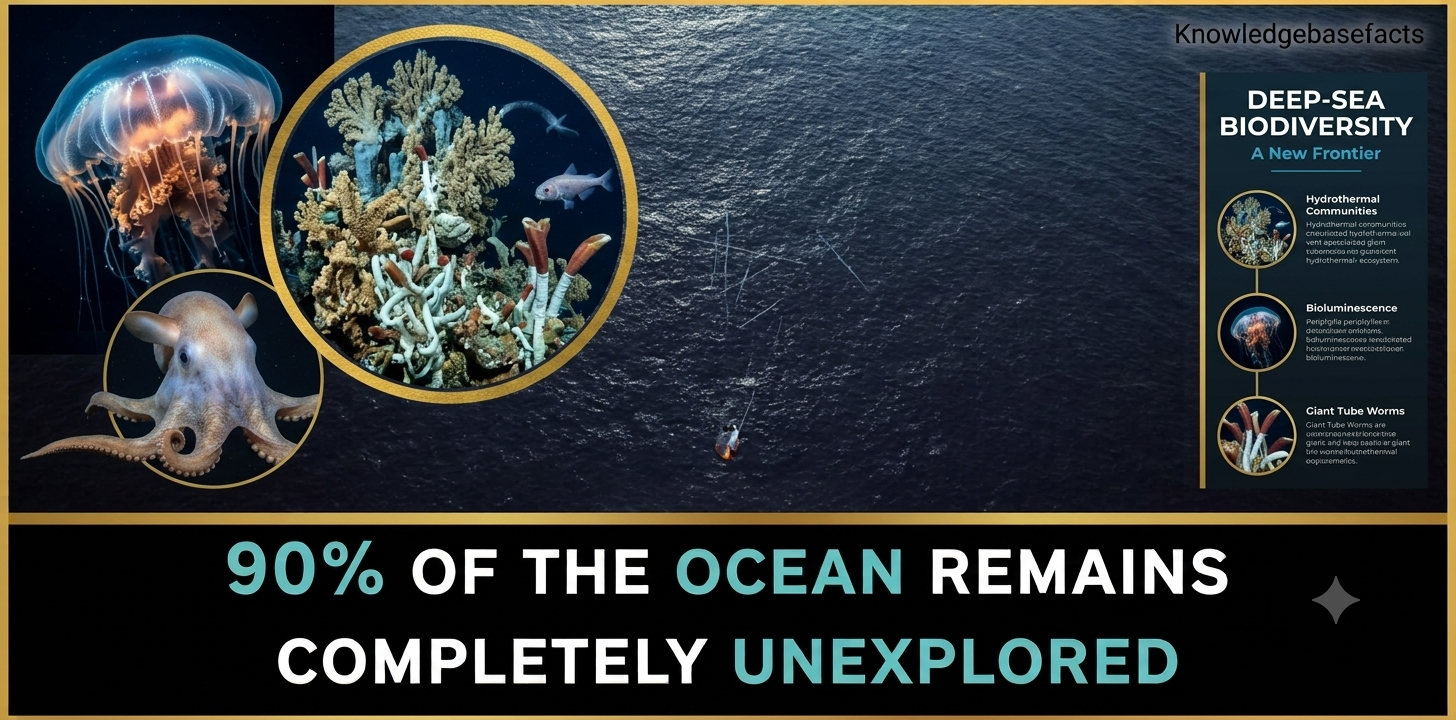

90% of our oceans remain completely unmapped and unexplored. While we continue to look to the stars, a massive, deep-blue world in the Pacific Ocean on July 10, 2026 at 4:03 AM. © Zenger.News
Ocean Census is just one organization working to discover new species in the oceans. Researchers from this department have already discovered hundreds of potential new species from their recent expeditions. However, it takes years for scientists to research and study these species and their behaviors before presenting a species to the public. Researchers worry that these species will be lost before their purposes and behaviors are known.
One of the most pressing issues for marine biologists is deep-sea mining. Many consider mining the ocean floor for valuable metals and minerals essential for supporting the development of clean energy for future electricity needs. Mining companies want to mine the deep sea for its various valuable resources. This includes copper, zinc, germanium, and rare-earth elements essential in making batteries for electric cars.
Many researchers worry that mining will damage the fragile ecosystems of these deep-sea habitats. The habitats and creatures that live there take hundreds or even thousands of years to grow and reproduce.
Deep-sea biologist Diva Amon says that exploring the deep sea is essential for preserving ocean species. She wants to ensure that scientific research can continue while conservation efforts happen at the same time, to prevent the extinction of species before we know they are there. “Now that new innovations are allowing us to explore the deep sea,” she notes, researchers want to make sure we do so responsibly.
Researchers expect that the number of these discoveries will grow with time. Scientists are now using artificial intelligence to help sort through and study hours of video footage from these deep-sea dives. With the public’s growing curiosity and new technologies to meet their needs, what new discoveries will they make in their oceans?