Trump Blames Sanctuary Cities for Keeping Migrant Children Missing
Trump claims sanctuary cities are actively obstructing federal efforts to locate missing children, escalating his immigration enforcement campaign in a post to his supporters.

WASHINGTON D.C. — Donald J. Trump accused local jurisdictions that limit cooperation with federal immigration authorities of deliberately keeping migrant children missing, sharpening one of his central immigration themes.
The president, who returned to office in January 2025, framed the charge as an obstruction claim rather than a policy critique, saying local officials were working against federal recovery efforts. He offered no data, agency finding, or case file to support the accusation. The post included one image and no supporting documentation.
Here is the full post on truthsocial: “These are the missing children, and we’re not being helped at all by Sanctuary Cities. They’re going out of their way to make sure the children remain missing! Trump” on August 3, 2026 at 4:13 PM ET.
This is Trump’s 11th message released today, and the last post was 0 minutes ago, and it is not part of a thread. On average, Trump produces 18 posts per day since his inauguration on January 20, 2025. The move fits a broader pattern in Trump’s recent messaging, with 17 of his 469 posts over the last 30 days classified as immigration posts.
“Sanctuary city” describes a locality that restricts how far its police and agencies will assist federal immigration enforcement, a designation with no fixed legal definition. Supporters argue the policies build trust between immigrant communities and local police. Critics, including the president, argue they shield people from federal accountability. The dispute over unaccompanied migrant children has run for years, tied to how federal agencies track minors after release to sponsors.
The stakes fall hardest on immigrant families and the local governments Trump named. Should the administration press enforcement demands, cities such as Chicago, Los Angeles, and New York could face funding threats or litigation. Federal agents would gain leverage to compel local data-sharing. Immigrant advocates warn that aggressive tracing can push vulnerable families further from the authorities meant to protect them, while enforcement supporters say tighter oversight protects children from trafficking and abuse.
For the average reader, the fight shapes how tax dollars flow and how local police spend their time. Federal grants tied to immigration cooperation can rise or fall with these disputes, and a city’s stance can determine whether local officers assist federal agents or stand apart. The outcome touches school enrollment, hospital access, and policing in communities far from the border.
This has happened before. The first Trump administration sued California over its sanctuary statutes in 2018, and a federal appeals court largely upheld the state’s laws in 2019. Congress and successive administrations have clashed repeatedly over the whereabouts of unaccompanied minors released from federal custody, a recurring flashpoint in oversight hearings.
The next move rests with the administration and the Department of Homeland Security, which could translate the accusation into enforcement action or funding conditions. No date for any such decision has been announced.
Sanctuary politics have divided American cities before, as happened during an earlier era of federal-local conflict. During Prohibition in the 1920s, city governments from New York to Chicago openly declined to enforce federal alcohol bans, and New York repealed its state enforcement law in 1923. Federal agents pressed on for a decade until the 21st Amendment ended the experiment in 1933. The mayors who defied Washington largely kept their offices, and the federal government ultimately retreated from the fight it could not win locally.
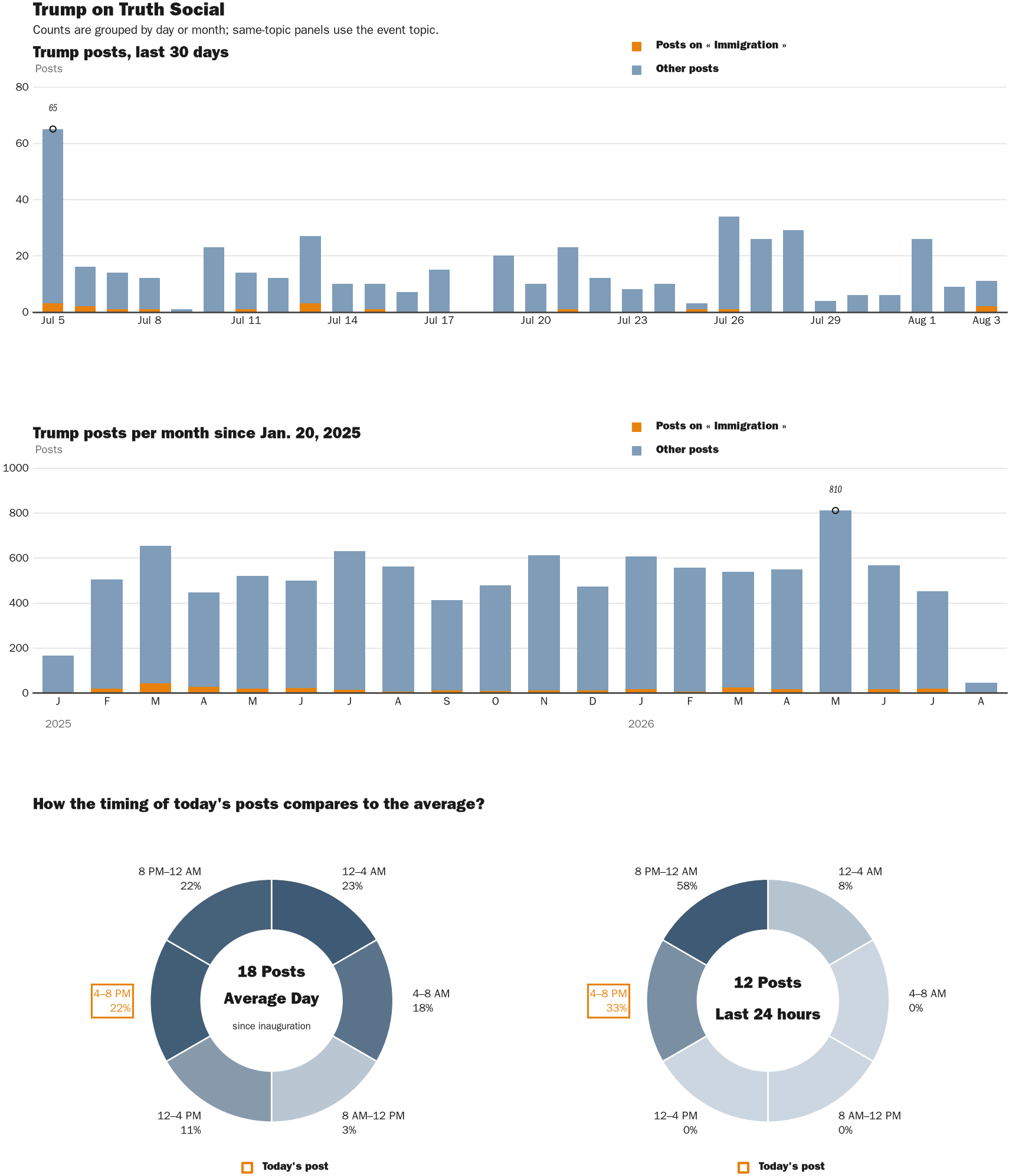

NewsFindr Chart Maker
Photo by Zenger real-time database of all Truth Social posts.
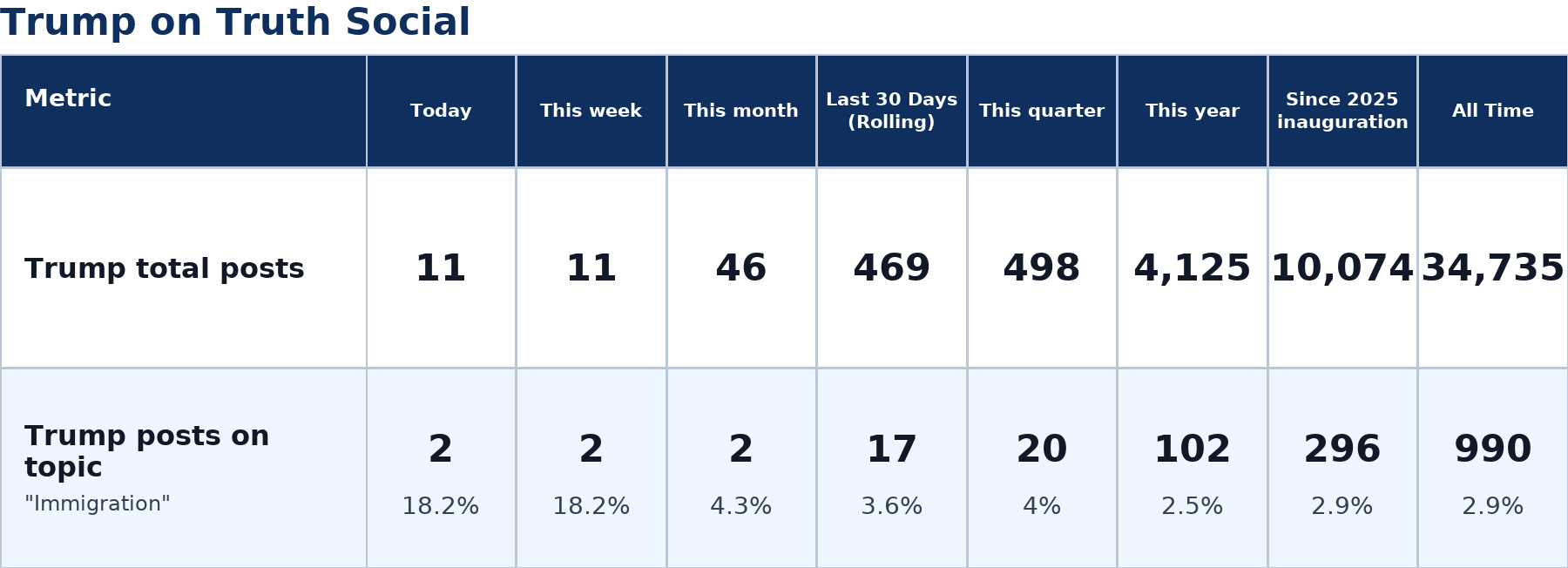
Zenger analysis
Photo by Zenger analysis