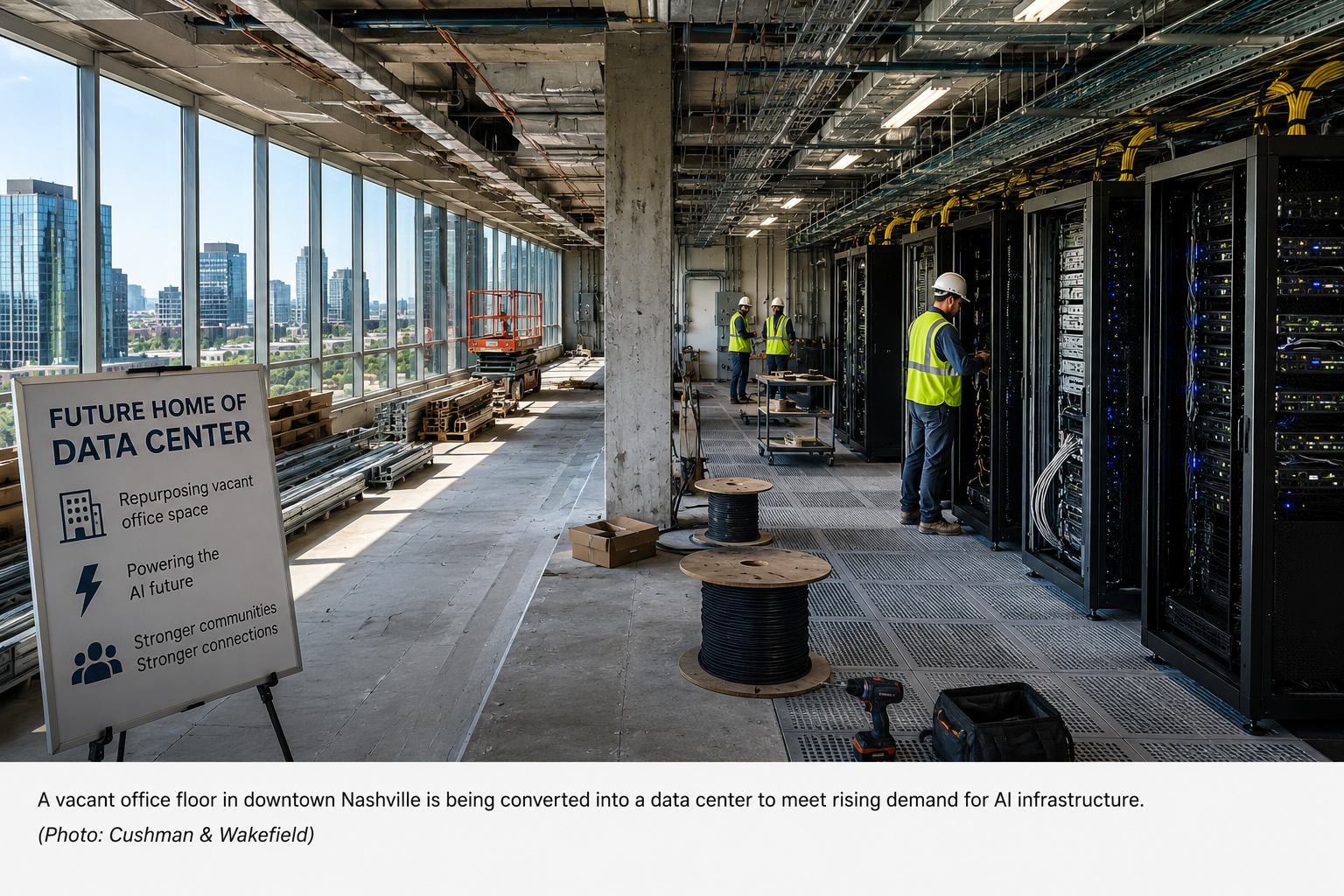
Why companies are turning old offices into data centers
The AI boom is driving demand for computing power, pushing developers to repurpose vacant office buildings instead of constructing new facilities.

UNION CITY, CALIFORNIA — Empty office buildings are finding new life as data centers as the artificial intelligence boom fuels demand for computing power.
Across North America, Europe, and parts of Asia, developers are exploring office to data center conversions while office vacancy rates remain historically high.
“The AI revolution is creating demand for digital infrastructure at a pace we’ve never seen before, and in some cases, underused office buildings can provide an opportunity to meet that need,” said Jim Wencel.
While not every office building is suitable because of power, cooling, and structural requirements, industry experts say the trend is gaining momentum as property owners look for new ways to repurpose vacant commercial space and capitalize on AI-driven growth.
For Jim Wencel, conversations about empty office buildings no longer revolve around finding new tenants. Instead, the Executive Managing Director and Global Data Center Practice Lead at Cushman & Wakefield spends much of his time advising investors and developers on whether those vacant properties can be transformed into data centers to meet the exploding demand driven by artificial intelligence.
As office vacancies persist and AI infrastructure needs to accelerate, Wencel has seen a growing number of clients shift their attention from traditional commercial real estate to digital infrastructure
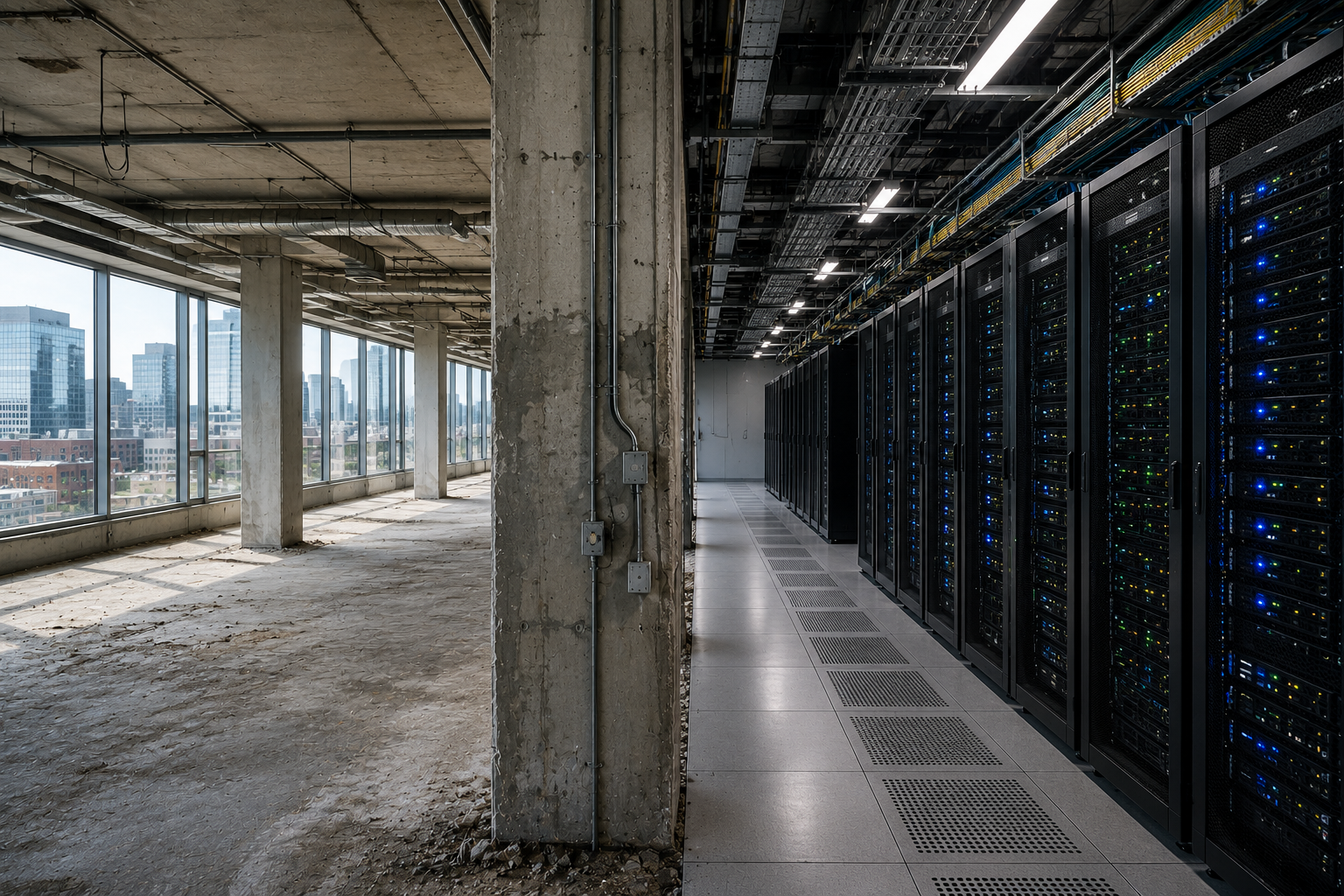

Slate Norah in Unites kingdom on July 6, 2026 at 10:03 PM. Photo: Slate/luna. © lunastudiolens2025
Demand for data centers is rising much faster than supply as artificial intelligence drives unprecedented computing needs. CBRE’s 2025 Global Data Center Trends report found that the global average data center vacancy rate fell to 6.6% in the first quarter of 2025, while vacancy in major North American markets reached a record low of 1.6%, reflecting intense competition for available capacity.
Meanwhile, JLL’s 2025 Global Data Center Outlook reported that power shortages, and surging AI investment are pushing developers to consider alternative real estate options.
Property owners and technology companies see office to data center conversions as a way to revive vacant buildings and meet soaring AI-driven demand for computing infrastructure. But the trend has sparked resistance from some local communities, who argue that data centers consume vast amounts of electricity and water while placing additional strain on aging power grids.
Developers counter that repurposing existing office buildings can reduce construction waste and breathe new economic life into struggling commercial districts, highlighting a growing tension between the need for digital infrastructure.
As AI adoption continues to accelerate, industry experts expect demand for data centers to remain strong, increasing pressure to find new sites with adequate power and connectivity. Office to data center conversions are likely to expand in cities where aging commercial buildings meet technical requirements, although concerns over energy use and grid capacity could slow projects in some communities.
The coming years will reveal whether repurposing vacant offices becomes a lasting solution for the AI era or whether environmental and infrastructure constraints will force the industry to find a different path.