
Trump Claims 28-1 Endorsement Record, Accuses Media of Distortion
Trump says his endorsed candidates won 28 of 29 races overnight and accuses the press of covering only the single loss.

WASHINGTON D.C. — Donald J. Trump claimed a 28-1 record for his endorsed candidates in overnight races and accused the national press of ignoring the wins to fixate on the single defeat.
Trump said the endorsed slate included several long-shot candidates, or outliers, who prevailed despite unfavorable odds. He offered no list of the races, candidates or states, and provided no independent tally to verify the count.
Here is the full post on truthsocial: “I was 28-1 last night on Endorsements, and numerous of them were outliers, but if you studied the Fake News, you would think it was just the opposite, 1-28. All they talked about was the one, and that’s why they call it the FAKE NEWS! President DJT” on August 5, 2026 at 4:16 PM ET.
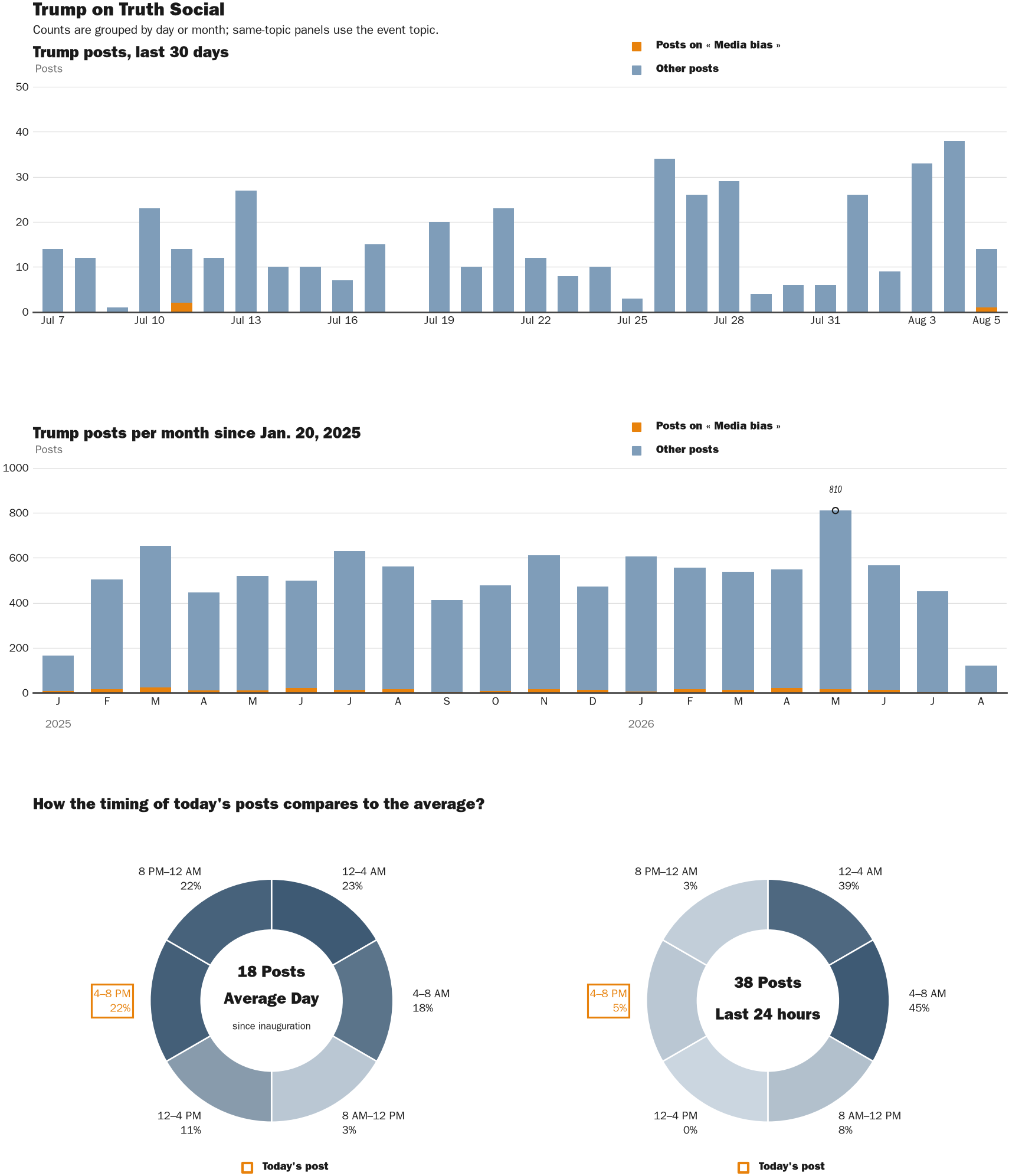
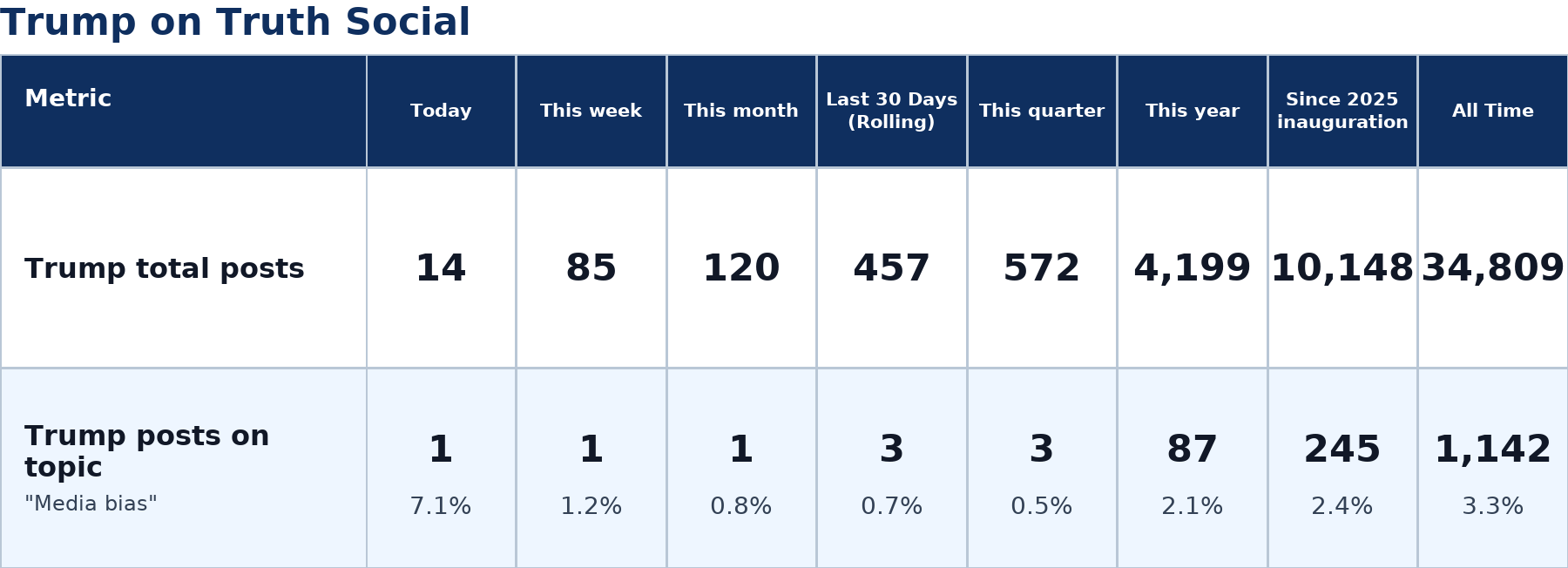
This is Trump’s 14th message released today, and the last post was 6 hours ago, and it is not part of a thread. On average, Trump produces 18 posts per day since his inauguration on January 20, 2025. The move fits a broader pattern in Trump’s recent messaging, with 3 of his 457 posts over the last 30 days classified as media bias posts.
The post frames endorsement outcomes as a measure of political strength and press honesty at once. Candidates who win with a Trump endorsement gain a claim to his coalition and its voters. A public boast of a 28-1 record raises the stakes for allies who trail in future primaries and for rivals who bet against his picks.
Endorsement scorekeeping has long shadowed Trump’s political brand. He touted a near-perfect primary record during the 2018 and 2022 midterm cycles, and Republican candidates routinely sought his backing to consolidate primary voters. Disputes over how to count those endorsements, and which races to include, have recurred each cycle, with critics noting that many endorsed candidates ran in safe or uncontested seats.
The complaint about coverage of a single loss echoes a familiar Trump argument that outlets amplify setbacks over successes. The claim cannot be independently confirmed from the post alone, which names no contests and cites no results.
For the average reader, the exchange offers little direct effect on daily life beyond the tone it sets for the coming election season. Endorsement records shape which candidates raise money, which draw national attention and which appear alongside Trump at rallies, all of which influence the choices voters see on a ballot.
This has happened before. Trump has repeatedly cited his endorsement win rate as proof of influence within the Republican Party, and he has repeatedly accused the press of underplaying those results. The pattern has held across multiple election cycles since 2016.
The next test of the claim will come from the results of upcoming primary and special elections, and from the candidates and party officials who tally them. A specific date for the next round of contests was not announced in the post.
Endorsement fights between a party’s standard-bearer and the press are not new to American politics. Andrew Jackson, who won the presidency in 1828, built a network of partisan newspapers to counter hostile coverage. Theodore Roosevelt coined the term “muckrakers” in a 1906 speech to describe reporters he viewed as excessively negative. Franklin D. Roosevelt used radio fireside chats beginning in 1933 to speak past newspaper publishers who opposed him. Each leader sought to control the scoreboard of public opinion, and each found that the press kept its own count.

NewsFindr Chart Maker
Photo by Zenger real-time database of all Truth Social posts.
Zenger analysis
Photo by Zenger analysis