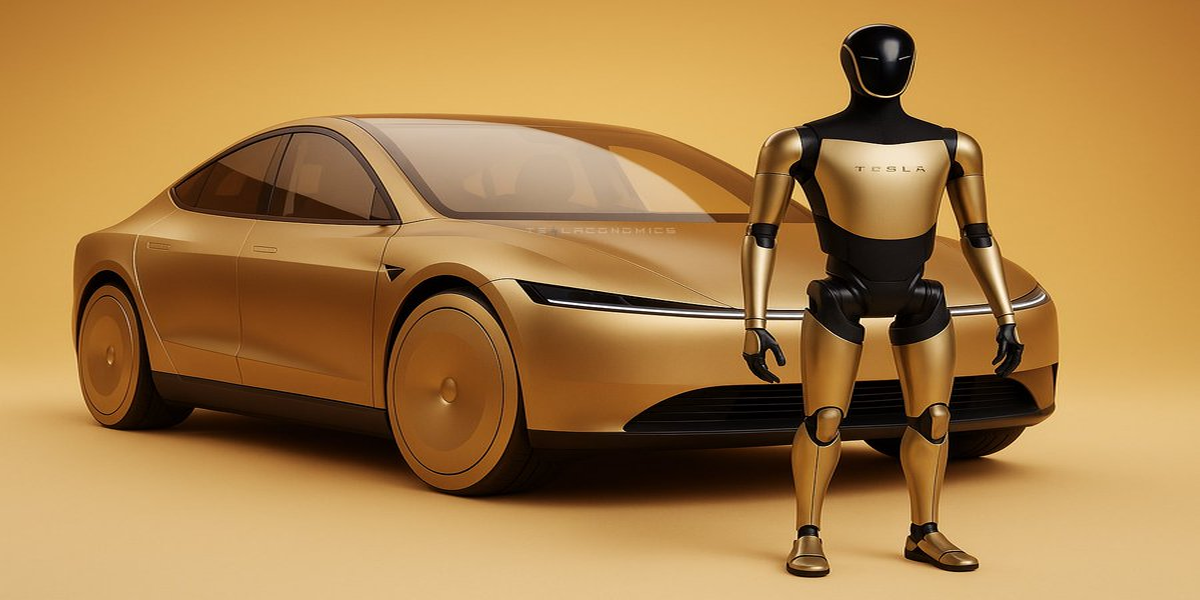
TeslaÔÇÖs Humanoid Robot Takes Its First Domestic Steps
MuskÔÇÖs Household Robot Vision Gains Traction as Optimus Handles Everyday Tasks

FREMONT, CALIFORNIA — The future of home living made a significant leap forward as Elon Musk welcomed Tesla’s humanoid robot, Optimus, into an actual household setting.
For years, Elon Musk has talked about a future where intelligent robots assist people with daily tasks, but that vision is now turning personal. By bringing Optimus into his own home, Musk is effectively putting his credibility and long-term goals on display. For the billionaire entrepreneur, the robot is more than a technological achievement, it is a test of whether an idea once limited to science fiction can become a practical part of everyday life. The moment underscores Musk’s belief that humanoid robots could one day become as common in households as smartphones and personal computers are today.
At the core of the Optimus narrative lies a growing tension between technological ambition and public caution. On one side stands Tesla and its CEO, Elon Musk, who envision a future where humanoid robots manage household chores, assist the elderly, and handle repetitive or hazardous tasks. On the other side are consumers, labor advocates, regulators, and technology experts who question whether such machines can be safely trusted within homes and communities. What is at risk extends far beyond a single robot. If Optimus succeeds, it could reshape how people live and work, potentially easing labor shortages and improving quality of life for millions. If it fails or triggers harm through accidents, privacy breaches, or job displacement, it could deepen public distrust of artificial intelligence and automation. For ordinary families, the debate is not solely about technology; it is about whether they are willing to embrace intelligent machines within their homes, livelihoods, and daily lives, whose long-term impact remains uncertain.
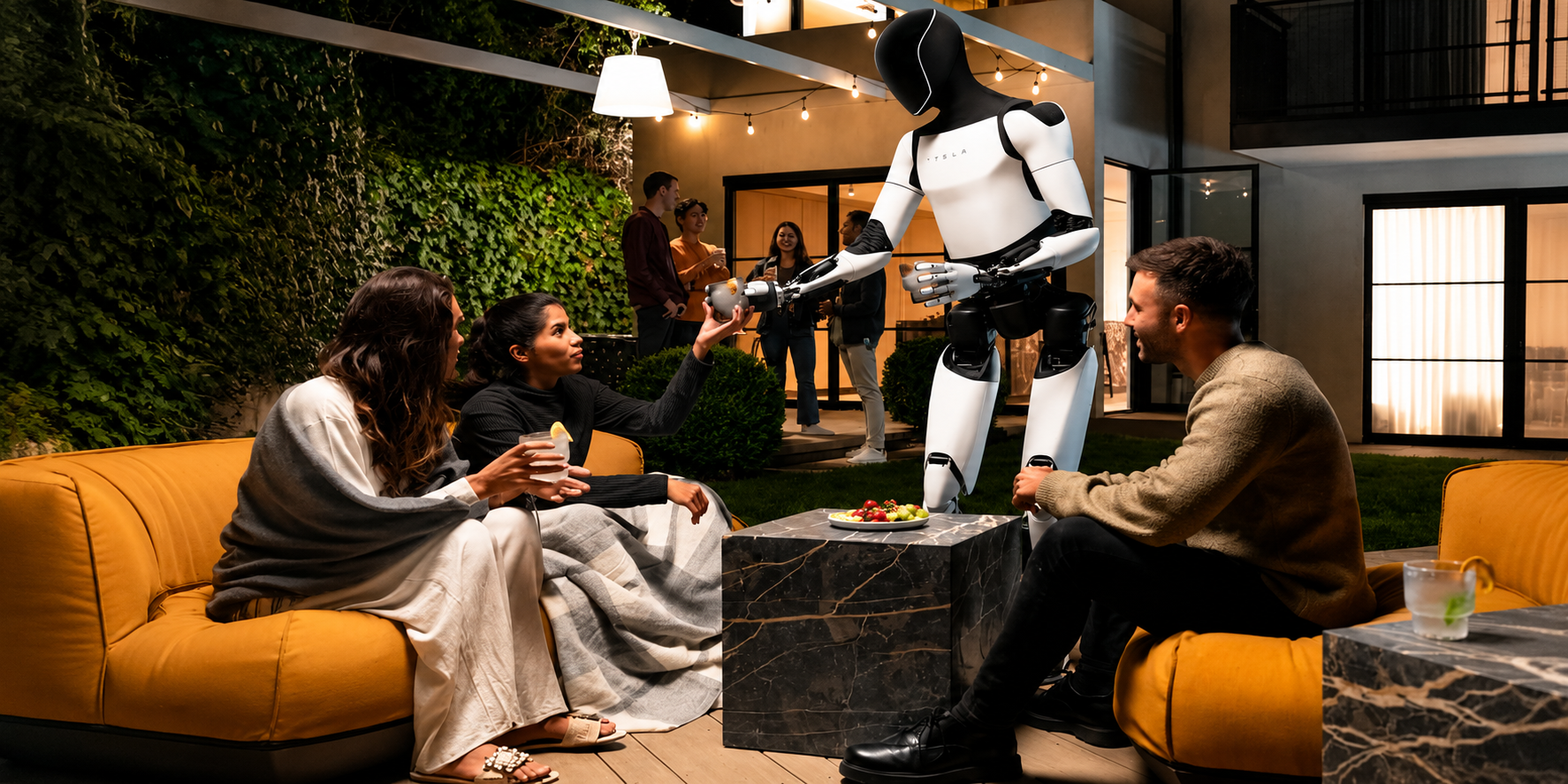

Optimus interacting with people in a residential-style setting during a company demonstration in Fremont on July 1, 2026 at 9:07 AM. Photo: Tesla/Handout
Tesla first unveiled Optimus in 2021 as part of its wider push into artificial intelligence and robotics. Since then, the company has released a series of demonstrations showing the humanoid robot progressing from a basic prototype to a machine capable of walking, carrying items, and performing simple tasks. The latest home based showcase comes amid a global race among technology firms to develop advanced robots powered by AI. As breakthroughs in artificial intelligence accelerate, companies are increasingly exploring how robots can be utilized not only in factories and warehouses but also in homes, healthcare, and other everyday environments. Optimus is Tesla’s entry into this rapidly evolving field, where the goal is to create robots capable of safely working alongside humans in the real world.
“They could assist with household chores, support elderly individuals, and take on repetitive or physically demanding tasks, potentially improving quality of life for many families," said Sarah Chen, a Professor of Robotics and Artificial Intelligence”
As one of the world’s most influential technology leaders, Elon Musk has the ability to shape public conversations about the future of artificial intelligence and automation. His choice to show Optimus in a home setting is likely to influence how consumers, investors, and policymakers view humanoid robots. For Tesla’s audience, the demonstration provides a glimpse of technologies that could eventually become part of daily life. For the robotics and AI sectors, it raises the stakes in an increasingly competitive race to develop machines capable of working beside humans. More broadly, the story taps into a cultural debate about how much society should embrace automation. As robots become more capable and visible, questions about trust, privacy, employment, and the role of human labor are shifting from theoretical discussions into practical concerns that could impact millions of people. The public interest lies not only in what Optimus can do today, but in what its development signals about the future relationship between humans and intelligent machines.
What comes next will be pivotal in determining whether Optimus is remembered as a breakthrough or simply an ambitious experiment. Tesla is expected to continue improving the robot’s capabilities and expanding real world testing, with investors, regulators, and consumers monitoring closely for evidence that it can operate safely and reliably outside controlled demonstrations. Future updates on production timelines, commercial availability, and regulatory oversight will offer clearer insight into how soon humanoid robots might enter everyday households. As the technology progresses, the broader question stays unanswered: is society ready to welcome intelligent machines into its homes, or will public concerns hinder the march toward Musk’s robotic future?