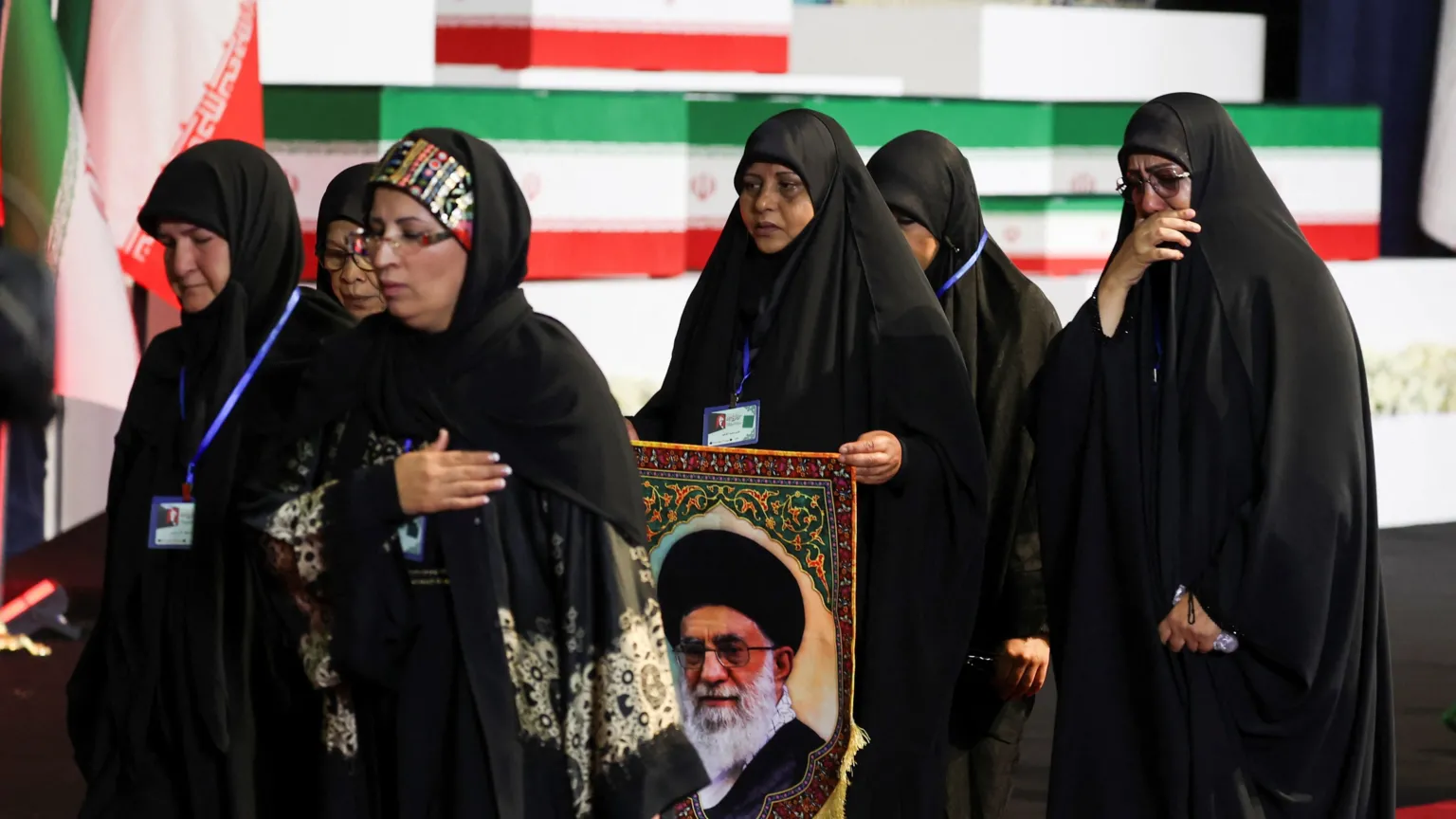
20 million mourners pack Tehran for Ali Khamenei burial under fragile US-Israel ceasefire
Slain Supreme Leader lies in state in Tehran as millions gather for Mashhad burial, testing the fragile US-Israel ceasefire.

TEHRAN, IRAN — The flags were displayed at the Grand Mosalla as Ali Khamenei’s body arrived on Friday morning.
Ayatollah Ali Khamenei, the Islamic Republic’s supreme leader for over 30 years, was killed in a U.S.-Israeli airstrike on February 28th, opening hostilities in a war that reshaped the Middle East. His death threw the Islamic Republic into uncharted waters.
His son, Mojtaba Khamenei was elevated to the role on March 4th but has been missing in public ever since, rumored to have been injured in the same strike that claimed his father’s life. Now, four months on, Iran will stage its largest public mourning since the 1979 revolution, a state funeral anticipated to draw up to 20 million people to the capital city alone.
The funeral ceremony has been delayed due to months of war, but will take place under a precarious ceasefire between the U.S. and Iran. All public and private offices in Tehran are to close from Saturday to Monday, and traffic will be significantly restricted in central Tehran from Saturday through Monday. The capital’s airspace will be partially closed on Friday and entirely on Monday.
Flights from both Mehrabad and Imam Khomeini airports will be suspended on the day of the procession, while all transportation between IranÔÇÖs 31 provinces will be restricted.
Over 50,000 personnel of the Islamic Revolutionary Guard Corps (IRGC) have been deployed to ensure the security of the funeral procession.
Earlier this morning, Mohammad Mohkber, the acting president, was among the first to arrive at the Grand Mosalla before sunrise. For years, he had stood at the supreme leader’s side, as vice president and then as interim president after the death of President Raisi in a May helicopter crash. That day, Mokhber had cried openly; today, he did not shed a tear.
He stood at attention as workers unfurled enormous banners emblazoned with images of the fallen leader above the vast prayer hall, gazing at the throngs of people already pushing past the mosque’s gates, and many more expected by morning.
The funeral, he knew, was more than a eulogy; it was a trial by fire, a critical test of the regime’s enduring power and the public’s unwavering loyalty to their new, absent leader. His phone vibrated: delegations from one hundred countries had confirmed, security was on high alert, Tehran was transforming into a sea of black. Mokhber moved towards the coffin, placing a hand on the polished wood. Every camera captured the moment.
IranÔÇÖs national security council has vowed revenge, and parliamentary Speaker Mohammad Bagher Ghalibaf urged a massive turnout to “avenge the supreme leader’s martyrdom.” The funeral is to become a potent symbol of resistance against Washington and Tel Aviv, a powerful message that the Islamic Republic remains undeterred. But the fragile truce, the product of lengthy Omani and Qatari-mediated negotiations that went into effect June 15th, could crumble under the strain.
Tehran has halted ongoing diplomatic negotiations to focus on the funeral rites.
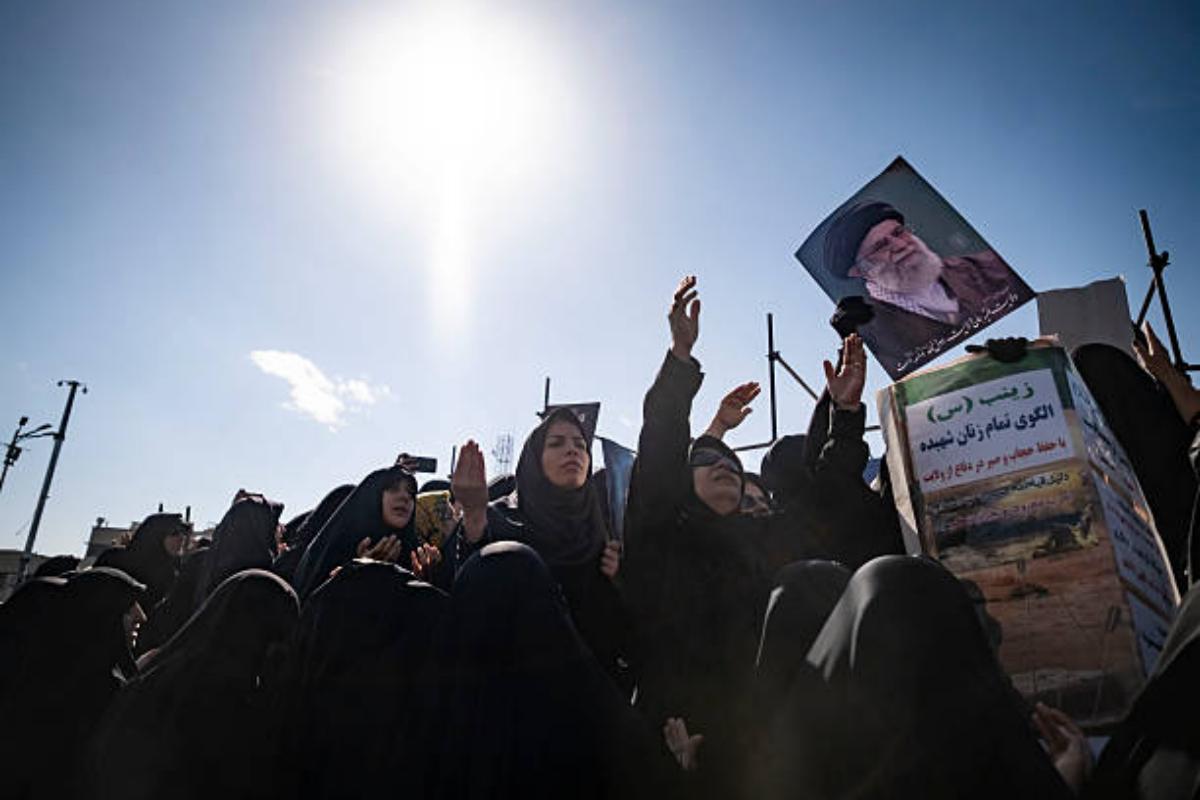

Veiled Iranian woman hold a portrait of Iran's Supreme Leader Ayatollah Ali Khamenei and mourn during a rally in Tehran on March 1, 2026. Photo: Morteza Nikoubazi/NurPhoto via Getty Images
Meanwhile, ordinary Iranians face closed businesses, paralyzed transportation systems, and streets converted into the site of Iran’s largest state mourning since 1979, a ceremony estimated to cost over $200 million. The cost of the government’s mobilization, including shutting down all non-essential services, paralyzing traffic, and deploying thousands of IRGC personnel, will fall squarely on the Iranian taxpayer. Several questions hang in the air: Who decided to postpone the funeral for months? Why proceed with it now under a peace agreement so precarious it could shatter with the slightest provocation?
While Mojtaba Khamenei was selected by the Assembly of Experts as the new supreme leader, his absence from the public eye has led to uncertainty about who is truly in charge.
At least a dozen individuals have been arrested and detained for “spreading disinformation” about the supreme leader’s death, although the government has refused to disclose their names.
“This is the largest gathering since the revolution,” said one Tehran municipality official, who asked not to be identified for security reasons. “We have prepared for months. Every district has a designated prayer station.”
Khamenei’s coffin will remain at the Grand Mosalla until Sunday evening, and a funeral procession will proceed through TehranÔÇÖs central streets on Monday, passing landmarks such as Valiasr Square and the former U.S. Embassy, before making its way south. His body is then expected to travel to the Iraqi holy sites of Najaf and Karbala, and ultimately be buried in Mashhad on July 9th, at the shrine of his ancestor, Imam Reza.
Tehran is poised, holding its breath as millions prepare to mourn, the world watching. Moh ammad Mokhber wi ll stand at the center of this seismic event, the interim leader tasked with guiding the nation through a critical juncture. The future remains unwritten; the ceasefire is in place, for now. Flags will remain black tomorrow, but the identity of Iran’s new leader is anything but clear.