Heat without relief as Americans struggle to keep cool
As temperatures break records and alerts flood phones, the real story unfolds in homes, hospitals, and an overworked power grid as the 4th of July nears.

WASHINGTON — This year, as Americans mark the Fourth of July, the familiar sounds of celebration are competing with a quieter, more pressing reality and people trying to stay cool. By mid-day, the heat feels less like weather and more like something you have to endure as temperatures rise to about 100 degrees.
Across the country, Independence Day is unfolding under intense, lingering heat. For many families, the holiday doesn’t begin with fireworks or food, but with checking temperatures, filling water bottles, and figuring out how long it’s safe to be outside. Curtains are drawn earlier than usual, plans are shifted indoors, and what was meant to be a full day under the sun is being broken into shorter, cautious moments.
Still, the traditions persist, and celebrations will be there. Parks and streets slowly fill with people determined to celebrate, even if it means carrying umbrellas for shade or retreating often to air-conditioned spaces. Backyard barbecues go on, though hosts keep a closer eye on guests, most especially children and older people, making sure no one stays in the heat for too long. There is a sense of adaptation in the air, as if the holiday itself is being quietly reshaped in real time.
Emergency responders are preparing for a surge in heat-related calls, knowing that holidays like this can push people to underestimate the risks. Dehydration, heat exhaustion, heatstroke, and other serious heat illnesses often occur when people are distracted, caught up in celebration, or unaware of how quickly their bodies are being affected.
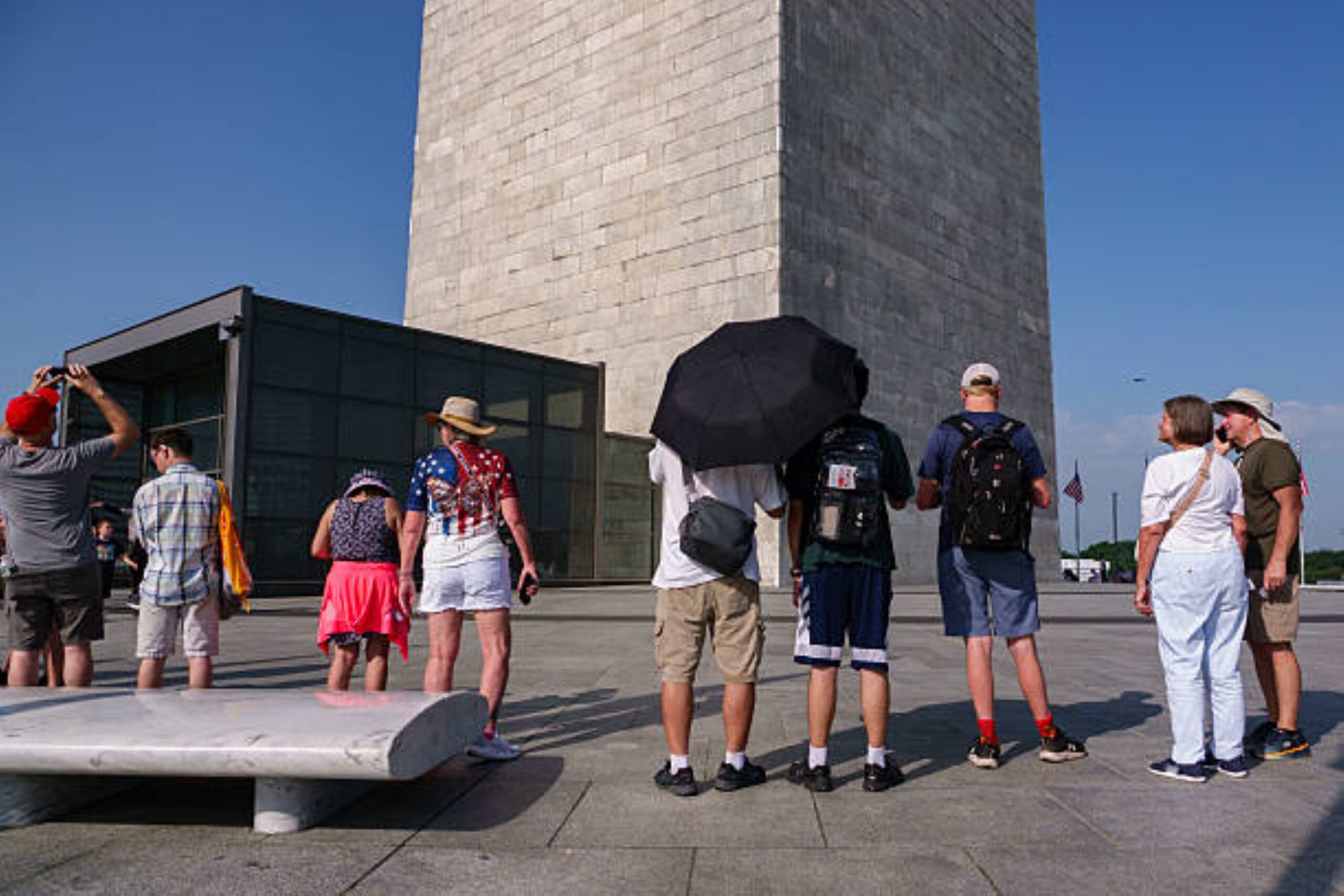

People outside the Washington Monument before it was closed due to the extreme heat in Washington, DC on July 2, 2026 at 7:23 PM. Photo: Kevin Carter/Getty Images. © Getty Images
Yet, as night falls and fireworks light up the sky, people still gather, sharing moments of celebration. It’s a reminder that while the conditions may be changing, the spirit of the day remains. But this Fourth of July carries something different, a growing awareness that the heat is no longer just part of summer, but something that is steadily reshaping it.
“What we are experiencing now is part of broader trends where extreme heat is becoming more common and more intense. This means communities will need to adapt, whether rethinking event timing, improving access to cooling spaces, or increasing public awareness. It's not just about one holiday; it's about preparing for a future where heat plays a much bigger role in how we live and gather," said Dr Jennifer during an interview.”
For many Americans, staying cool has become as much a part of the holiday as the fireworks themselves. And as the last sparks fade in the sky, the heat remains, stretching into the next day, a quiet signal that this may be what future summers and future celebrations will feel like