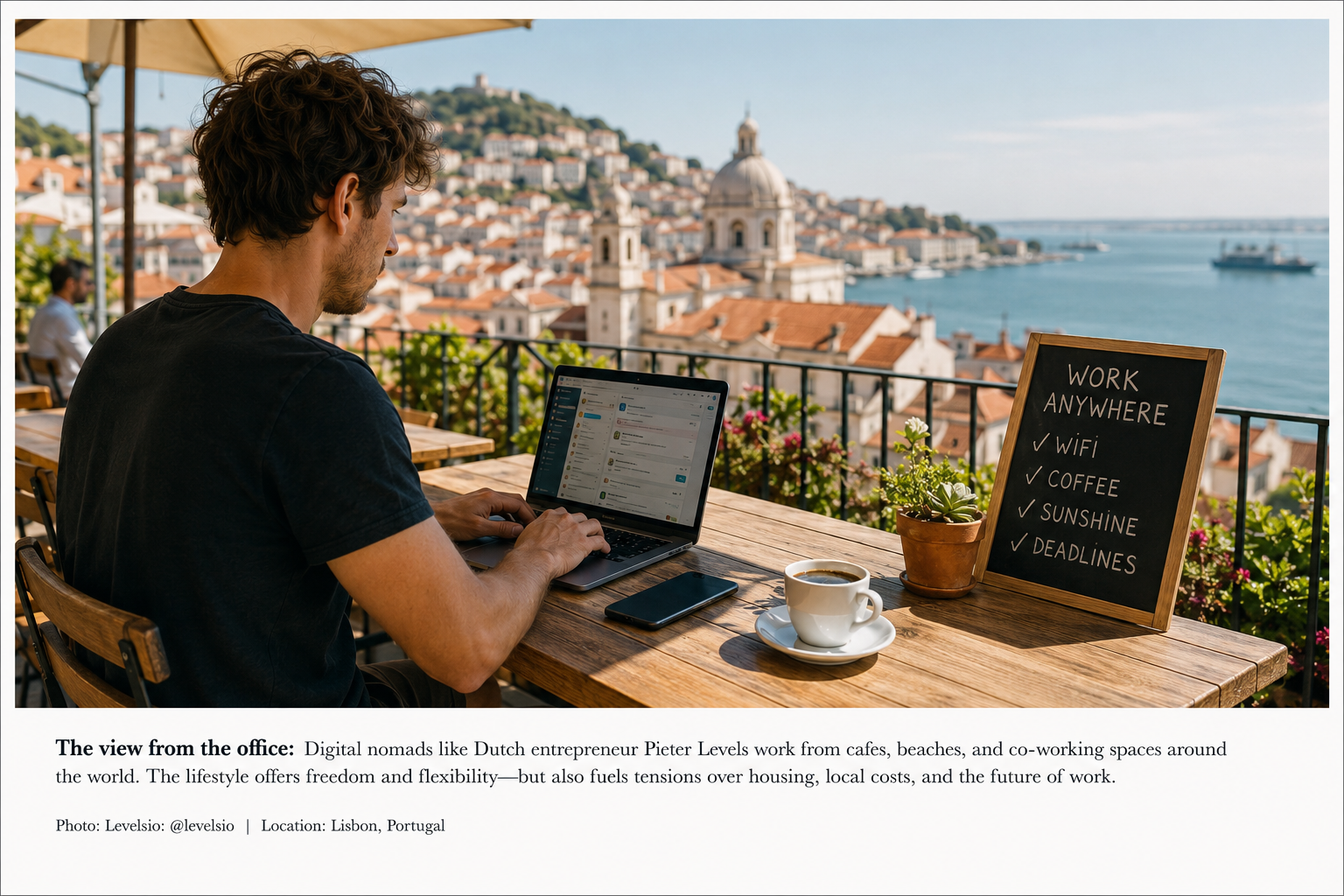
The global rise of digital nomads
It's clear engaging and accurately reflects the article's focus on the worldwide trend and its impact on business and lifestyle.

NEW YORK MILLS, MINNESOTA — As the sun rises over a bustling café, a remote worker logs into a video conference with teammates spread across North America, Europe, and Asia. Hours later, after completing projects, responding to clients, and attending virtual meetings, the laptop closes, and the rest of the day is spent exploring a new city instead of commuting home. This work-and-travel lifestyle, once limited to freelancers and entrepreneurs, is becoming a mainstream choice for professionals in industries such as technology, marketing, finance, design, and consulting. Enabled by high-speed internet, cloud-based collaboration tools, and employers embracing remote and hybrid work, millions of workers are no longer tied to a single office or country.
For Dutch entrepreneur and digital nomad Pieter Levels, work is no longer tied to a single office, city, or even country. Based in the Netherlands but known for building online businesses while traveling the world, Levels has become one of the most recognizable advocates of the digital nomad movement. His lifestyle reflects the opportunities created by remote work—greater freedom and access to global markets—but it also highlights the tensions surrounding the trend. As more professionals choose to work while living abroad, many destinations are experiencing increased demand for housing and pressure on local infrastructure, while employers continue to grapple with managing distributed teams.
The digital nomad movement is backed by growing evidence that remote, location-independent work is becoming a permanent feature of the global economy. According to the MBO Partners 2025 Digital Nomad Trends Report, 18.5 million Americans identified as digital nomads in 2025—an increase of 153% from 2019 —representing about 12% of the U.S. workforce. Meanwhile, the projects that the number of jobs that can be performed remotely from anywhere will reach 92 billion by 2030, driven by advances in digital technology, improved connectivity, and changing workplace policies.
The rise of digital nomadism has created clear winners and losers. Companies also gain access to a wider global talent pool and reduced office expenses. However, the trend has sparked growing resistance from residents, housing advocates, and some policymakers who argue that an influx of higher-earning remote workers is driving up rents, increasing the cost of living, and changing the character of popular destinations.
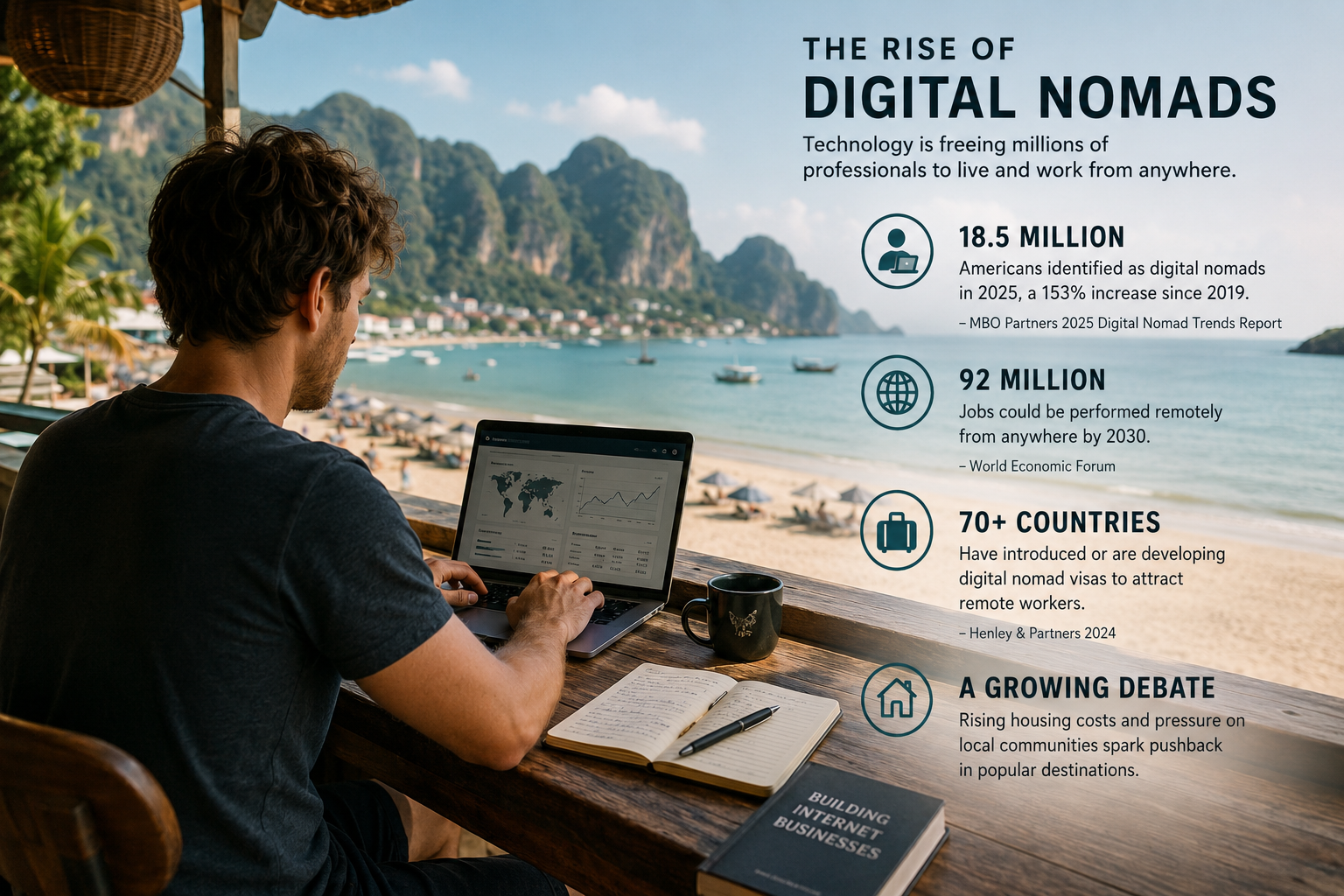

Lucy Lincon in Washington DC on June 30, 2026 at 5:27 PM. The Digital Nomad Trend. Photo: Lucy/Waweru. © Waweru Lens Studio
To provide a balanced perspective, this story should include interviews with Pieter Levels, a digital nomad entrepreneur who embodies the trend; a representative from a government agency responsible for digital nomad visa programs, such as Portugal or Estonia, to explain why countries are attracting remote workers; and an urban housing economist or labor market expert who can discuss the impact of digital nomads on housing affordability, local economies, and the future of work. The key question is not whether digital nomadism will continue to grow, but whether governments, employers, and local communities can find a balance that allows the benefits of location-independent work to be shared without leaving residents behind.