Rising waters, rising alarms as deadly floods expose America’s growing climate strain
From Kentucky to Tennessee, sudden flash floods claim lives and overwhelm communities, intensifying concerns over preparedness and extreme weather resilience.

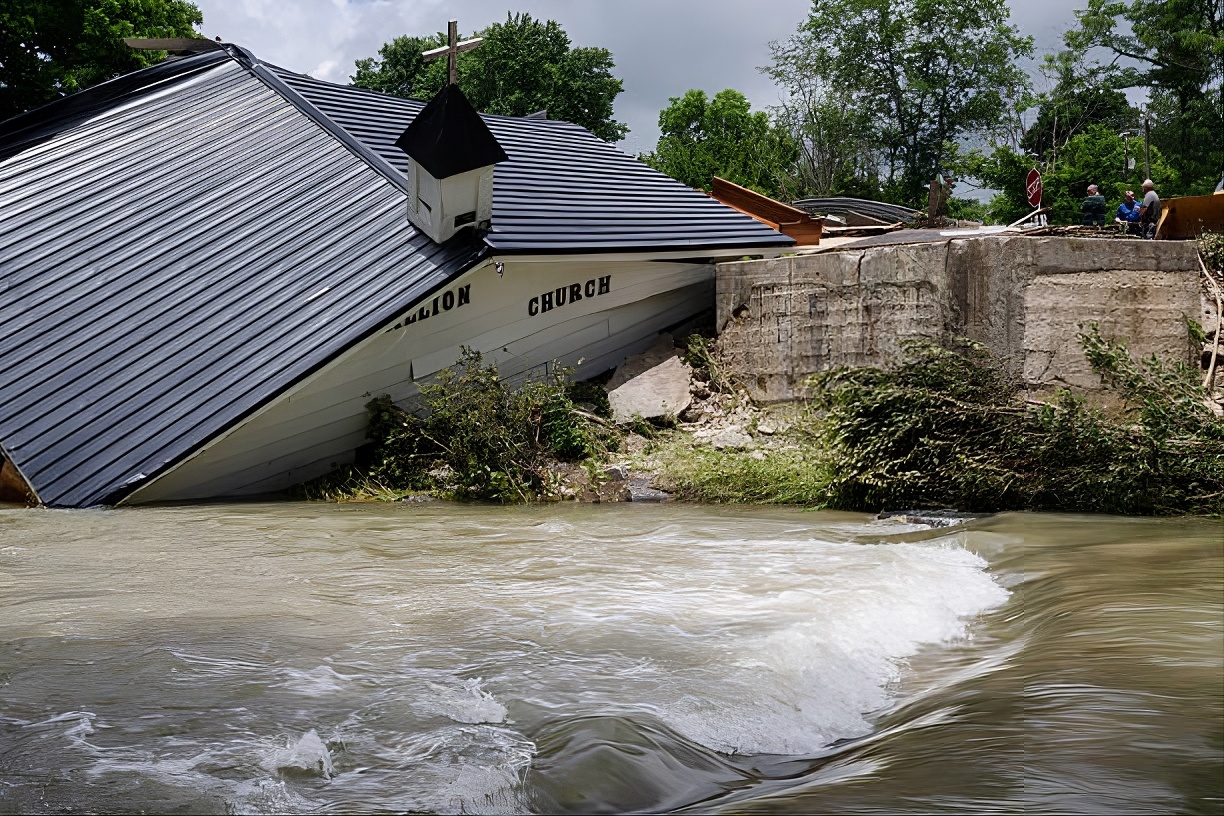
KENTUCKY, ARKANSAS — Across parts of the southeastern United States, what began as a powerful summer storm system quickly changed into a fast-moving disaster, catching communities off guard and leaving a trail of destruction in its wake.
In states like Kentucky and Tennessee, relentless rainfall transformed quiet neighbourhoods into flood zones within hours, as rivers surged beyond their banks and drainage systems struggled to cope. Roads disappeared beneath muddy water, homes were submerged, and emergency crews rushed to rescue residents trapped by the sudden rise of floodwaters.
For many families, the flooding unfolded with little warning. The speed and intensity of the floods left residents scrambling to protect loved ones and salvage what they could. Some sought refuge on rooftops or higher ground, while others relied on the intervention of first responders navigating dangerous conditions. The human toll has been devastating, with lives lost and entire communities forced into recovery mode almost overnight.
At the center of the response has been Governor Andy Beshear, who has worked alongside emergency teams to coordinate relief efforts and provide updates to the public. His administration has emphasized the urgency of rescue operations and the need for long-term support as affected areas begin to assess the damage.
Yet even as immediate aid is deployed, the scale of the crisis has raised deeper concerns about whether current systems are equipped to handle such rapidly intensifying events.
“Right now, our top priority is saving lives. We have emergency responders working around the clock, conducting rescues, and making sure people get to safety," said Governor Beshear. "We are coordinating closely with local officials and federal partners to ensure resources reach those who need them most." ”
Beyond the immediate destruction, the flooding has reignited a broader national debate about preparedness and resilience. Critics argue that repeated disasters of this magnitude highlight vulnerabilities in infrastructure, from outdated drainage systems to insufficient flood defenses. Others point to the growing unpredictability of extreme weather, warning that such events may become more frequent and more severe.
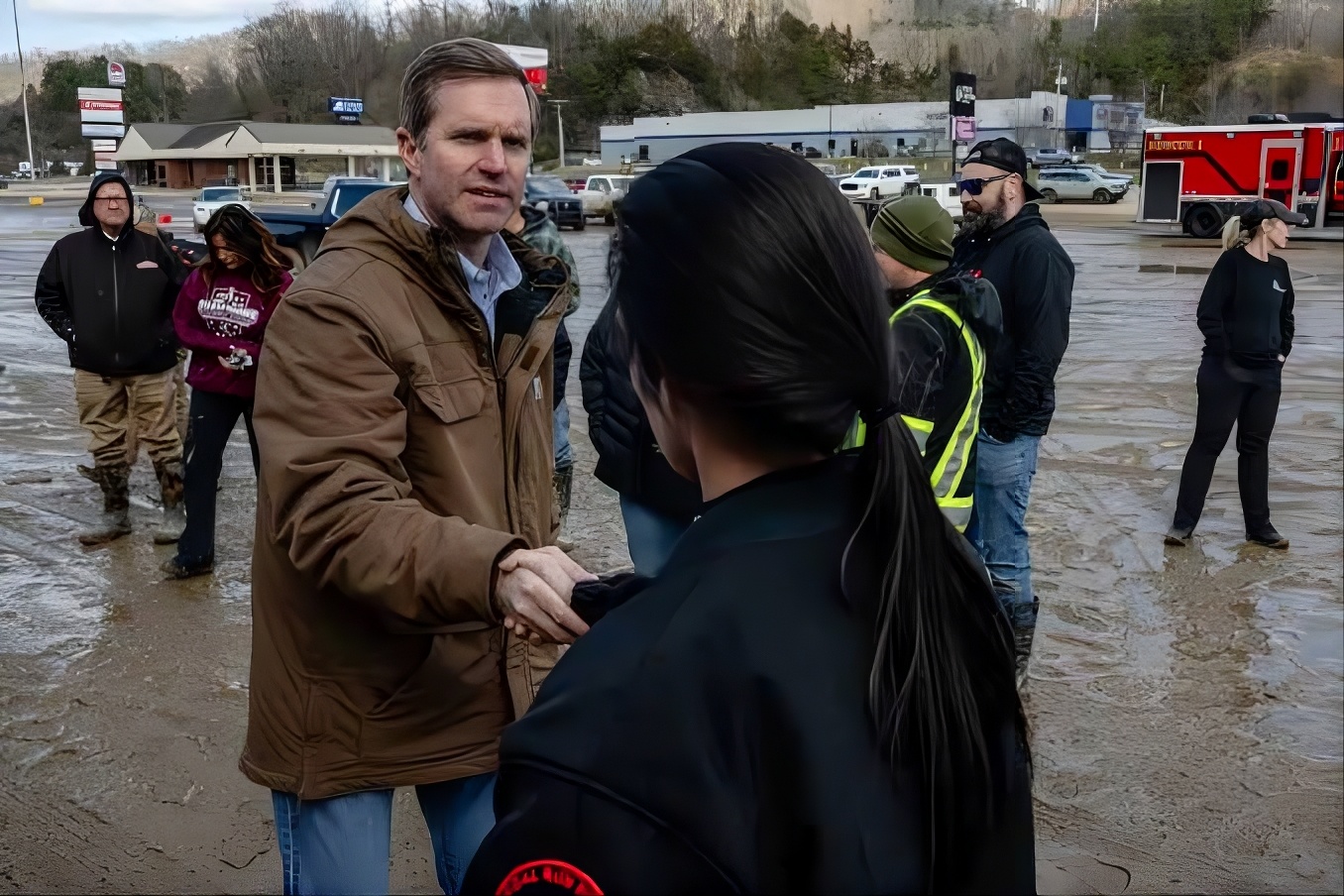

Governor Andy Beshear greets a woman as he meets the locals in Pikeville, Kentucky, on February 17, 2025 at 10:42 PM. Photo: Jon Cherry/Getty Images. © Getty Images
The tension between these perspectives underscores a difficult reality. While nature may trigger these disasters, their impact is often shaped by how well or poorly communities are prepared to withstand them.
As waters begin to decrease, the long process of recovery is just beginning. Families are returning to damaged homes, local authorities are evaluating the cost of rebuilding, and policymakers face renewed pressure to address the underlying risks. The floods have not only left physical scars but also raised pressing questions about the future. Whether this disaster becomes a turning point or another chapter in a recurring pattern will depend on how seriously those lessons are taken in the months and years ahead.