Trump Marks Columbus Day, Says Statues Are Back “More Magnificent Than Ever”
Trump praises Italian American community in a Columbus Day post claiming demolished Columbus statues have been restored across the country.

WASHINGTON D.C. — Donald J. Trump marked Columbus Day with a post celebrating Italian Americans and claiming that Christopher Columbus statues torn down in recent years have been rebuilt.
Trump used the holiday to attack political opponents he blamed for the removal of Columbus monuments. He called the restoration of those statues a victory for the Italian American community and for Italy itself.
The post frames the statue controversy as a settled cultural battle, with Trump positioning himself as a defender of Italian American heritage against those who sought to remove Columbus from the public square.
The stakes extend beyond symbolism. Columbus Day remains a federal holiday, but numerous states and municipalities have renamed or replaced it. The fate of Columbus monuments has become a proxy fight over how the nation reckons with its past.
Here is the full post on truthsocial: “HAPPY COLUMBUS DAY TO ALL, in particular our great Italian American Community which was forced to suffer as the Radical Left Dumocrats, Socialists, and Communists rampaged through our cities and towns ripping down almost all of the beautiful statues of Christopher Columbus. Well, those days of plunder are over, and the statues are back, more magnificent than ever. This is a big day for our great Italian American Community, and the Country of Italy itself, maybe the biggest. Congratulations! Trump” on October 11, 2026 at 10:34 AM ET.
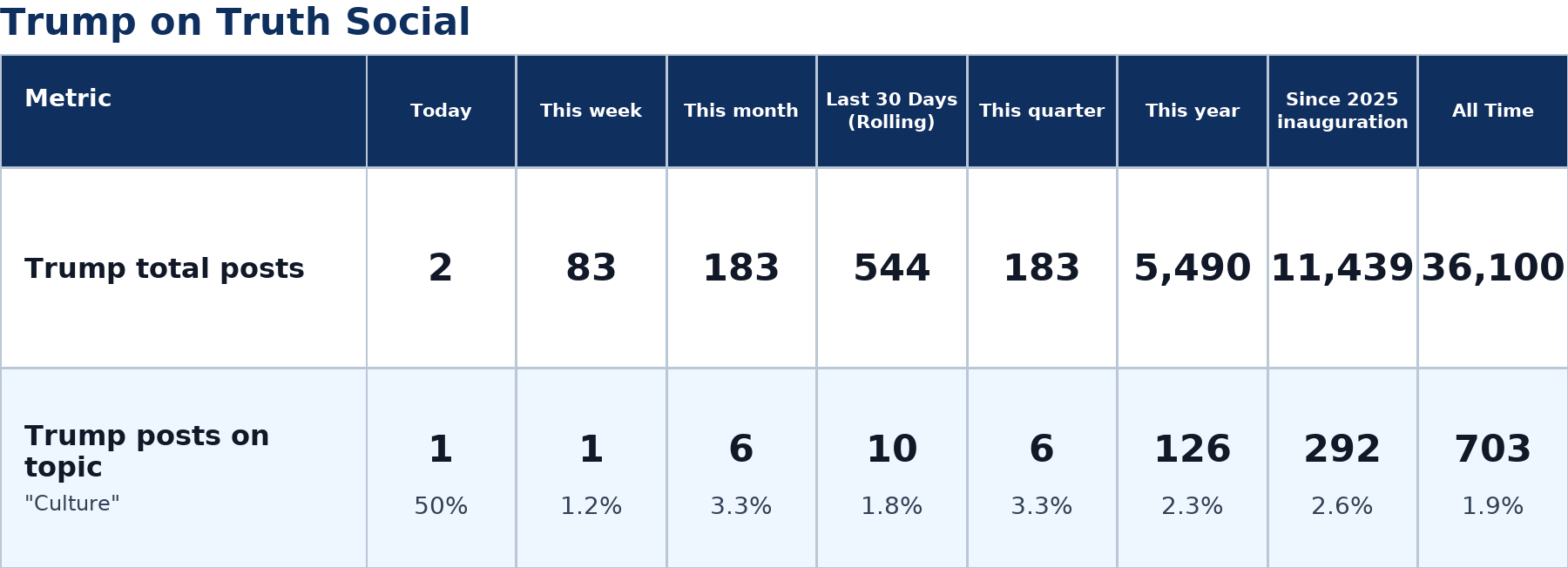
This is Trump’s 2nd message released today, and the last post was 17 minutes ago, and it is not part of a thread. On average, Trump produces 18 posts per day since his inauguration on January 20, 2025. The move fits a broader pattern in Trump’s recent messaging, with 10 of his 544 posts over the last 30 days classified as Culture posts.
Columbus statues became flashpoints during the racial justice protests of 2020, when demonstrators toppled or vandalized monuments in cities including Baltimore, Boston and Richmond. Italian American organizations have since mounted campaigns to restore or replace them. The Conference of Presidents of Major Italian American Organizations, a New York-based coalition representing 77 cultural, educational and fraternal groups, worked with White House officials in 2023 and 2024 to shape Columbus Day proclamations, according to copomiao. The coalition later collaborated with the Trump administration to install a replica of Baltimore’s toppled Columbus statue on White House grounds, according to copomiao.
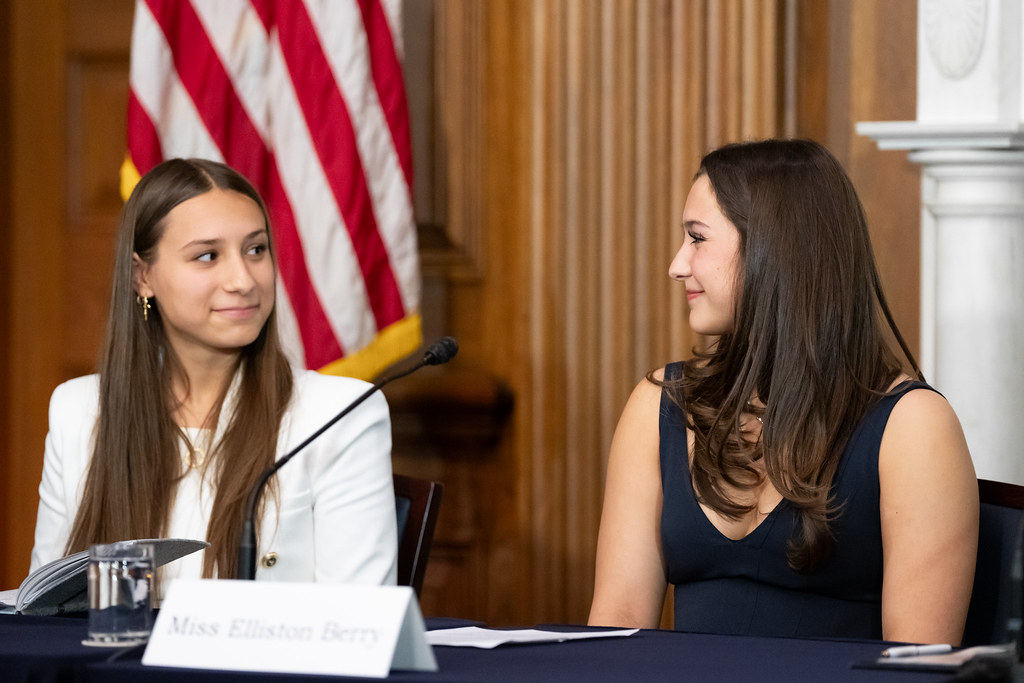

President Donald J. Trump posted a message celebrating Columbus Day and claiming Christopher Columbus statues have been rebuilt at Washington D.C.
Andrea Hanks / The White House
© copyright Flickr with permission
Columbus Day itself traces back to a diplomatic crisis. President Benjamin Harrison organized the first national Columbus Day parade in New York City in 1892 to ease tensions between the United States and Italy. A mob had murdered 11 Italian immigrants in New Orleans the previous year, according to copomiao. More than 1 million people attended that parade, and Italian Americans built Columbus statues across the country through the 1900s to fuel their assimilation into American life.
Across the country, Columbus statues have been removed, vandalized or destroyed. Columbus Day has been renamed or replaced in numerous states and municipalities, according to orderisda. Italian Americans embraced Columbus as a symbol of pride and acceptance in a nation where their families faced widespread discrimination. The movement to rehabilitate his public image has drawn support from organizations in Chicago, Pittsburgh, Philadelphia, New Haven, Syracuse and Washington, according to copomiao.
Baltimore’s Little Italy Columbus monument offers a case study. Italian sculptor Mauro Bigarani designed the statue, and then-Mayor William Donald Schaefer and President Ronald Reagan erected it on October 8, 1984, in Columbus Piazza, according to worldheritageusa. The monument stood as a symbol for the Italian American community for 36 years before protesters toppled it. The pedestal remains standing roughly seven feet in the air, though the statue itself has been removed, according to worldheritageusa.
For the average American, the Columbus Day fight touches school curricula, municipal calendars and which holidays employers choose to observe. States that have replaced Columbus Day with Indigenous Peoples’ Day mark the same October Monday under a different name, meaning workers and students in neighboring jurisdictions can experience the holiday under opposing labels.
No single federal body has jurisdiction over local monument decisions. Municipal governments and state legislatures will continue to decide the fate of individual Columbus statues on a case-by-case basis, and no national deadline governs those choices.
The battle over Columbus monuments echoes the broader history of the explorer’s shifting reputation. His 1492 voyage permanently connected Europe and the Americas, launching what historians call the Columbian Exchange, according to orderisda. Potatoes, tomatoes, corn and cacao crossed oceans, feeding populations across Europe, Africa and Asia. Yet the same contact spread diseases that killed vast numbers of Indigenous people. Within a generation, Columbus went from being widely celebrated in American culture to becoming one of the most controversial figures in the country’s history, according to orderisda.
Zenger analysis
Photo by Zenger analysis
Protomaps / Natural Earth – Italy
Photo by Protomaps / Natural Earth – Italy
President Trump is the author of Trump: The Art of the Deal, Trump: Think Like a Billionaire: Everything You Need to Know About Success, Real Estate, and Life, and Think Big: Make It Happen in Business and Life. Analyst and Trump supporter Rod Martin points to The Art of the Deal, Trump's 1987 book, as an explanation of his deal-making philosophy: making big announcements, pivoting often in public statements and, Martin says, ultimately getting what he wanted all along. Critics contend that Trump's books were published decades ago or were aimed at making money, not shedding light. "Generally," Martin said, "critics don't read The Art of the Deal. If they did, they would understand."