Trump Posts Declassified 2020 Intelligence Assessment on Foreign Election Threats
Trump publishes a downgraded National Intelligence Council paper on Russian, Chinese and Iranian efforts to influence the 2020 US election, carrying a July 3, 2026 declassification stamp in his name.

WASHINGTON D.C. — Donald Trump published a declassified National Intelligence Council assessment on foreign threats to the 2020 US federal elections, a document carrying a July 3, 2026 declassification stamp bearing his name.
The paper, identified as NICA 2020-06885D, first appeared on August 19, 2020, and states it is a downgraded version of the earlier classified assessment. It covers covert and overt influence measures by Russia, China and Iran. One passage assesses that Russia sought to boost Trump’s candidacy on social media while China preferred that Trump lose, according to the document image.
Here is the full post on Truth Social: “DIRECTOR OF TELLIGE OFFICE NATIONAL 19 August 2020 DECLASSIFIED BY PRESIDENT TRUMP on 3 July 2026 NATIONAL INTELLIGENCE COUNCIL ASSESSMENT NICA 2020-06885D Foreign Threats to 2020 US Federal Elections (U) Key Takeaways Scope Note: This is a downgraded version of a paper originally published on 19 August, 2020, and includes information current as of that date. This paper updates NICM 2020-32, NICM 2020-033, and which also addresses China’s broader influence efforts. Ahead of the 2020 US elections, foreign states will continue to use covert and overt influence measures in their attempts to sway US voters’ preferences and perspectives, shift US policies, increase discord in the United States, and undermine the American people’s confidence in our democratic processes. We are primarily concerned about ongoing and potential influence activity by Russia, China, and Iran.” on July 21, 2026 at 3:52 PM ET.
This is the first message released by Trump today. On average, Trump produces about 16 posts per day since his inauguration on January 20, 2025.
The move fits a broader pattern in Trump’s recent messaging, with 93 of his 492 posts over the last 30 days focused on elections.
The assessment carries the seal of the Office of the Director of National Intelligence and the banner of the National Intelligence Council. Numerous redaction bars obscure names, sources and specific details across the page. A footer notes that the National Intelligence Officer for Cyber oversaw the paper and that the National Intelligence Council drafted it.
The document judges that Russia, China, Iran and many nonstate actors have the capability to interfere with the voting process, steal sensitive data, or question the validity of election results. It also states that such actors would struggle to manipulate voting processes at scale and without detection.
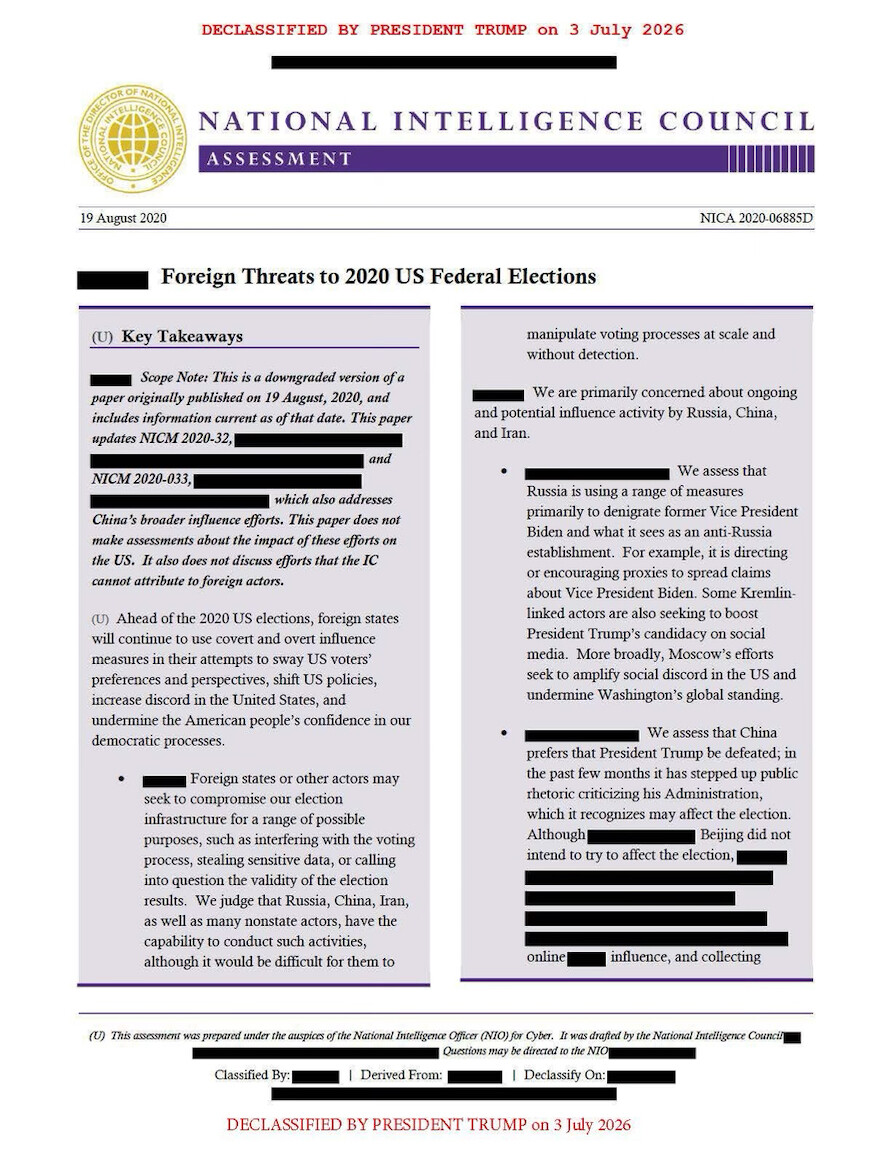

The NATIONAL INTELLIGENCE COUNCIL ASSESSMENT NICA 2020-06885D Foreign Threats to 2020 US Federal Elections is pictured at Washington D.C. on 07/21/2026.
© copyright Zenger.News
The stakes reach across the political spectrum. The declassified text names both candidates in the 2020 race. It assesses that Kremlin-linked actors sought to denigrate former Vice President Joe Biden while some sought to boost Trump on social media, and that Beijing stepped up rhetoric criticizing the administration then in power. Voters, campaigns and intelligence officials all hold a stake in how such assessments reach the public.
The executive branch controls the declassification of intelligence products, and a sitting president holds broad authority to release classified material. The release adds to a public record that began forming during the 2020 cycle, when election-security warnings dominated the closing months of the campaign.
For the average US reader, the release bears on trust in elections and the machinery that protects them. The assessment’s core warning, that foreign states aim to undermine confidence in democratic processes, speaks directly to how citizens weigh the reliability of the vote.
This has happened before. Intelligence agencies published assessments on foreign election interference in both 2016 and 2020, and later declassified reports drew intense public scrutiny over how their findings were framed. The pattern of releasing downgraded intelligence to the public is well established, though the individual documents remain contested.
The next decision on the material rests with the Office of the Director of National Intelligence, which maintains the official record of such assessments. Officials have not announced a date for any further release or official confirmation tied to this document.
Disputes over election-security intelligence are not new to Washington. In January 2017, the intelligence community released an unclassified assessment concluding that Russia sought to influence the 2016 election, a finding that drew years of congressional review and multiple public reports. Those earlier releases reshaped how administrations handle sensitive analysis. Each president who follows must weigh the political cost of publishing what the analysts wrote.
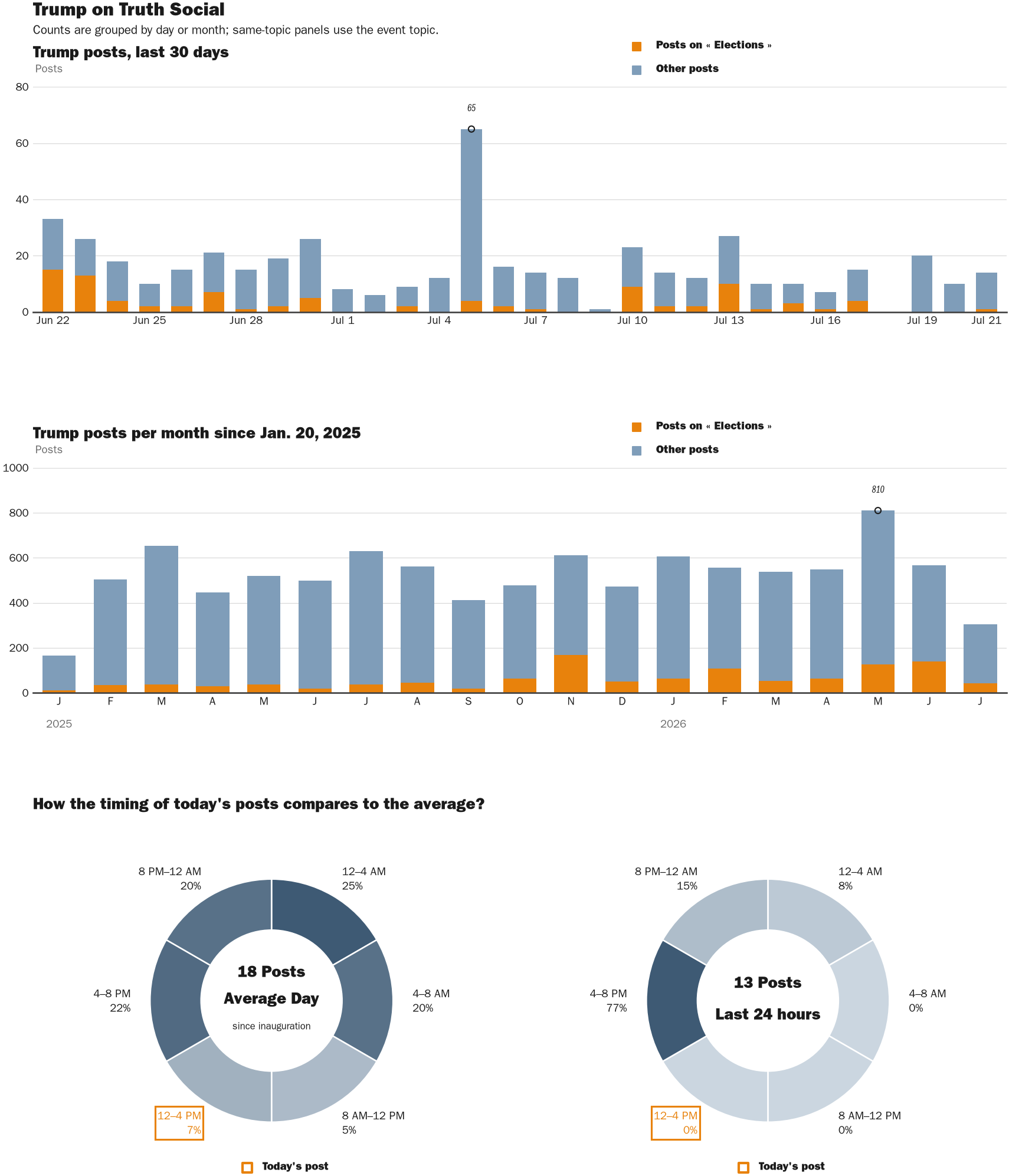
NewsFindr Chart Maker
Photo by Zenger real-time database of all Truth Social posts.
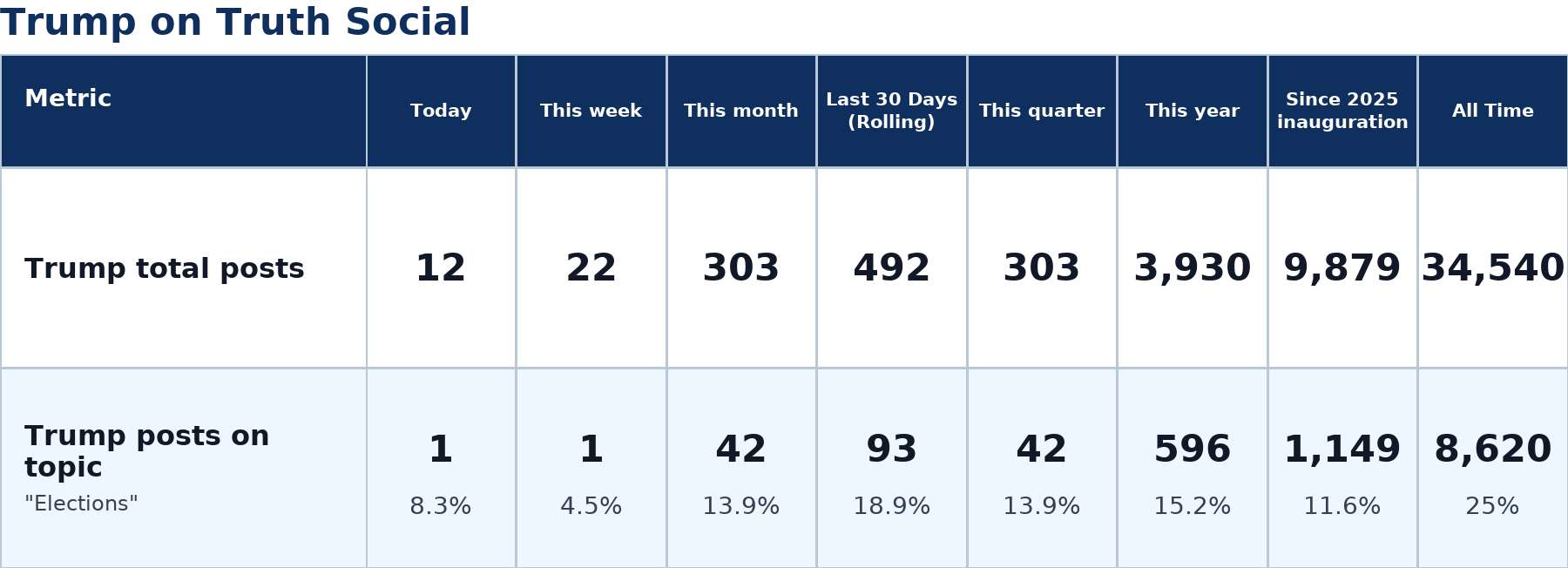
Zenger analysis
Photo by Zenger analysis
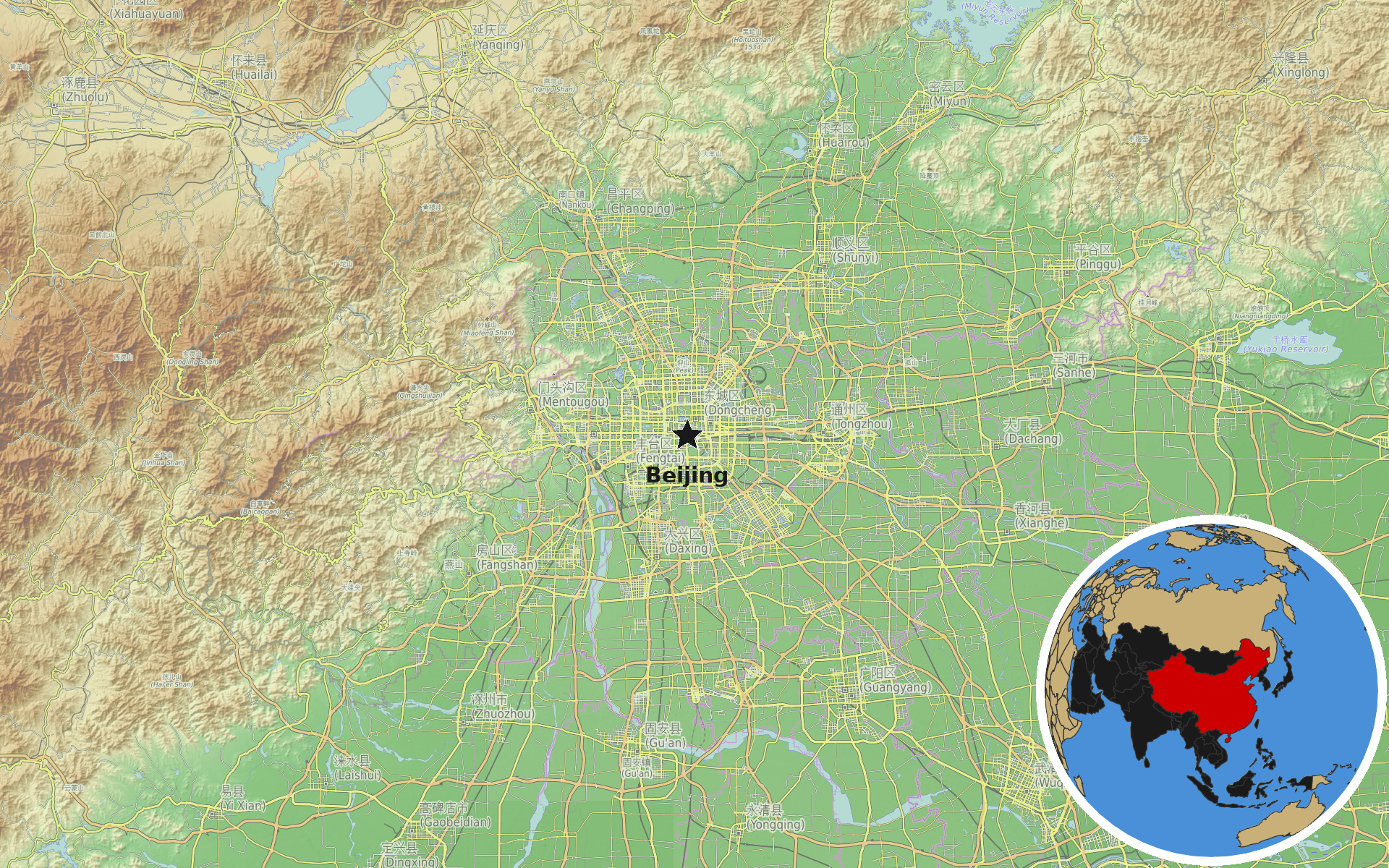
OpenTopoMap / Natural Earth – China
Photo by OpenTopoMap / Natural Earth – China
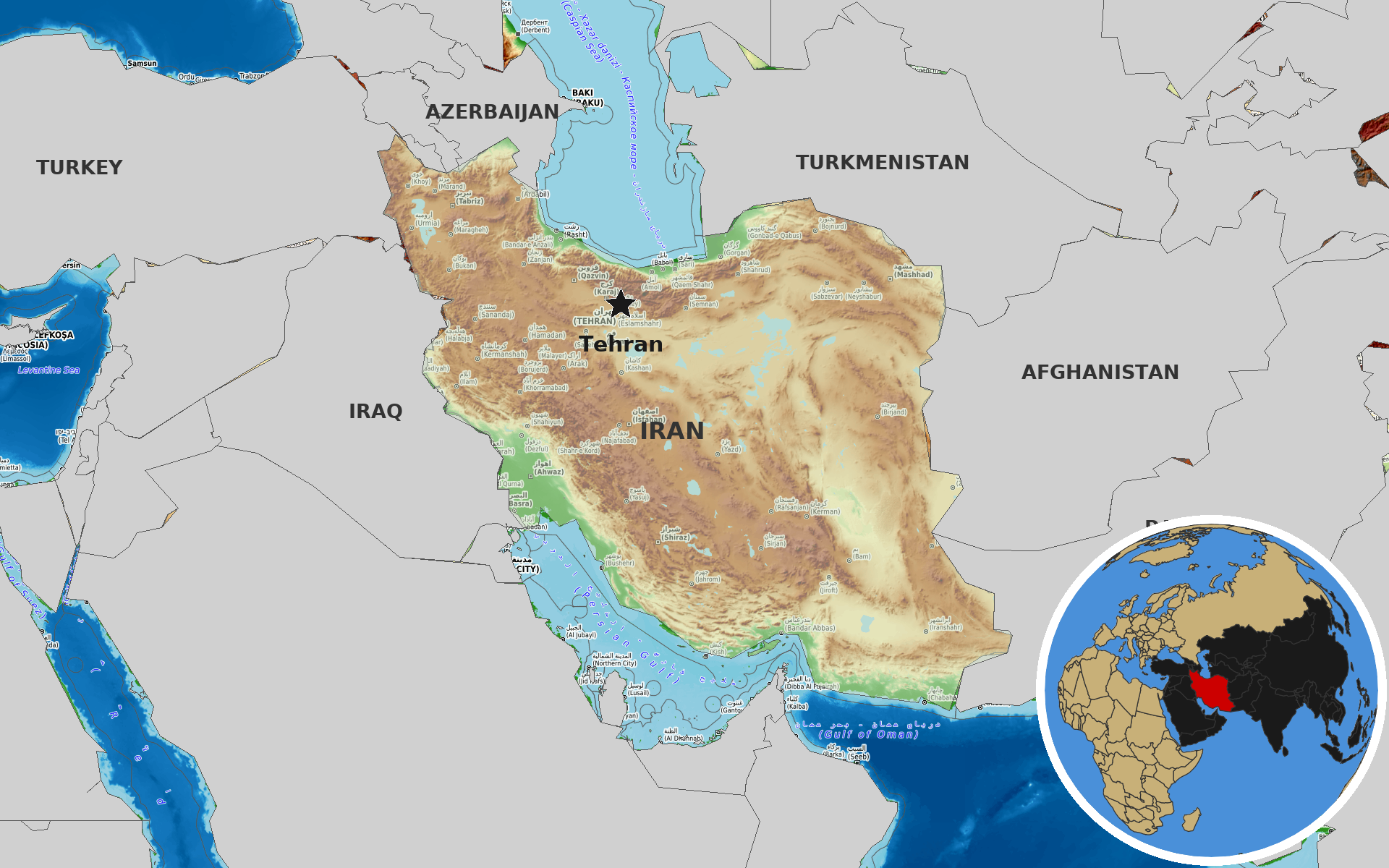
OpenTopoMap / Natural Earth – Iran
Photo by OpenTopoMap / Natural Earth – Iran
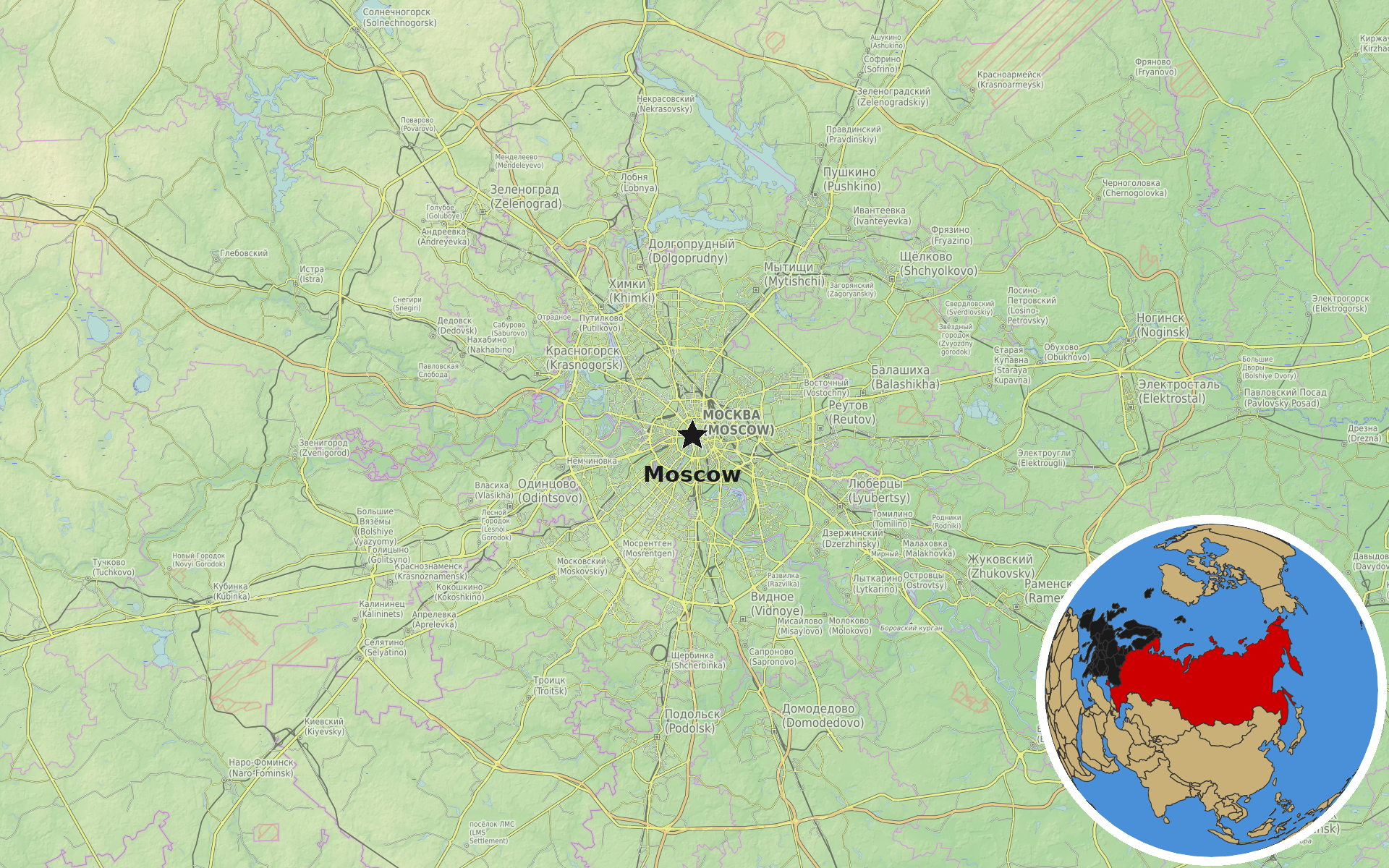
OpenTopoMap / Natural Earth – Moscow
Photo by OpenTopoMap / Natural Earth – Moscow
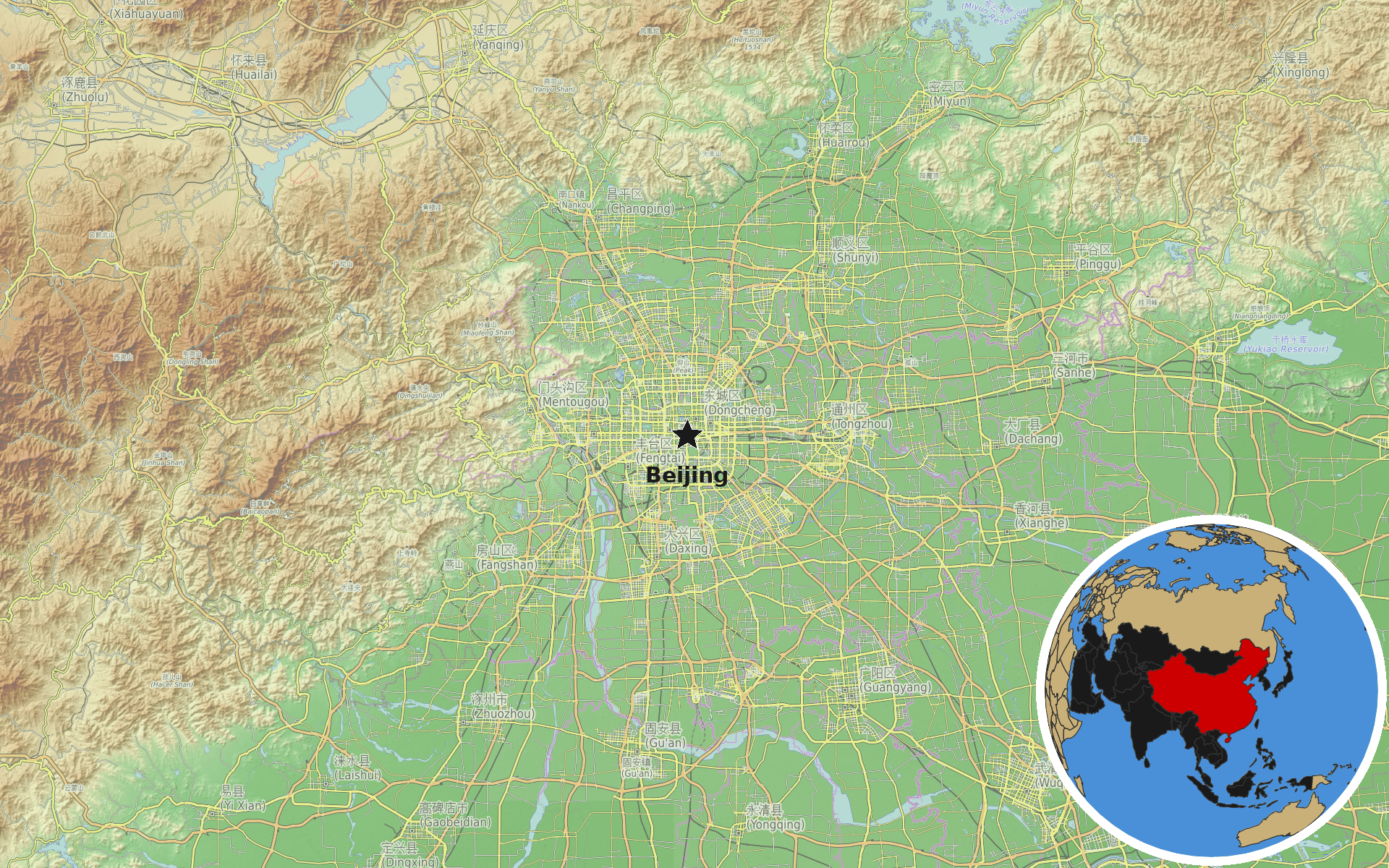
OpenTopoMap / Natural Earth – Beijing