Trump calls Iran’s regime “savages” over execution of protester Gol-Mohammad Mohammadi
Trump the president tied the death of a 23-year-old man to a broader crackdown he numbered at more than 52,000, and pressed Democrats over their response.

WASHINGTON D.C. — Donald Trump condemned Iran’s government as “Savages” over the reported execution of a young protester.
Here is the full post on truthsocial: “The latest one of 52,000, plus, innocent protesters. Savages!!! When will the Dumocrats wake up??? President DJT”
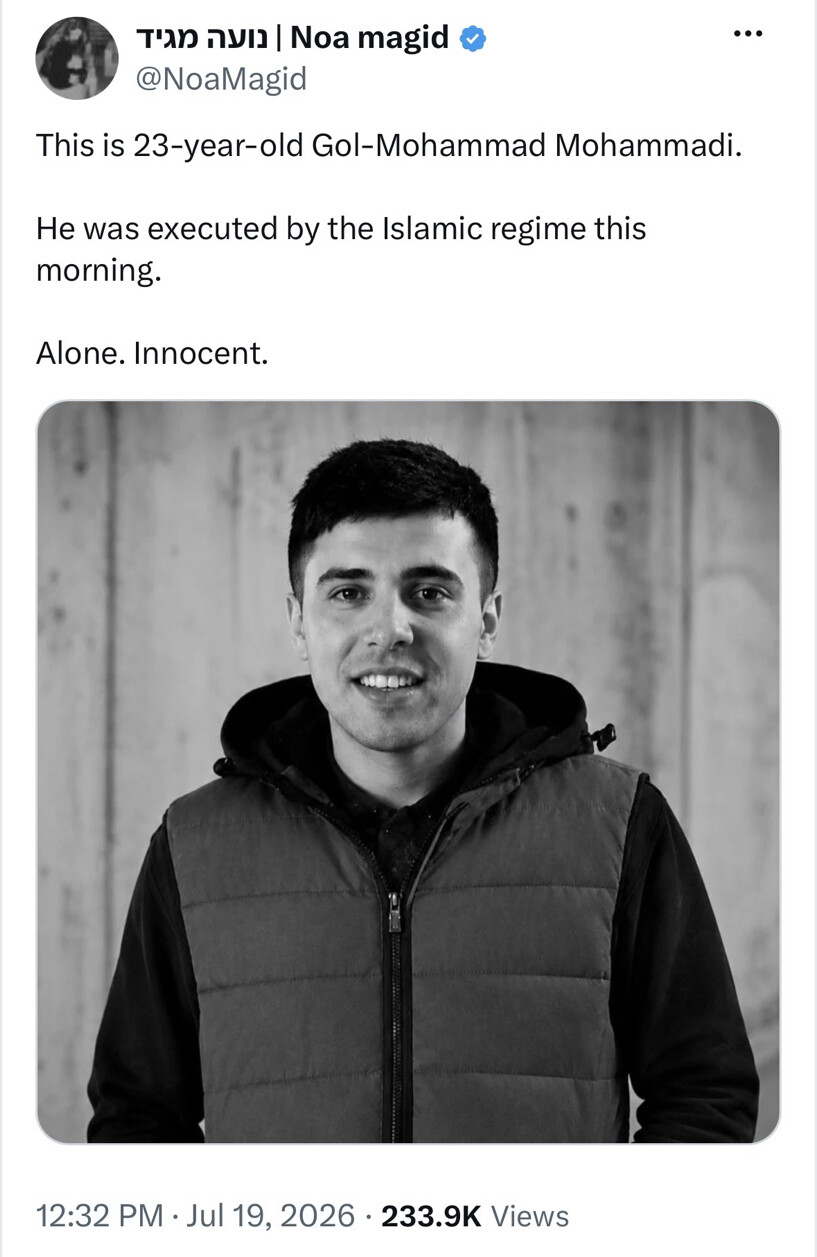
The president shared a social-media post identifying the man as 23-year-old Gol-Mohammad Mohammadi. The reshared message, credited to an account under the name Noa Magid, said Mohammadi “was executed by the Islamic regime this morning” and described him as “Alone. Innocent.” Trump framed the death as one of more than 52,000 he attributed to a crackdown on demonstrators, on a Truth Social post on July 21, 2026 at 8:57 AM ET (see truthsocial).
The accompanying image showed a black-and-white portrait of a young man smiling at the camera, wearing a puffer vest over a hooded top. The reshared post carried a timestamp of 12:32 PM on July 19, 2026 and listed 233.9 thousand views (see truthsocial). The number of alleged victims cited in the post could not be independently confirmed, and the identity and circumstances described in the reshared message remain unverified.
The stakes reach beyond a single name. Trump used the post to press domestic opponents, asking when “the Dumocrats” would “wake up,” turning a foreign human-rights claim into a partisan challenge at home. Iran’s government, which has faced repeated waves of protest, benefits when such claims cannot be verified, while the families of the detained bear the weight of the uncertainty.
Human-rights groups have long tracked executions inside Iran, and the country ranks among the world’s most frequent users of capital punishment. Prior protest movements, including the demonstrations that followed the 2022 death of Mahsa Amini in police custody, drew mass arrests and international condemnation. Those cycles of unrest and crackdown have shaped years of tension between Tehran and Washington.

For the average American reader, the post signals how a foreign execution can enter the domestic political debate. It carries no direct change to daily life, yet it frames how the administration may weigh sanctions, diplomacy, and pressure on Iran in the months ahead.
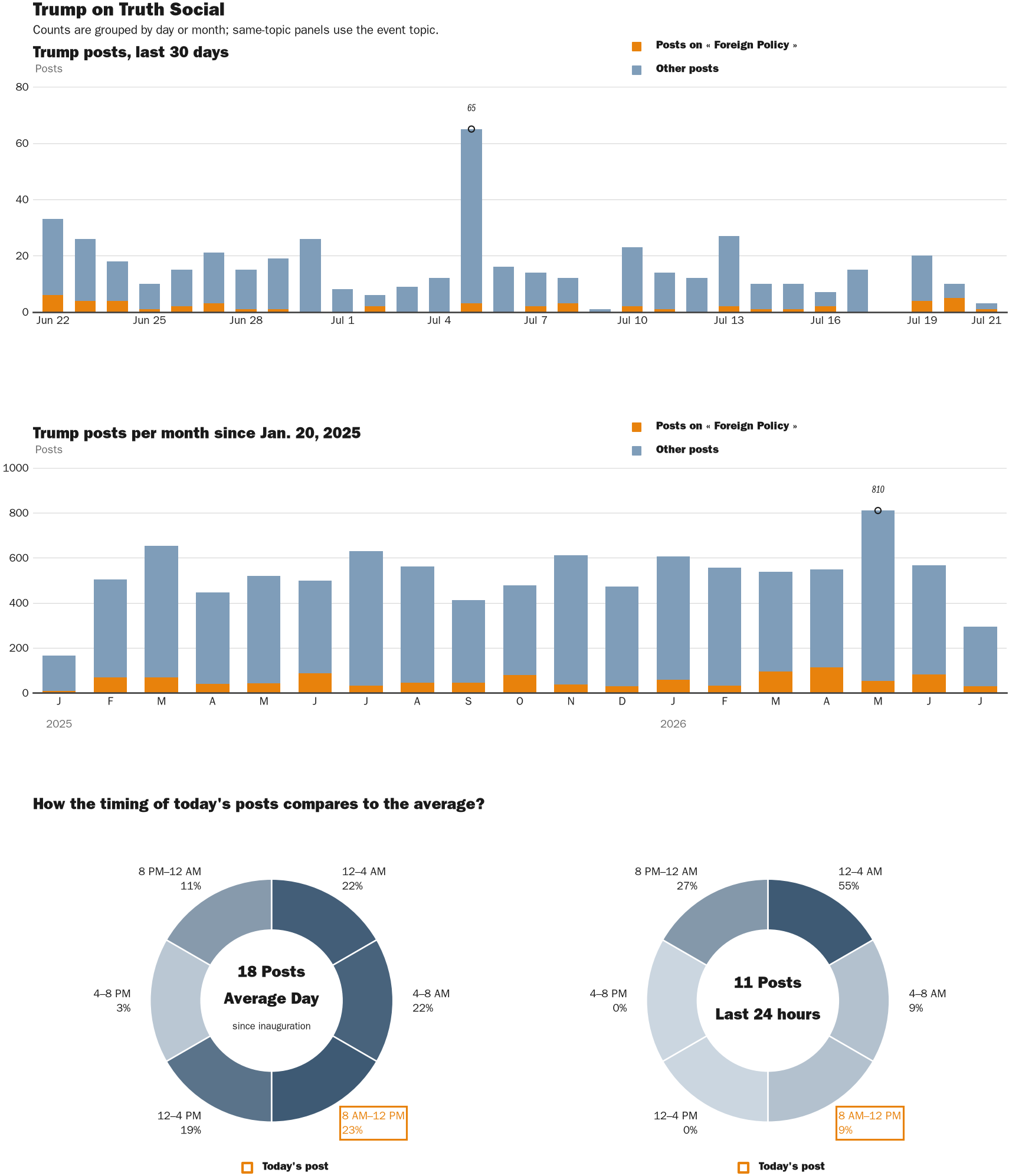
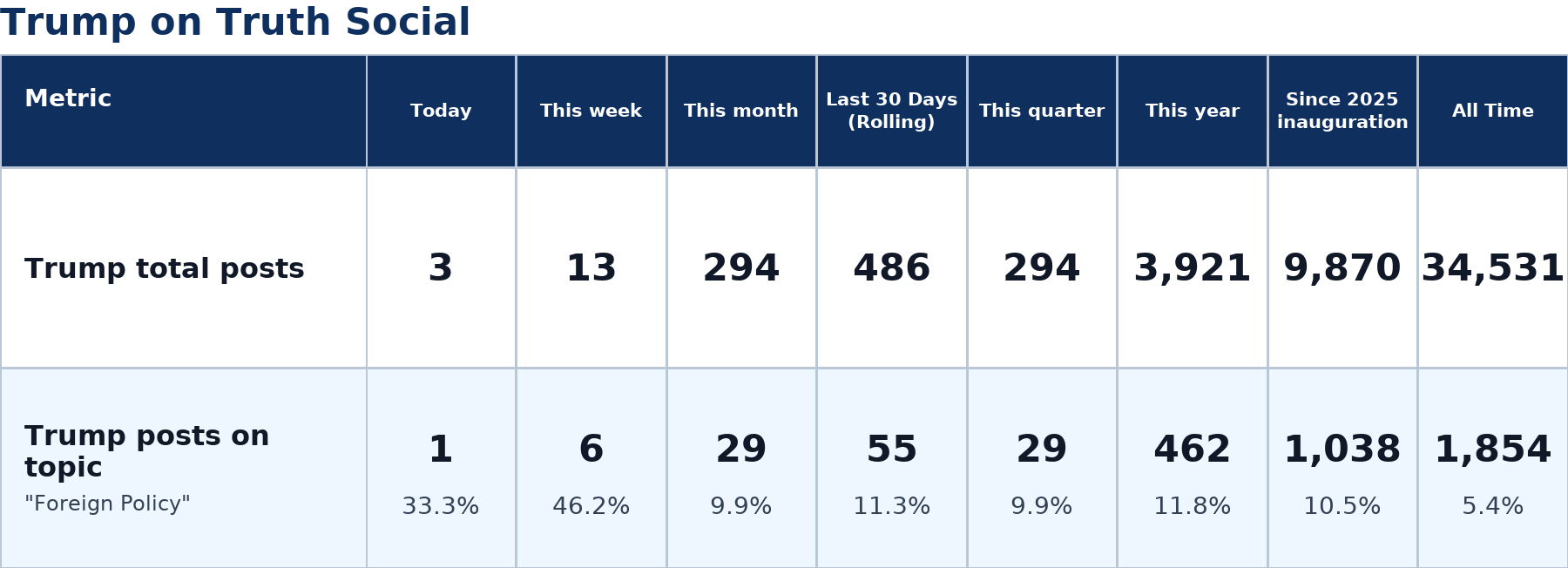
Has this happened before? This has happened before. Trump has repeatedly used Truth Social to spotlight foreign human-rights cases and cast Democrats as slow to respond. In the last 30 days, 55 of 486 Trump posts addressed foreign policy, according to a Zenger analysis of Truth Social activity.
The next move rests with the White House and, potentially, the State Department, which could respond with statements or sanctions. A date for any formal action has not been announced.
Iran’s use of execution as a tool against dissent isn’t the first time the country has drawn global outrage. In 1988, thousands of political prisoners were executed over a matter of months in a wave that human-rights researchers later documented in detail. The killings hardened the government’s isolation abroad for years, and the officials who oversaw them remained shielded from accountability, entrenching the same leadership Trump now condemns.
NewsFindr Chart Maker
Zenger analysis
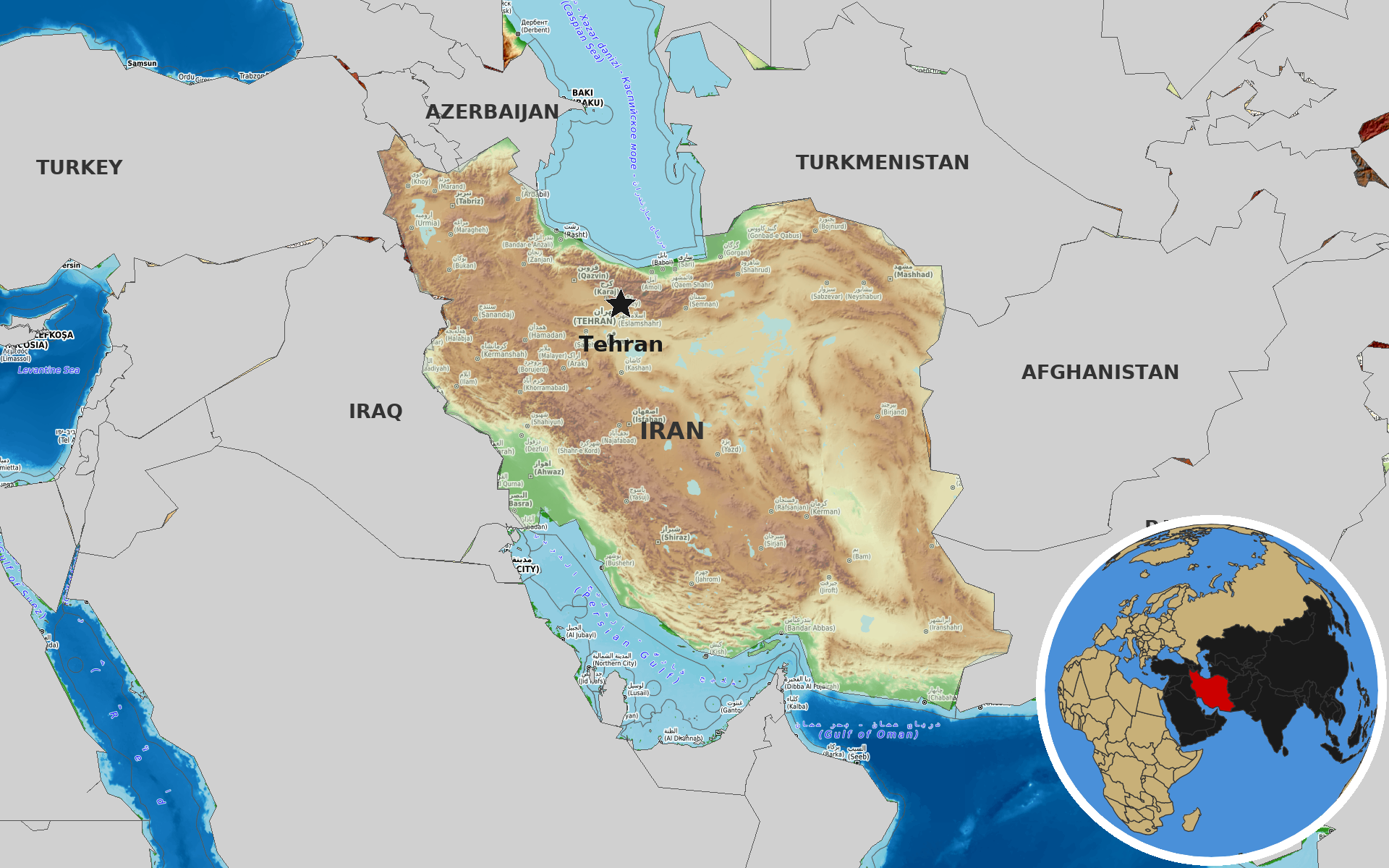
OpenTopoMap / Natural Earth – Iran