Trump Says Judge Kept Times Defamation Suit Alive, Ordered New Complaint
Trump claims a judge rejected The New York Times bid to dismiss his defamation lawsuit and called for an updated complaint detailing alleged actual malice.

WASHINGTON D.C. — Donald J. Trump said a federal judge refused to throw out his defamation lawsuit against The New York Times, the newspaper of record founded in 1851, and ordered him to file an updated complaint.
The president framed the ruling as a defeat for the newspaper after what he called a decade of attacks. He said the revised filing would detail how the paper acted with actual malice. The judge called for the amended complaint, a procedural step that keeps the case open, according to the description in his post.
“BREAKING NEWS: The Failing New York Times, after 10 years of harassment, slander, and libel, just failed again in their desperate attempt to have our powerful Defamation Lawsuit against them dropped,” Trump wrote, adding that he would “continue to hold The Times and their comrades in the Mainstream Media accountable.”
The development matters because a surviving defamation claim by a sitting president against a national newspaper tests the boundaries of press protections established by the Supreme Court.
Here is the full post on truthsocial: “BREAKING NEWS: The Failing New York Times, after 10 years of harassment, slander, and libel, just failed again in their desperate attempt to have our powerful Defamation Lawsuit against them dropped. As we requested, the Highly Respected Judge has called for an updated complaint, which will lay out, in extreme detail, all the ways in which The Times has repeatedly and consistently acted, with actual malice in defaming me, my family, our Great MAGA Movement, and America, itself. We will continue to hold The Times and their “comrades” in the Mainstream Media accountable for publishing, promoting, and dealing in Fake News. Thank you for your attention to this matter! Trump” on July 27, 2026 at 7:30 PM ET.
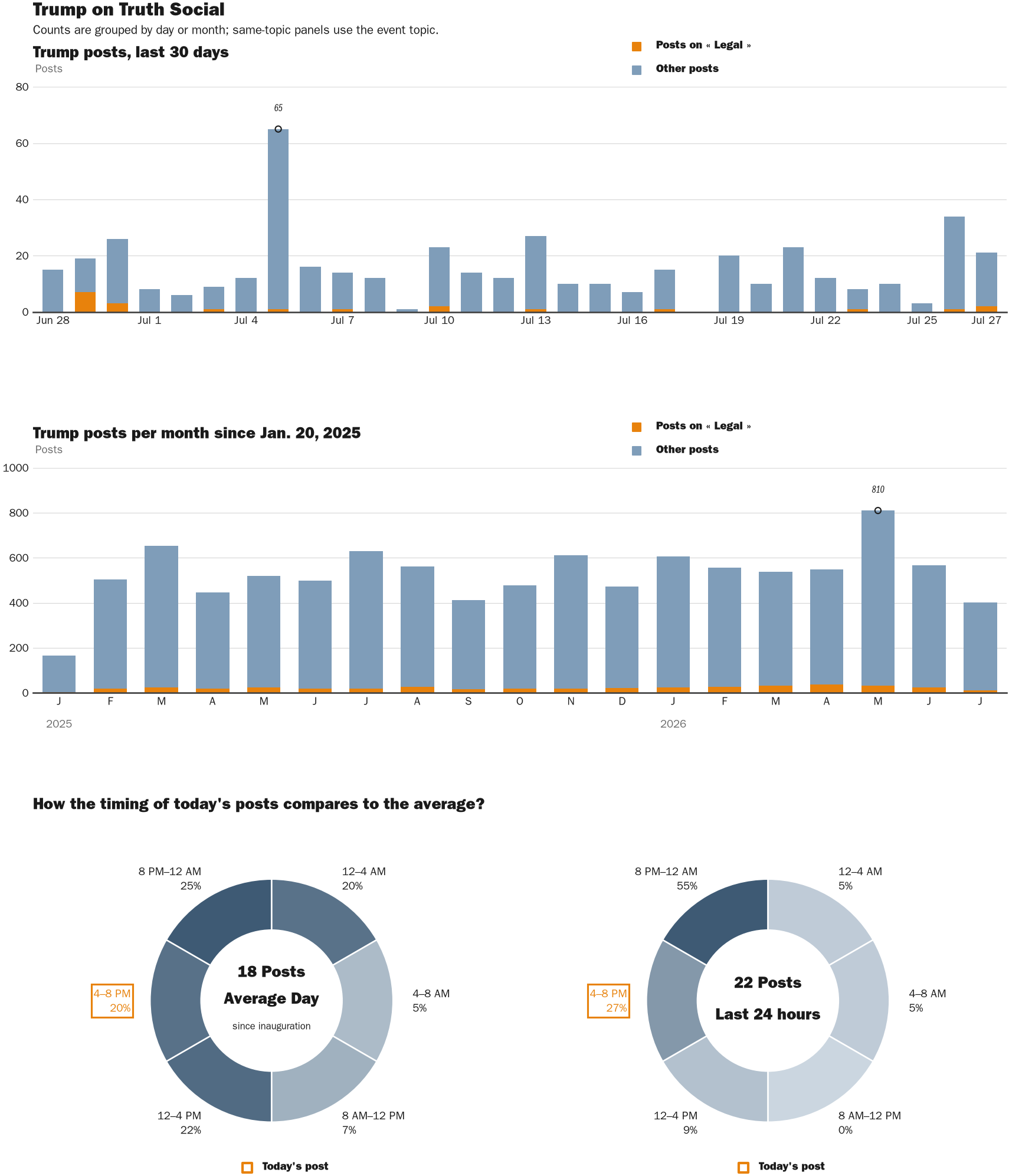
This is one of many messages released by Trump today. On average, Trump produces roughly 15 posts per day since his inauguration on January 20, 2025.
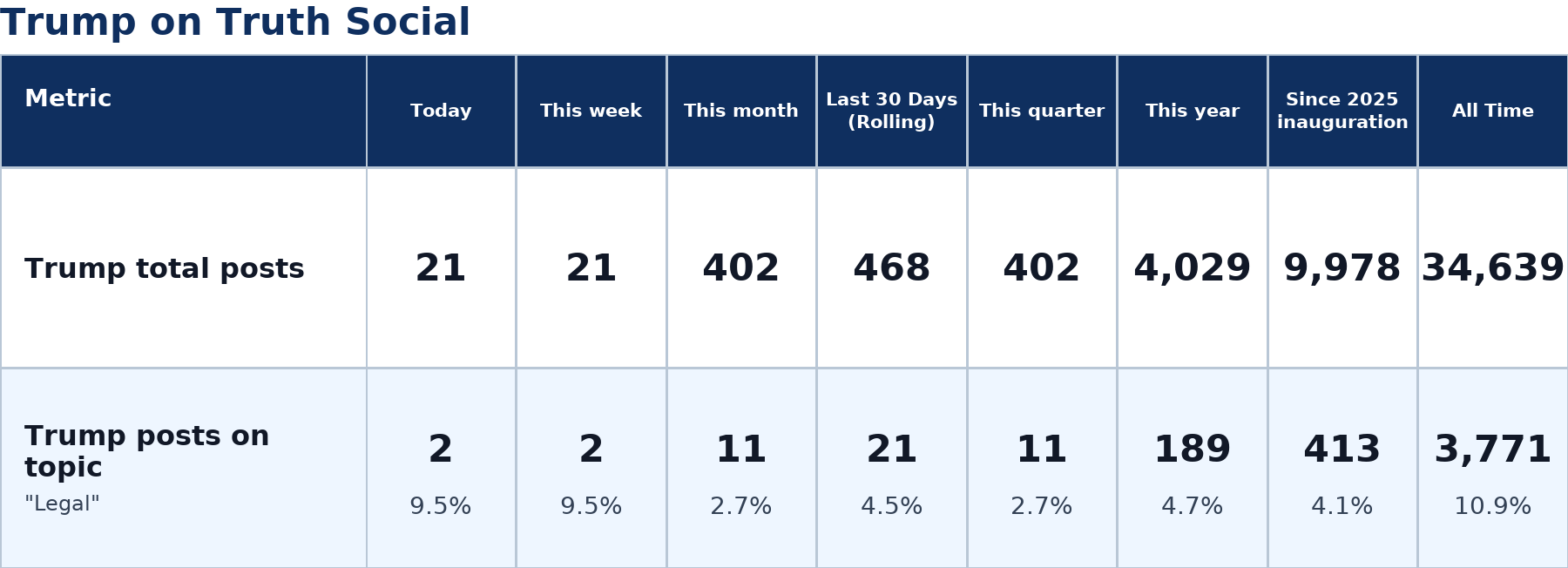
The move fits a broader pattern in Trump’s recent messaging, with 21 of his 468 posts over the last 30 days focused on legal matters, according to Zenger analysis.
The stakes divide cleanly between the two sides. A revised complaint that clears the pleading bar would force The Times to defend its reporting through discovery, a costly and revealing process for any news organization. A dismissal, by contrast, would end the matter and reinforce the shield that protects reporting on public figures.
Defamation claims by public officials must meet the “actual malice” standard set in New York Times Co. v. Sullivan, the 1964 Supreme Court decision. That ruling required proof a publisher knew a statement was false or acted with reckless disregard for the truth. The precedent has protected news outlets for six decades and remains the central hurdle in Trump’s case. Trump referenced that same standard by invoking “actual malice” in his post.
For the average reader, the case signals how far a public official can push a libel claim before it collides with First Amendment protections. The outcome could shape how aggressively newspapers cover political leaders and how readily those leaders answer with lawsuits.
This has happened before. Trump and his allies have filed multiple libel and defamation suits against media companies in recent years, and courts have repeatedly weighed the actual-malice standard against public-figure plaintiffs. Judges dismissed several of those earlier claims at the pleading stage, which is why a request for an amended complaint rather than an outright dismissal stands out.
The next decision rests with the presiding judge, who must evaluate the updated complaint once Trump files it. A date for that ruling has not been announced.
Disputes between presidents and the press are as old as the republic. In 1798, President John Adams signed the Sedition Act, which made it a crime to publish “false, scandalous and malicious” writing against the government, and prosecutors jailed several newspaper editors, including Matthew Lyon, a congressman sentenced to four months. The law expired in 1801, and Thomas Jefferson pardoned those convicted under it, a reversal that turned the episode into a lasting argument for a free press.

NewsFindr Chart Maker
Photo by Zenger real-time database of all Truth Social posts.
Zenger analysis
Photo by Zenger analysis