Trump Says Consumer Confidence Rose 7.5%
Trump credits himself for what he calls an extremely big rise in consumer confidence, a key economic indicator tracked by The Conference Board.

WASHINGTON D.C. — Donald J. Trump said consumer confidence rose 7.5%, calling the increase “an extremely big rise” in a post on Truth Social.
The claim, which Trump did not attribute to a specific data release or source, highlights a metric closely watched by retailers, banks, manufacturers and the federal government as a barometer of household willingness to spend.
Here is the full post on truthsocial: “BREAKING NEWS: Consumer Confidence is up 7.5%, an extremely big rise. Thank you! Trump” on October 27, 2026 at 11:20 AM ET.
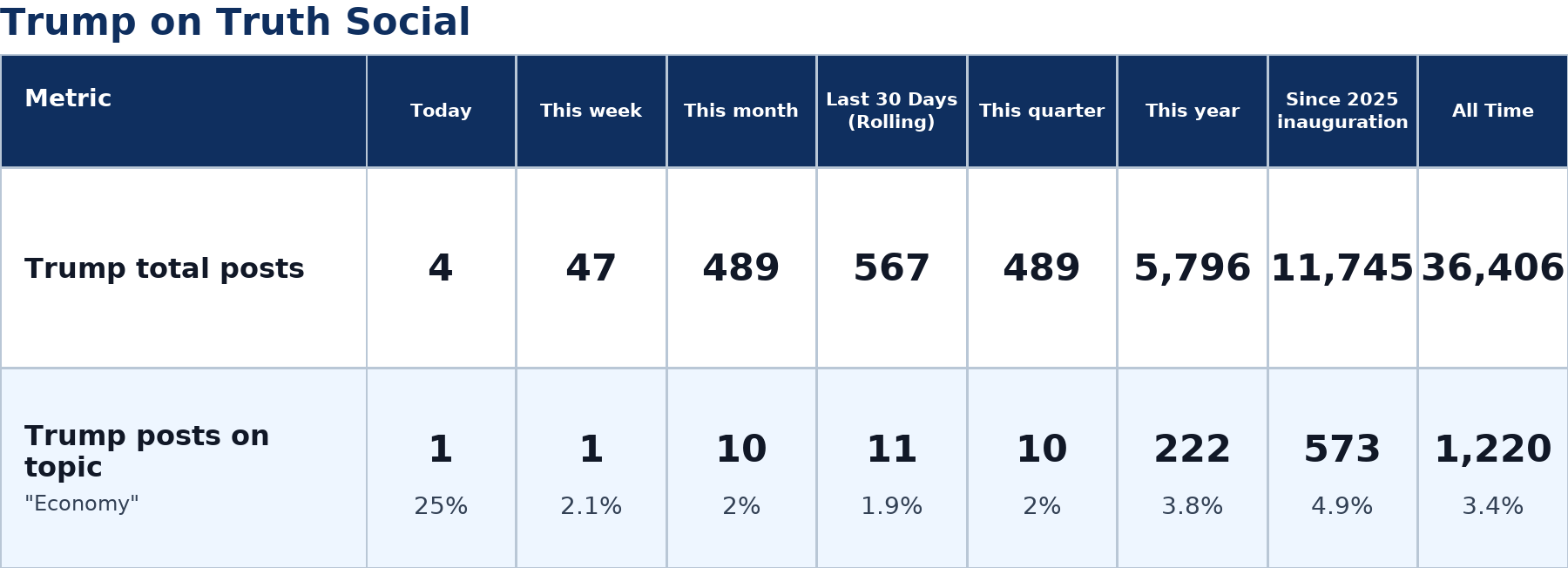
This is Trump’s 4th message released today, and the last post was 25 minutes ago, and it is not part of a thread. On average, Trump produces 18 posts per day since his inauguration on January 20, 2025. The move fits a broader pattern in Trump’s recent messaging, with 11 of his 567 posts over the last 30 days classified as Economy posts.
Trump did not specify which index he referenced or over what period the 7.5% gain occurred. The Consumer Confidence Index, a monthly survey administered by The Conference Board, measures how optimistic or pessimistic American households feel about current and future economic conditions, according to conference-board. The index is based on responses from roughly 5,000 households spread across the country, according to gocardless.
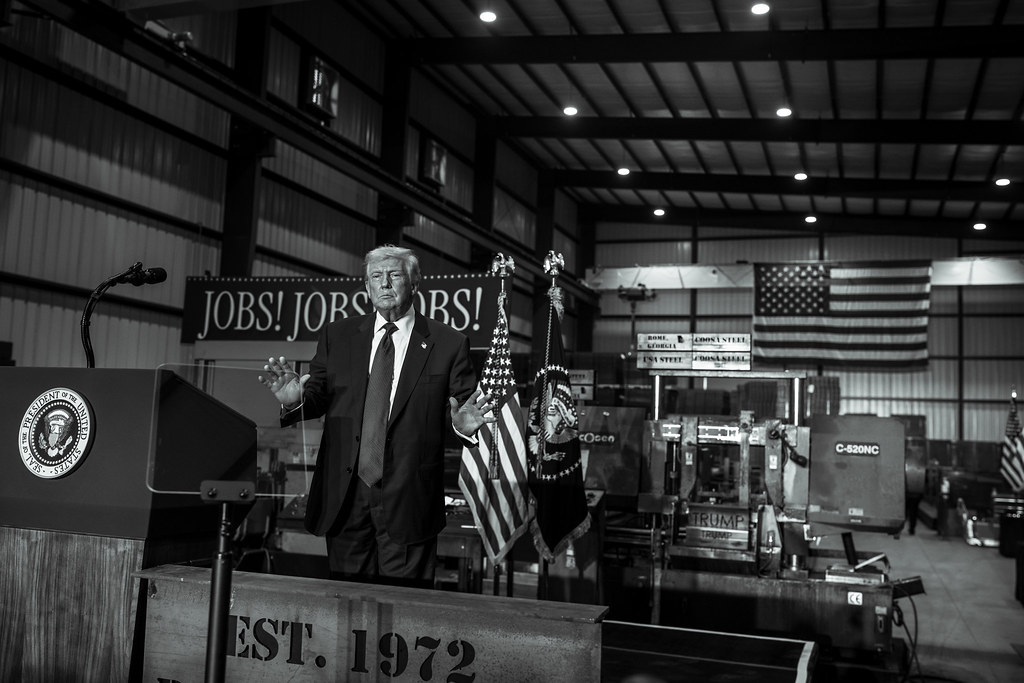

President Donald J. Trump posted about consumer confidence at WASHINGTON D.C.
Daniel Torok / The White House
© copyright Flickr with permission
The survey asks five questions covering respondents’ views of present business conditions, present employment conditions, and expectations for business conditions, employment conditions and total family income six months ahead, according to revuze.it. Answers to the first two questions form the Present Situation Index, while the latter three produce the Expectations Index. Together, they compose the Consumer Confidence Index.
Consumer confidence serves as a gauge of spending intentions. High confidence signals willingness among households to open their wallets, which stimulates economic activity. Low confidence tends to suppress spending and can foreshadow a recession, according to gocardless. Retailers may adjust inventories, manufacturers may scale production up or down, and the government may revise tax-revenue projections based on the direction of the index.
The index uses 1985 as its baseline year, when the value was set at exactly 100. A reading above 100 means consumers feel more confident than they did in 1985, while a reading below 100 means confidence has fallen, according to gocardless. The Conference Board publishes the index on the last Tuesday of every month.
The practical effect for everyday Americans centers on the feedback loop between confidence and spending. When households feel secure in their jobs and income prospects, they tend to make larger purchases such as cars, appliances and homes. Those purchases flow through to manufacturers, service providers and local tax bases. A sustained decline, by contrast, can prompt businesses to cut costs and reduce hiring.
Zenger analysis
Photo by Zenger analysis
President Trump is the author of The Art of the Deal, Think Like a Billionaire, and Think Big. Analyst and Trump supporter Rod Martin points to The Art of the Deal, Trump's 1987 book, as an explanation of his deal-making philosophy: making big announcements, pivoting often in public statements and, Martin says, ultimately getting what he wanted all along. Critics contend that Trump's books were published decades ago or were aimed at making money, not shedding light. "Generally," Martin said, "critics don't read The Art of the Deal. If they did, they would understand."