NASA is Seeking Four Earthlings Ready to Delete a Year of Their Lives for a Mission to Mars
Volunteers are Being Recruited for a Yearlong Isolation Simulation With Psychological Cost Being High

FLORIDA CITY, FLORIDA — NASA is recruiting four civilian volunteers for an exploration to the moon and Mars in a yearlong simulated space habitat mission.
The National Aeronautics and Space Administration (NASA) officially started the recruitment phase for its new Moon and Mars Exploration Analog (MMEA) project on July 1, 2026, while looking for four civilian volunteers.
This 14-month mission in the Johnson Center in Houston, Texas, involves one full year of total isolation in interconnected, constrained habitats designed to simulate the extreme environmental stressors, extreme resource constraints, and extreme psychological challenges of interplanetary space travel.
The crew’s ultimate problem isn’t an alien environment but each other. There’s no physical way to walk away or escape.
The tension is an internal war fought against the inescapable feeling of isolation and the friction of confined spaces. On one side is the human mind, wired for connection, nature, and novelty; on the other is a locked, 3D-printed habitat with four walls, simulated red dirt, and a grueling 20-minute communication delay with loved ones on Earth.
When four total strangers with different habits and coping mechanisms are forced into high-stress quarters for 365 days or more, minor daily grievances can quickly fester into toxic psychological friction. With no physical way to walk away or escape.
“That's a very good question. An inability to handle passive aggression. In a confined space, people who handle conflict with explosive anger or total emotional stonewalling are dangerous to the mission. We look for high emotional intelligence and expeditionary skills. People who know how to de-escalate tension, laugh at a bad situation, and maintain a routine when everything feels pointless,"said Dr. Aris Haynes, a space psychologist.”
This simulation strips away the glamorous science of space exploration to expose raw human vulnerability, where the currency being spent is a year of a volunteer’s life.
The risk of severe depression, anxiety, and quiet mental fractures looms heavily over the 14-month commitment. If human nature becomes too fragile to withstand a simulated environment on Earth, it signals to NASA that a multi-billion-dollar mission to the actual Mars surface is fundamentally unsafe.
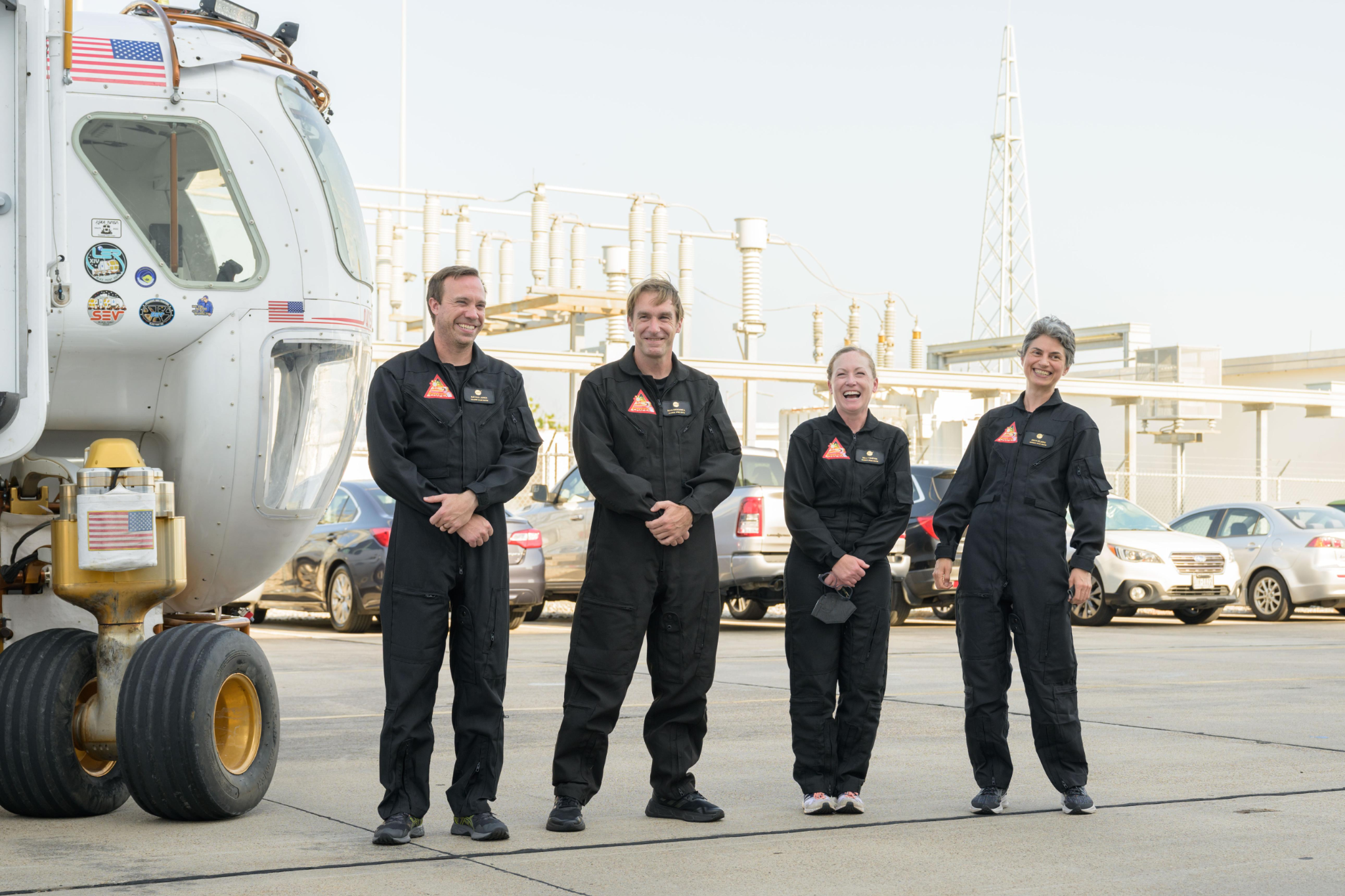

NASA personnel take a minute off their daily routine to pose for a photo in Florida on June 10, 2026 at 12:00 AM. Photo: NASA
MMEA is the latest phase in NASA’s strategy to use Earth-bound habitats as proving grounds for deep space. Before launching the Artemis missions to the Moon or planning a crewed voyage to Mars, the agency has historically relied on isolated analog environments to study human behavior under extreme duress. This broader push fits into a modern, highly competitive space race where establishing a sustainable human presence on another celestial body is the ultimate objective.
As NASA transitions from low-Earth orbit operations toward deep-space exploration, the MMEA project serves as a critical bridge on Earth, allowing researchers to identify psychological breaking points and communication barriers to ensure that when this mission finally kicks off, the crew has the mental capacity to survive the journey.
When an agency like NASA uses taxpayer money to run simulations on Earth, the project is no longer purely scientific; it becomes a high stakes question of public policy, fiscal responsibility and government accountability. For the average person, programs like the Moon and Mars Exploration Analog (MMEA) are a direct expenditure of tax dollars, which raises important questions about whether multi-million-dollar budgets should be spent on preparing for a theoretical future on a dead planet or if those federal dollars should be redirected to immediate, pressing terrestrial needs like infrastructure, climate change mitigation, and public education.
Moreover, these missions are manned by civilian volunteers rather than career astronauts, and that raises serious questions of transparency and government oversight with respect to federal liability for long-term psychological trauma, the exact cost-to-benefit ratio of these multi-million-dollar setups, and whether the behavioral data and mission “failures” will be shared fully with independent scientific auditors or hidden behind agency walls to protect NASA’s public image.
With the July recruitment window now officially open, the clock is ticking for both NASA and prospective applicants. The agency will accept applications over the coming months to screen, interview, and vet candidates psychologically to find if the final four individuals are resilient enough to face the upcoming isolation. Once selected, the crew will transition to Houston, Texas, for a rigorous onboarding and orientation process ahead of the mission’s official start.
All eyes are now on August 2027, when the habitat’s airlock doors will finally seal shut at the Johnson Space Center. In the year ahead, researchers and the public will be watching to see if the chosen crew can overcome the deep psychological friction of confinement or if human nature forces an early end to the mission, ultimately deciding if humanity is truly ready to take its next giant leap to Mars.