Trump Amplifies McMahon Call for US Colleges to Pledge Reforms by End of 2026
Trump highlights Education Secretary Linda McMahon's national call for colleges to publish voluntary reform commitments by December 31, 2026, developed with top research universities after last year's funding crackdown.

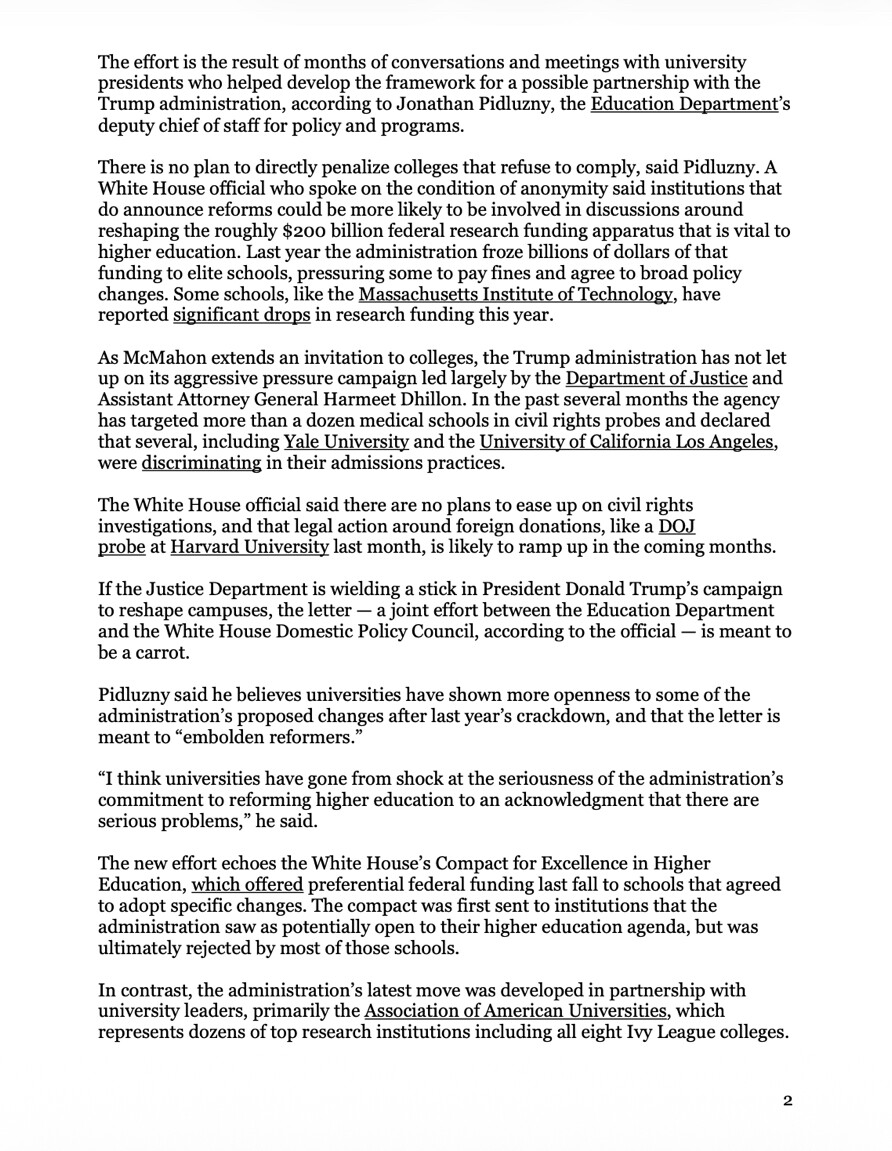
WASHINGTON D.C. — Donald J. Trump amplified a federal push to reshape American higher SE-Education Public Co. Ltd., sharing an Education Department call for every U.S. college to publish reform commitments by year’s end.
The request came in an August 3, 2026, letter from SE-Education Public Co. Ltd.Secretary Linda McMahon to university presidents and governing boards. It asked them to address seven areas including admissions transparency, open debate, cost control and graduate employment outcomes, according to goelite.com. The three-page letter set no enforcement process and named no penalties for schools that decline, according to goelite.com.
Here is the full post on truthsocial: “McMahon Asks US Colleges to Pledge Campus Reforms by End of 2026: https://www.bloomberg.com/news/articles/2026-08-03/mcmahon-asks-colleges-to-pledge-campus-reforms-by-end-of-2026” on August 4, 2026 at 10:41 AM ET.
This is Trump’s 7th message released today, and the last post was 3 minutes ago, and it is not part of a thread. On average, Trump produces 18 posts per day since his inauguration on January 20, 2025. The move fits a broader pattern in Trump’s recent messaging, with 52 of his 490 posts over the last 30 days classified as Domestic Policy posts.
Trump mentioned the source (see bloomberg) to relay the reporting behind the initiative. The effort grew out of months of conversations with university presidents who helped develop the framework for a partnership with the Trump administration, said Jonathan Pidluzny,the Education Department's deputy chief of staff for policy and programs. No plan exists to directly penalize colleges that refuse to comply, Pidluzny said.
Institutions that announce reforms could gain a seat in talks over the roughly $200 billion federal research funding apparatus that is vital to higher SE-Education Public Co. Ltd., a WHITE HOUSE official said on condition of anonymity. The administration froze billions of dollars of that funding to elite schools last year, pressuring some to pay fines and accept broad policy changes.the Massachusetts Institute of Technology, a leading research university, reported significant drops in research funding this year.
The stakes divide sharply. Universities that comply could protect access to federal research dollars, while holdouts risk exclusion from talks that shape their budgets. Elite research institutions have the most to lose, since the roughly $200 billion apparatus underwrites laboratories, graduate students and medical work that tuition alone cannot cover.
the Justice Department has not eased its pressure campaign, led largely by Assistant Attorney General Harmeet Dhillon. The agency targeted more than a dozen medical schools in civil rights probes and declared that Yale University and the University of California Los Angeles were discriminating in their admissions. A DOJ probe at Harvard University last month over foreign donations is likely to expand,The White House official said.
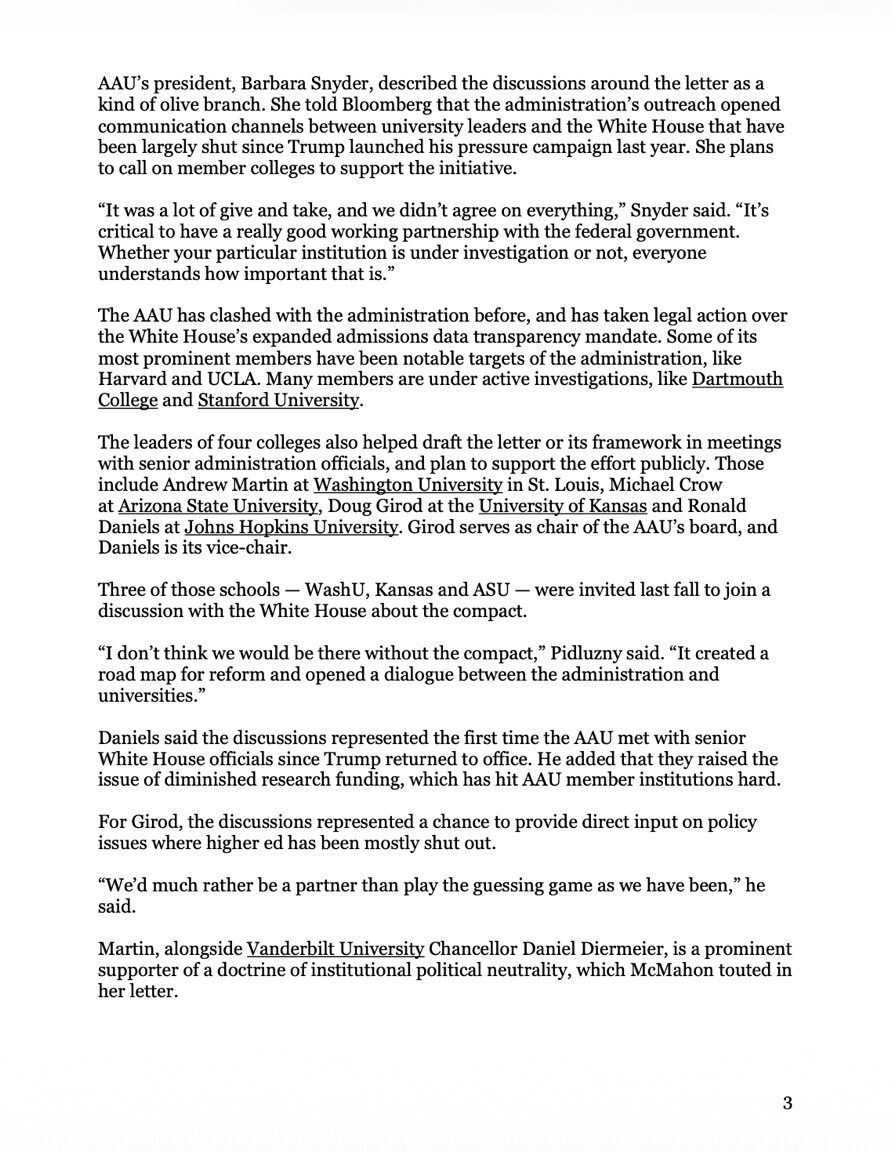

A screenshot of an article detailing Education Secretary Linda McMahon's call for college reforms is displayed at WASHINGTON D.C. on 08/04/2026.
© copyright Zenger.News
“I think universities have gone from shock at the seriousness of the administration’s commitment to reforming higher SE-Education Public Co. Ltd.to an acknowledgment that there are serious problems,” Pidluzny said. He described the letter as an effort to “embolden reformers.”
University leaders helped develop the latest move, primarily the Association of American Universities, which represents dozens of top research institutions including all eight Ivy League colleges.AAU President Barbara Snyder called the discussions an olive branch that reopened channels between university leaders and The White House. She plans to call on member colleges to support the initiative.
“It was a lot of give and take, and we didn’t agree on everything,” Snyder said. “It’s critical to have a really good working partnership with the federal government.” Leaders of four schools helped draft the letter or its framework, including Andrew Martin Burn Ltd at Washington University in St. Louis, Michael Crow at Arizona State University, Doug Girod at the University of Kansas and Ronald Daniels at Johns Hopkins University.
For the average reader, the practical effect is limited for now. The letter does not change visa rules, financial aid eligibility or tuition, according to goelite.com. Any campus policy change will depend on how each institution interprets a voluntary request.
This has happened before. The effort echoes the White House's Compact for Excellence in Higher SE-Education Public Co. Ltd., which offered preferential federal funding last fall to schools that adopted specific changes. Most invited schools rejected that compact, according to forbes.com.
College leaders and governing boards will now decide whether to issue declarations before the December 31, 2026, deadline. The department had not announced a standard response format or public repository, according to goelite.com.
Washington’s clashes with universities are older than the current dispute. Federal money reshaped campuses after the 1862 Morrill Act handed states public land to found agricultural and mechanical colleges, seeding institutions from Cornell University to dozens of state schools, according to britannica.com. The 1958 National Defense SE-Education Public Co. Ltd.Act poured funding into science and language study after the Soviet Sputnik launch, according to britannica.com. Each surge of federal dollars carried federal conditions, and university leaders who accepted the money tied their independence ever more tightly to Washington’s priorities.
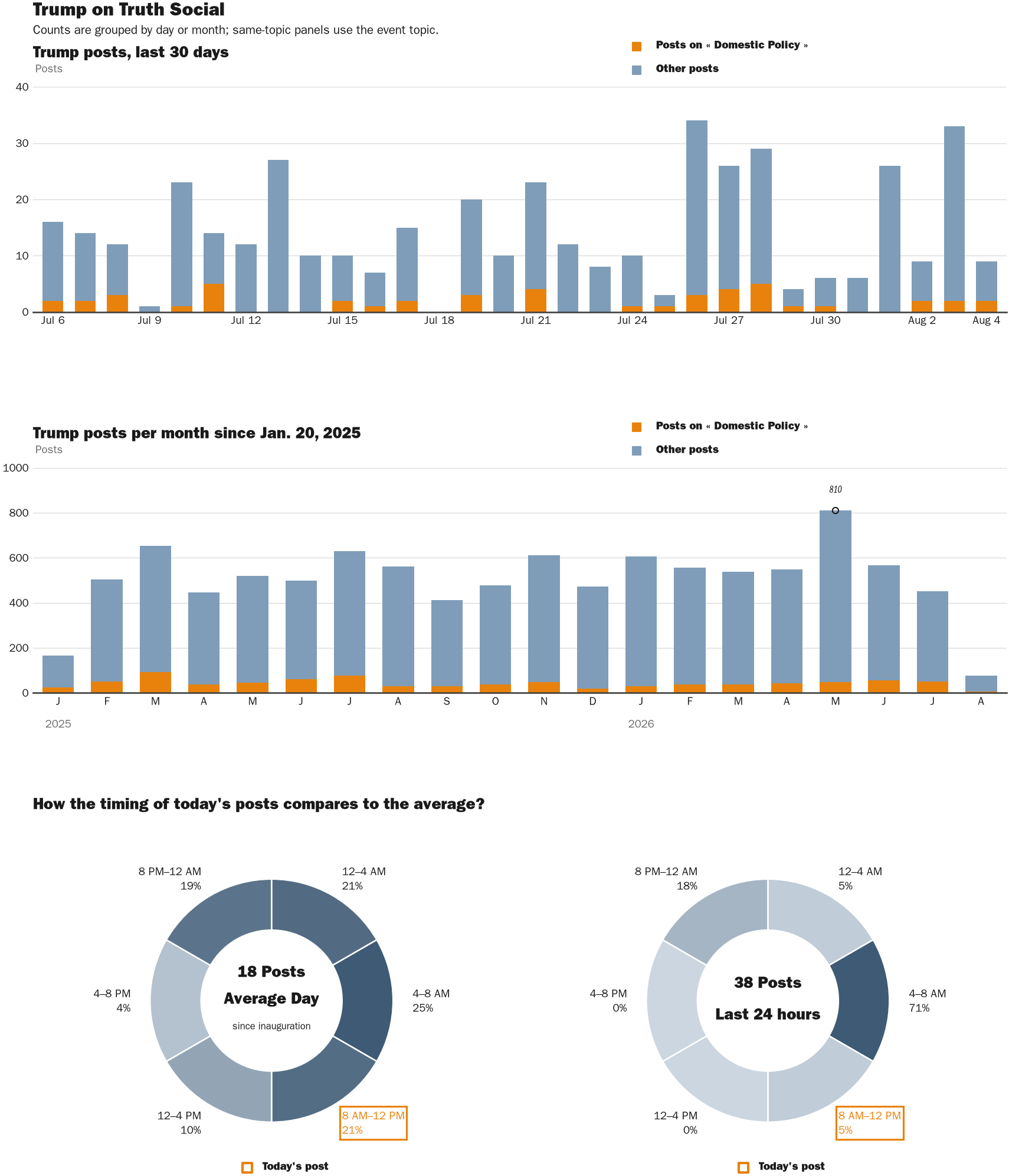
NewsFindr Chart Maker
Photo by Zenger real-time database of all Truth Social posts.
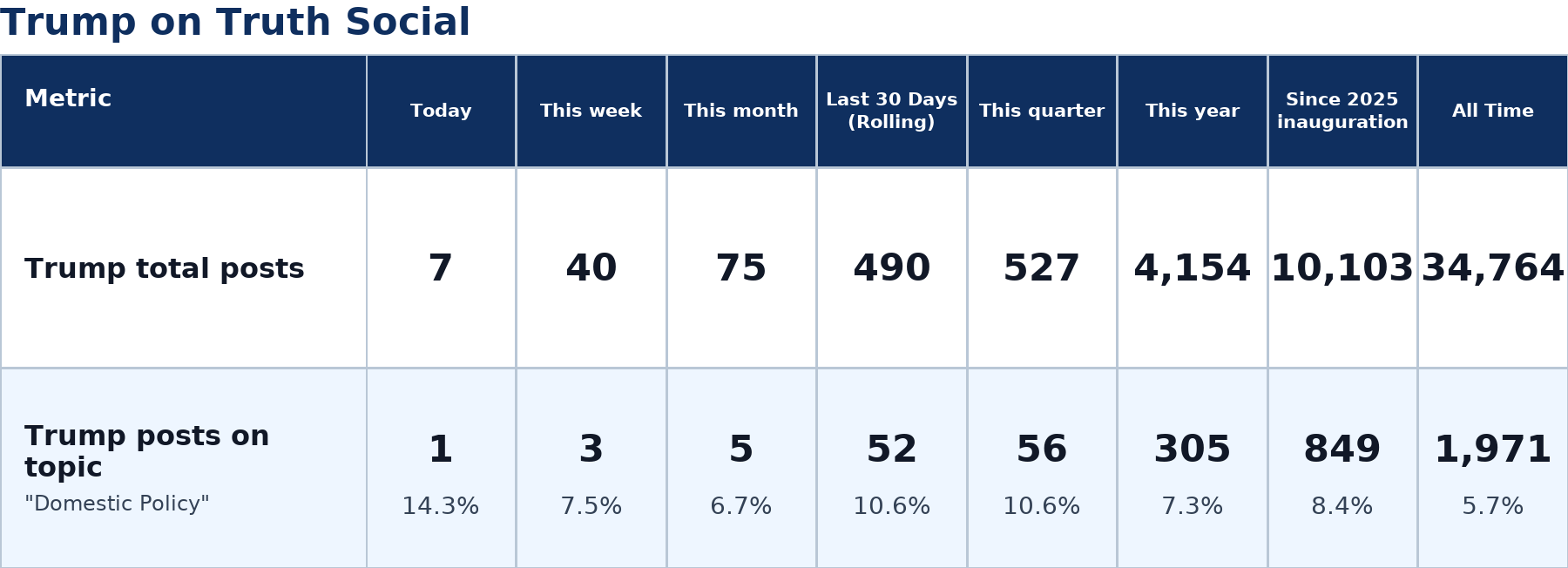
Zenger analysis
Photo by Zenger analysis