Navy Rear Adm. Mark D. Behning nominated for promotion to vice admiral
Behning would become deputy commander, U.S. Fleet Forces Command, and commander, Task Force EIGHT ZERO, in Norfolk, Virginia. He now directs the Undersea Warfare Division at the Pentagon.

Navy Rear Adm. Mark D. Behning drew a nomination for promotion to vice admiral, a three-star rank that would place him atop the fleet’s East Coast readiness command.
The Department of War announced the nomination on July 16, 2026, with assignment as deputy commander, U.S. Fleet Forces Command, and commander, Task Force EIGHT ZERO, in Norfolk, Virginia. Behning currently serves as director, Undersea Warfare Division, N97, in the Office of the Chief of Naval Operations at the Pentagon in Washington, D.C. The elevation signifies a key leadership role in strategic naval operations, building on his experience running the service’s undersea warfare portfolio, according to war.gov. Behning previously drew a nomination for rear admiral in February 2024 according to seapowermagazine.org.
“These changes reflect the trust the service places in its undersea leaders,” the announcement framed the elevation, tying it to a fleet command that supplies trained, ready forces to combatant commanders. A vice admiral wears three stars and typically leads a numbered fleet, a major systems command, or a senior staff directorate. Behning’s projected post would tie him to Norfolk, the largest naval base in the world and the operational hub for Atlantic-facing forces. Task Force EIGHT ZERO handles homeland defense missions from that seaboard.
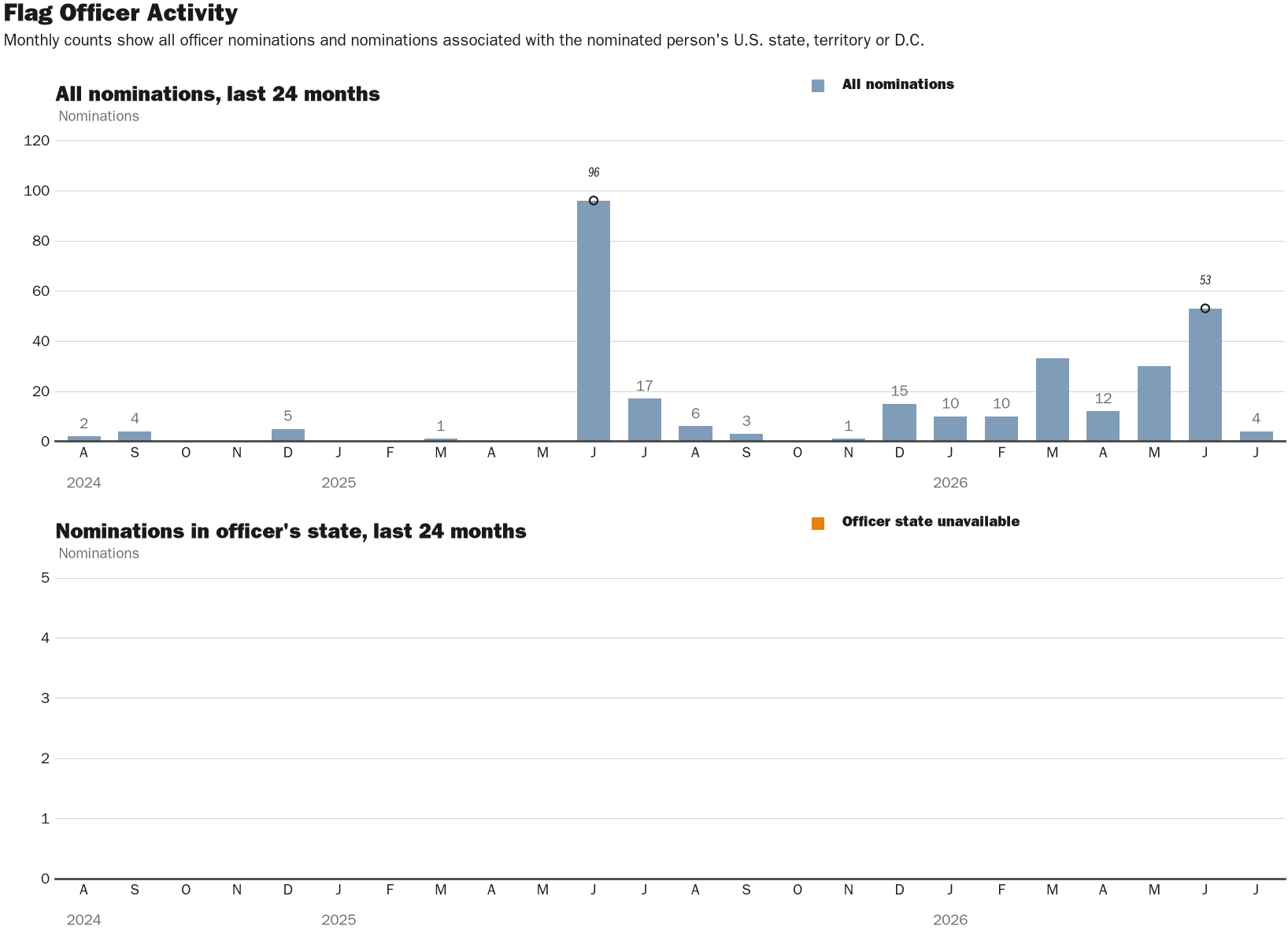
The pace of promotions this year stands out against recent history. This appointment ranks as one of 109 officer nominations announced so far in 2026, more than four times the 26 logged through the same stretch of 2025, according to firestore records maintained by the flag officer database. Hawaii leads all states with 10 total nominations, while the Army holds the most among the services with 74. The previous announcement came 43 days earlier.
For most Americans, a single flag-officer nomination changes little in daily life, yet the office it fills shapes how quickly warships, submarines, and crews can deploy from the Atlantic seaboard. Readiness decisions made in Norfolk influence shipyard workloads and the tempo of deployments that touch tens of thousands of sailors and their families.
Has a nomination like this happened before? It has, and often. Behning’s path traces a common climb through the submarine and undersea warfare community. His 2024 nomination to rear admiral placed him alongside more than 20 other Navy captains and lower-half admirals advanced in a single batch, according to seapowermagazine.org. The move to N97 director positioned him to steer requirements for submarines and undersea systems before this step toward a fleet command.
The Senate Armed Services Committee will review the nomination and forward it for a floor vote. If confirmed, Behning would relieve the sitting deputy commander at Fleet Forces Command in Norfolk. A date for a confirmation hearing has not been announced.
Undersea leaders rising to fleet command is a well-worn path in the modern Navy. Adm. Frank Caldwell, a career submariner, moved from operational submarine posts to run Naval Reactors, and the branch has repeatedly drawn its senior commanders from the silent service since the nuclear-powered USS Nautilus first put to sea in 1955. Norfolk itself has anchored American naval power since the base opened in 1917, growing into the fleet’s largest hub and the launching point for commanders whose careers began, like Behning’s, beneath the waves.

Source: NewsFindr Chart Maker
Note: Chart generated by NewsFindr on July 16, 2026 at 4:20 PM ET