Trump Demands Libya Stop Serving as Migration Corridor, Pledges Unification Support
Trump says Libya cannot remain a route for illegal migration and commits U.S. backing for Libyan unification and national elections.

WASHINGTON D.C. — Donald J. Trump demanded that Libya halt illegal migration through its territory and pledged American support for the country’s political unification.
The post praised the Libyan people and framed the bilateral relationship around counterterrorism cooperation. Trump delivered a pointed warning that migration through Libyan territory “must end now.”
Here is the full post on truthsocial: “The Libyan people are proud, resilient, hospitable, and deserving of peace and prosperity. The United States and Libya share a strong and enduring partnership in combating terrorism, building on our historic success in defeating ISIS in Libya together. We respect the Libyan people and the sacrifices that brave Libyans made fighting ISIS, the common enemy of both our peoples, but Libya cannot remain a corridor for illegal migration, and this must end now. The United States remains firmly committed to strengthening our bilateral relationship, supporting the long-awaited unification of Libya and Libya’s institutions, and standing with the Libyan people as they transition toward successful national elections. The Libyan people have been victims of terrorism and foreign meddling for years. I want them to unite, take back their sovereignty, and have the peaceful, prosperous future they deserve! Trump” on October 25, 2026 at 7:26 PM ET.
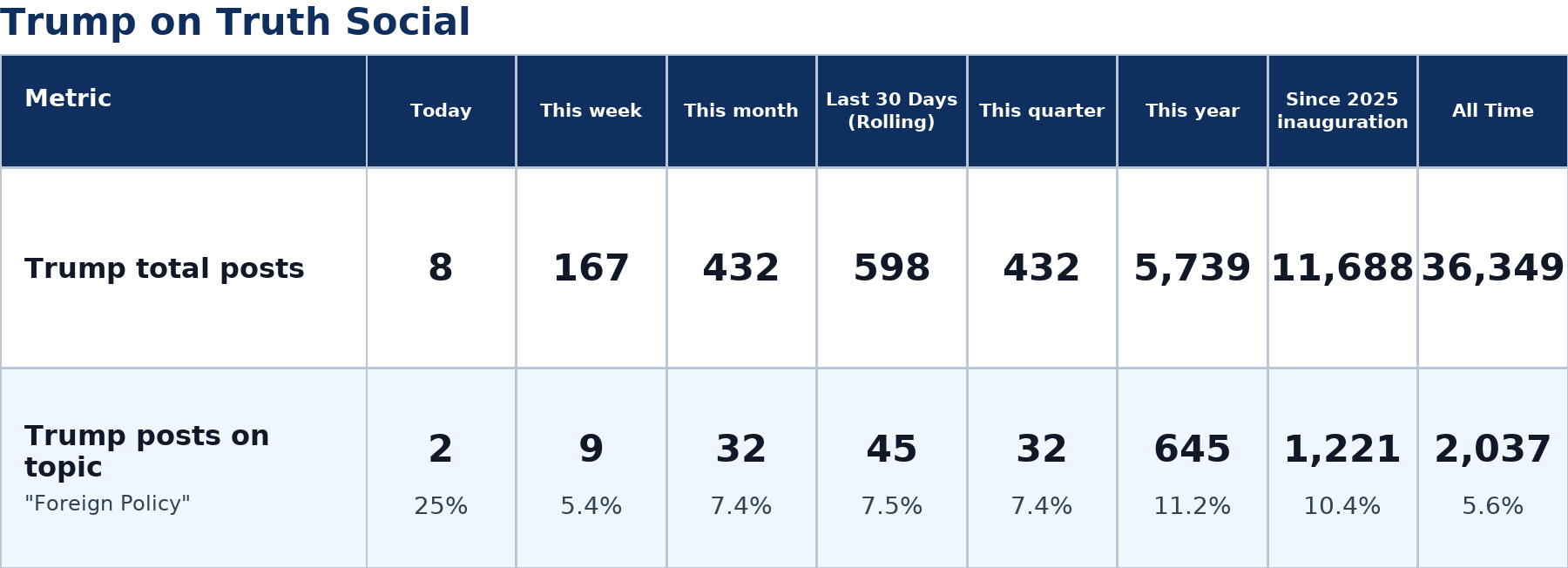
This is Trump’s 8th message released today, and the last post was 28 minutes ago, and it is not part of a thread. On average, Trump produces 18 posts per day since his inauguration on January 20, 2025. The move fits a broader pattern in Trump’s recent messaging, with 45 of his 598 posts over the last 30 days classified as Foreign Policy posts.
Trump described the partnership between the United States and Libya as “strong and enduring.” He anchored the relationship in what he called a shared history of defeating ISIS on Libyan soil. He credited Libyan fighters for sacrifices made against the militant group, which he labeled “the common enemy of both our peoples.”
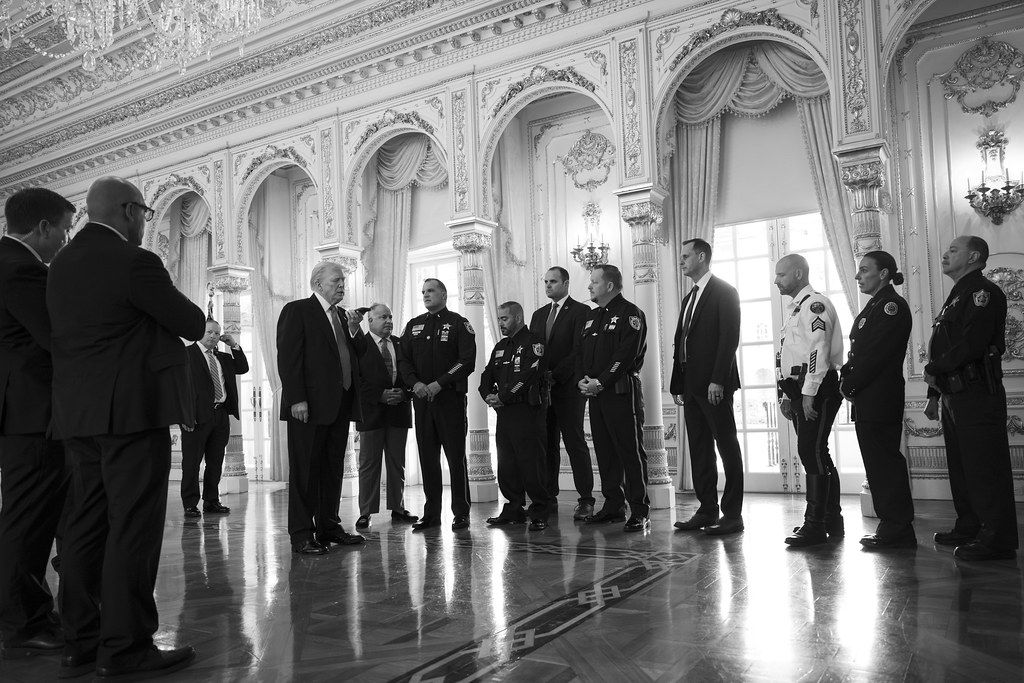

President Donald J. Trump posted a message about Libya at WASHINGTON D.C.
Joyce N. Boghosian / The White House
© copyright Flickr with permission
The sharpest line in the post targeted migration. Trump said Libya “cannot remain a corridor for illegal migration” and demanded the practice stop immediately. Libya has long served as a departure point for migrants and refugees crossing the Mediterranean Sea toward Europe. The post did not specify whether Trump referred to migration toward Europe, the United States, or both.
Trump committed the United States to supporting what he called the “long-awaited unification of Libya and Libya’s institutions.” Libya has operated under rival governments since the 2011 overthrow of Muammar Gaddafi. Competing administrations have governed from the country’s east and west. Trump called for national elections and urged Libyans to “unite, take back their sovereignty.”
The post blamed “terrorism and foreign meddling” for Libya’s instability but did not name specific countries or actors. Several regional and global powers have backed competing factions inside Libya over the past decade. Those interventions have complicated efforts to broker a lasting political settlement.
No date has been announced for when the next round of Libyan national elections might take place. The United Nations has attempted multiple times to organize a nationwide vote, but rival factions have blocked each effort. Trump’s post did not set a timeline or describe specific steps the United States would take to advance unification.
Zenger analysis
Photo by Zenger analysis
President Trump is the author of The Art of the Deal, Think Like a Billionaire, and Think Big. Analyst and Trump supporter Rod Martin points to The Art of the Deal, Trump's 1987 book, as an explanation of his deal-making philosophy: making big announcements, pivoting often in public statements and, Martin says, ultimately getting what he wanted all along. Critics contend that Trump's books were published decades ago or were aimed at making money, not shedding light. "Generally," Martin said, "critics don't read The Art of the Deal. If they did, they would understand."