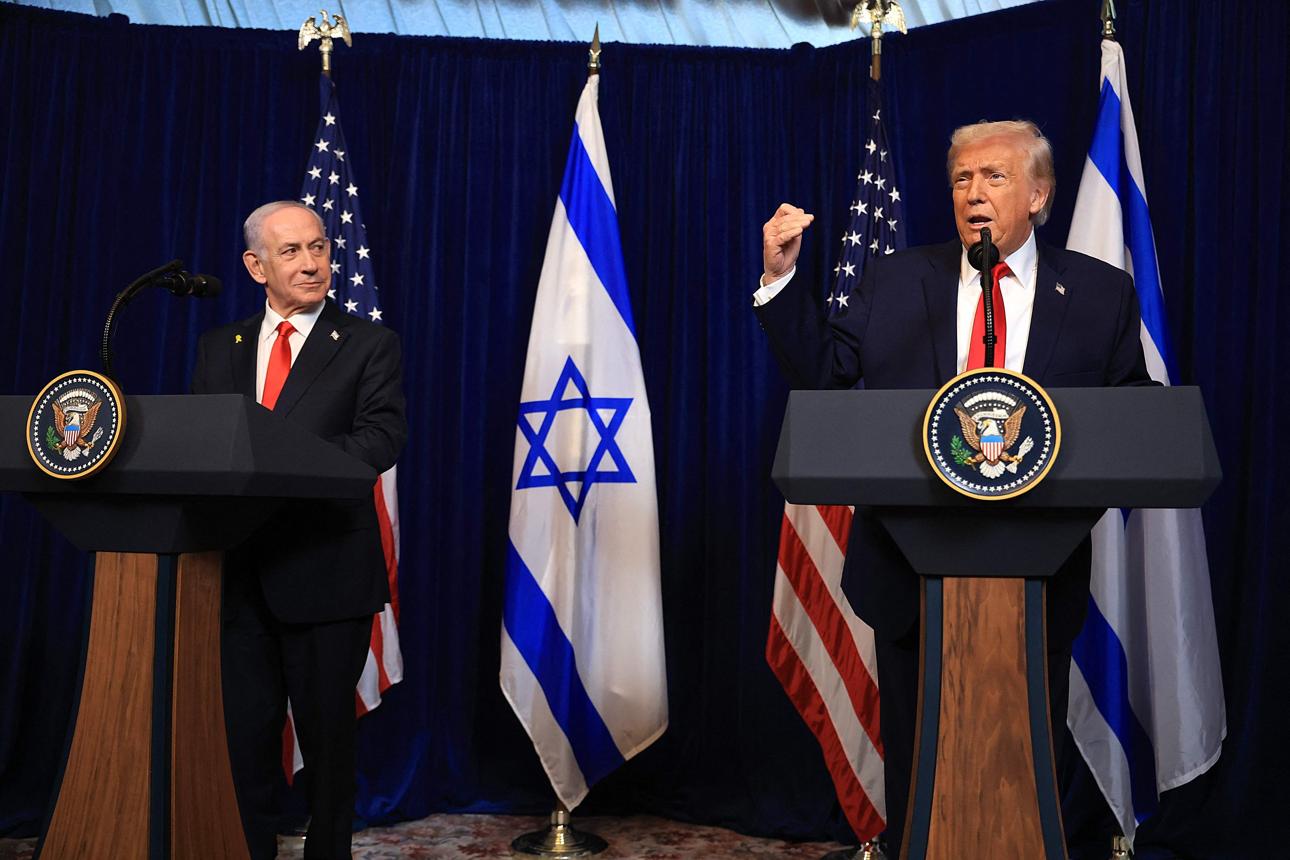
Trump opposes Netanyahu’s objections over F-35 Sale to Turkey
Trump says he decides US arms sales, praises Ankara as Israeli PM arrives for White House talks

WASHINGTON — Trump wants to sell F-35 fighter jets to Turkey as a valued NATO ally, while Netanyahu opposes the sale, warning it would upset the Middle East’s military balance and further arm a country now hostile to Israel.
Trump wants to sell Turkey the F-35s because he sees it as a strong, loyal NATO ally under Erdoğan, owing to its help in Syria and its military power. He argues no one else should dictate US arms sales.
Netanyahu opposes the deal, saying Turkish-Israeli relations have soured badly since the Gaza war, and he fears arming a country he now views as hostile would shift the region’s military balance against Israel.
The tension traces back to 2019, when the US suspended Turkey from the F-35 program after Ankara bought Russia’s S-400 missile defense system, a move Washington said could compromise the jet’s security, a suspension Turkey has long disputed.
Trump revived the idea of restoring the sale during a NATO summit in Ankara this month, praising Erdoğan and signaling openness to lifting related sanctions, though the State Department has since told Congress Turkey still doesn’t formally qualify.
The renewed dispute lands just as Israeli-Turkish relations have deteriorated sharply since the October 7, 2023, Hamas attack and the ensuing Gaza war, with each country’s leadership now openly critical of the other. Netanyahu’s visit to Washington acted as a collision point between two US relationships Trump has tried to keep separate.
For taxpayers, the cost is minimal since Turkey would pay for the jets, but the real stakes are accountability and consistency. Congress holds review authority over major arms sales, and the State Department’s own finding that Turkey doesn’t yet qualify raises questions about whether the deal would follow normal legal process or bypass it under presidential pressure.
Critics may also ask whether this undercuts past sanctions over Turkey’s S-400 purchase and whether prioritizing Ankara over Israel’s security concerns sends a mixed signal to US allies watching how Washington balances competing relationships.
The immediate next step is Trump’s White House meeting with Netanyahu, where the F-35 sale is likely to be a central point of friction even as both leaders emphasize alignment on Iran.
Beyond that, the deal’s fate lies with Congress, which retains formal review power over major arms sales, and on whether the State Department’s current stance.
Turkey doesn’t yet meet the criteria but hardens into a real obstacle or gets overridden. Continued back-and-forth in the coming weeks is expected as Ankara pushes to finalize the purchase, Israel lobbies against it, and lawmakers weigh in, with no formal sale finalized yet.