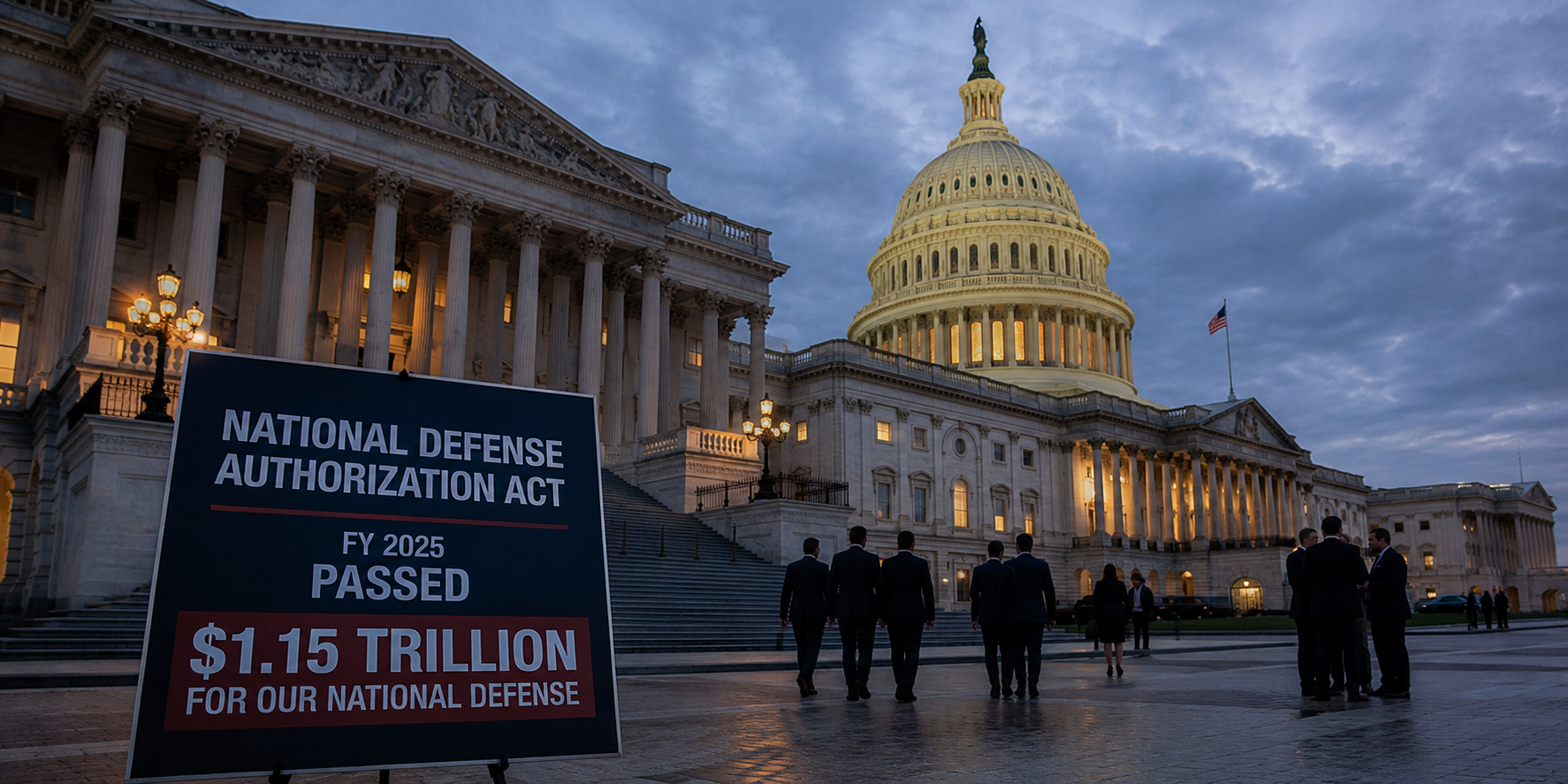
US house almost passes $1.15 trillion defense bill while in Iran war division
The vote tally of 216-212 exposed deep divisions in Congress and set up a fight in the Senate.

WASHINGTON — The U.S. House of Representatives passed a $1.15 trillion National Defense Authorization Act on July 22, 2026, by a narrow 216-212 vote.
The legislation funds the Pentagon for the year 2027 and will now be taken to the Senate, where its path is uncertain. The voting was 216-212, with six Democrats voting for the bill and seven Republicans voting against it. The Republicans who voted against the bill were Reps. Josh Brecheen, Tim Burchett, Eli Crane, Harriet Hageman, Anna Paulina Luna, Thomas Massie, and Chip Roy, while the Democrats supporting the bill were Reps. Henry Cuellar, Don Davis, Jared Golden, Vicente Gonzalez, Adam Gray, and Marie Gluesenkamp Perez.
The rise in the budget, which was higher than the $900.6 billion authorized last year, alarmed some members of Congress, since the government was becoming heavily indebted and should discontinue financing the war in Iran. Citing Rep. Brendan Boyle’s words, the ranking Democrat on the House Budget Committee, most of the deficit spending went toward the war in Iran, which he termed a reckless move since there is no strategy for winning.
As the ranking Democrat of the House Armed Services Committee, Rep. Adam Smith pointed out that backing the defense bill means backing the never-ending war. As the Senate minority leader, Chuck Schumer advised that the NDAA must not give way to recklessness in Iran.
Republican Congressman Thomas Massie, who has spoken out against the war, stated that the bill “tragically connects” the American military technologies and logistics systems to those of Israel, referring to one part of the bill as a betrayal of American sovereignty.
The war started as a result of military operations by the U.S. and Israel against Iran on February 28, and it is currently in its fifth month and has resulted in the death of 17 Americans. In June, a Memorandum of Understanding had been signed to establish the parameters of the ceasefire, but U.S. military operations against Iran have started again this month due to disputes at the Strait of Hormuz.
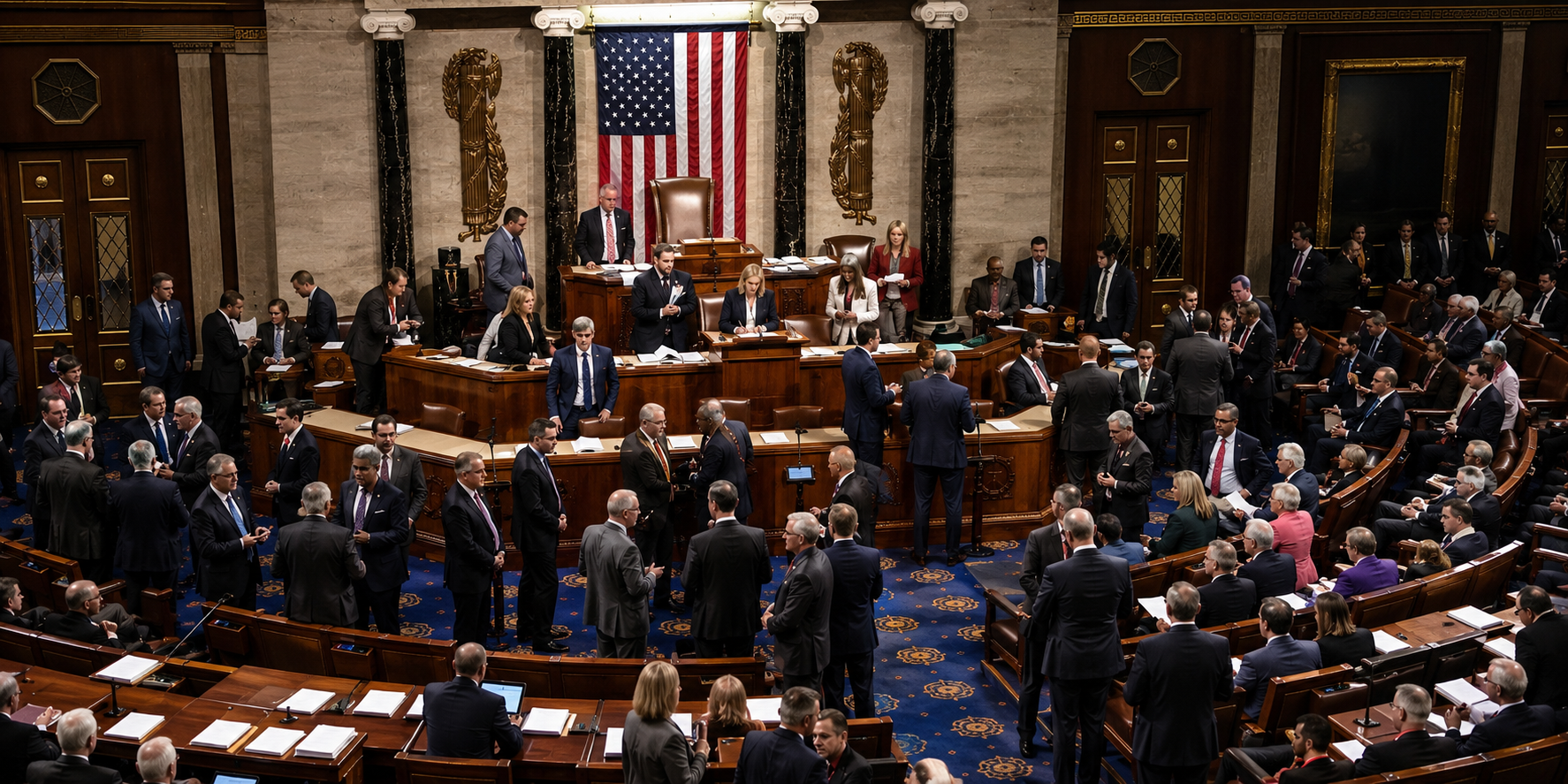

Lawmakers gather in US House for congressional debates in Washington, D.C. on July 19, 2026 at 9:33 PM. Photo: Zenger
The $1.15 trillion defense bill passed by a thin margin of 216-212, along with a companion bill for an additional $73 billion to fund a military campaign against Iran (216-214, with no Democratic votes) in what is being described as the largest single-year increase. This leads to concerns about deficits; lack of accountability; transparency regarding the $37.5 billion already spent; and the deaths of 18 soldiers.
Now the bill’s future is in the hands of the Senate, where Democrats defeated a similar one recently in an effort to make some concessions against the war drive on Iran by the Bush administration, with Republicans requiring Democratic votes for a 60-vote majority.