Personalized mRNA Cancer Vaccines Are the Future of Cancer Care
As personalized vaccines enter advanced clinical trials, researchers say tailoring treatment to each patient's tumor may redefine cancer care.

BOSTON — The ability to personalize cancer treatment is getting a big boost, thanks to experimental mRNA vaccines made from the cancer cells of the individual being treated.
That’s according to Dr. Vinod Balachandran, a cancer researcher at Memorial Sloan Kettering Cancer Centre who is investigating their use in the challenging area of pancreatic cancer.
The vaccines are like those being used in the fight against COVID-19, but instead of being designed to prevent infections, they’re personalized for patients with cancer.
Balachandran’s early research on pancreatic cancer points to the potential for such individualized treatments to substantially improve survival. But the work has broader implications, since similar approaches are being tested against other cancers.
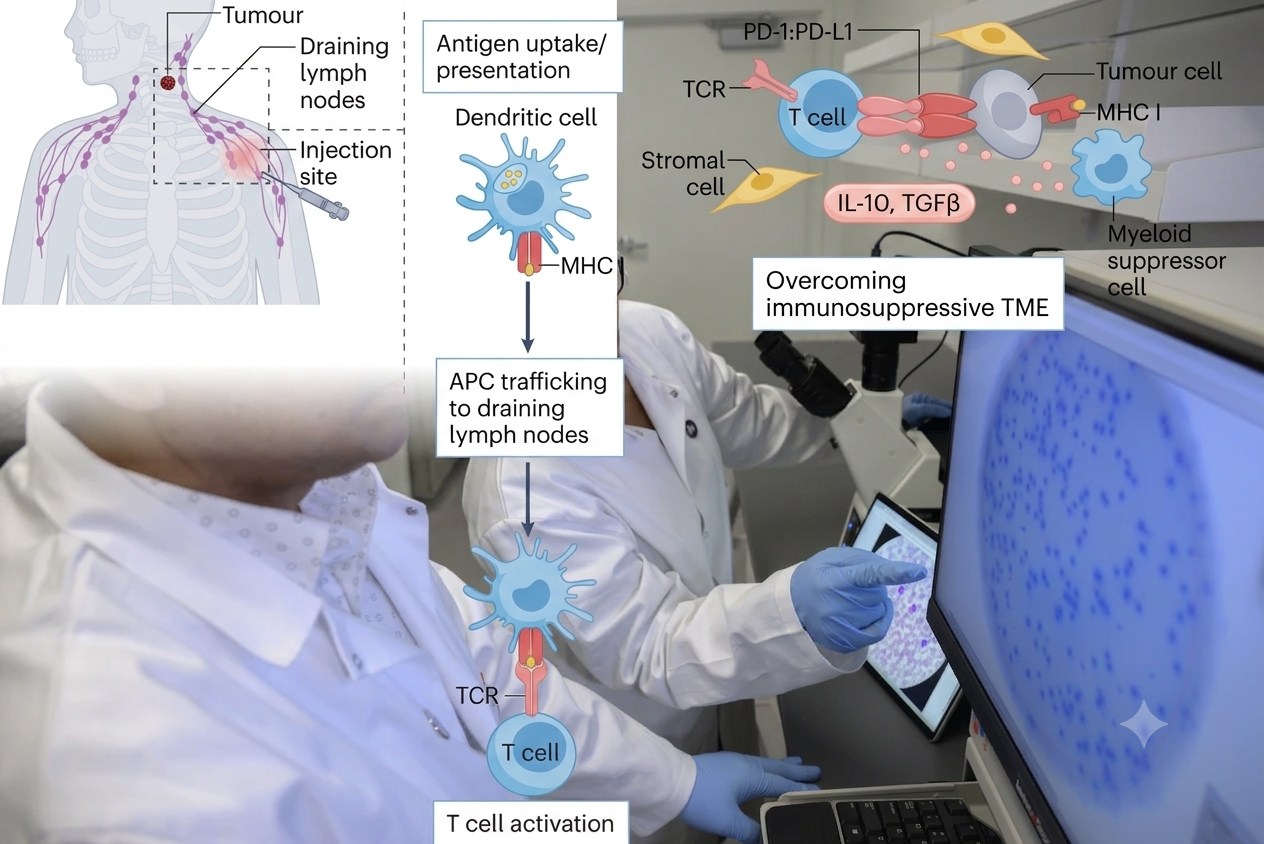
“Each person’s cancer is different,” said Balachandran, who leads one of the studies. A cancer cell’s genome can be sequenced to identify mutations unique to the individual tumor. These mutations can then be used to make an mRNA vaccine that instructs the body to attack the cancer.
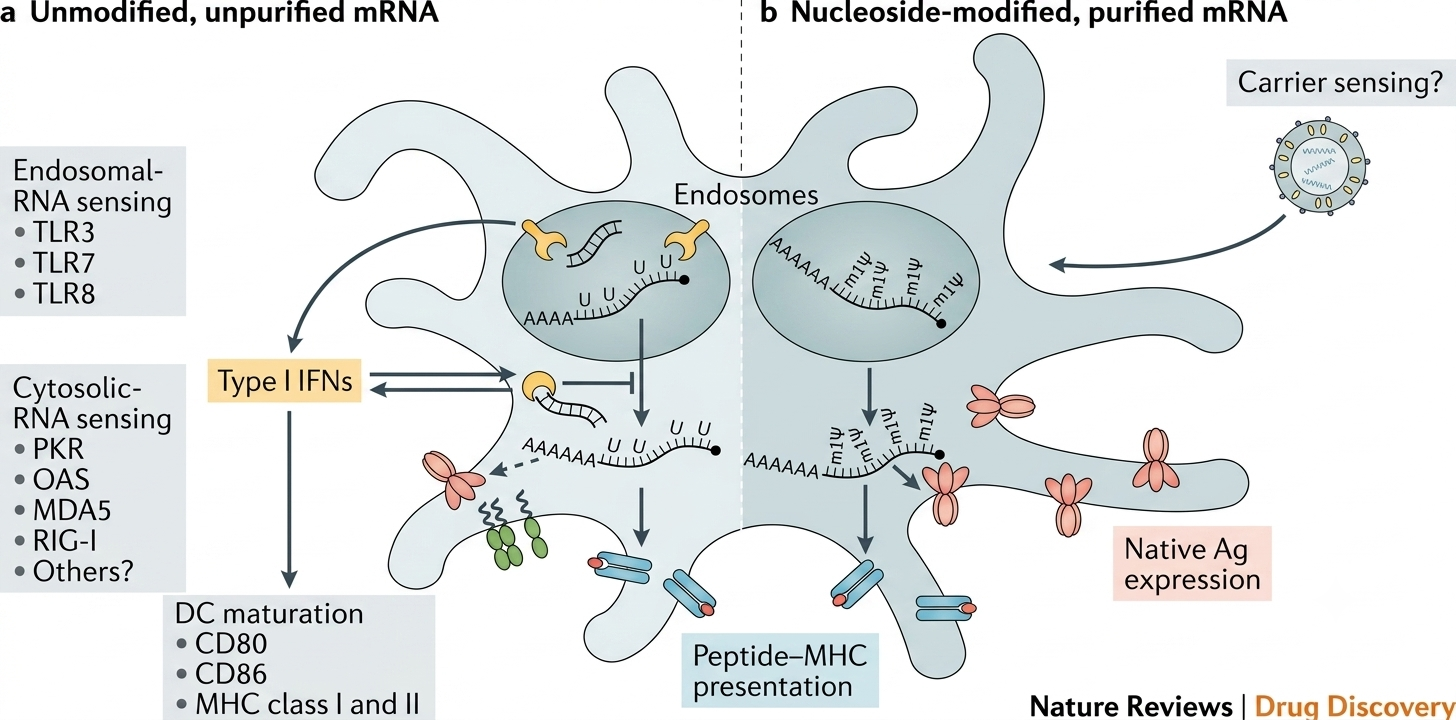

Intracellular Recognition Pathways of Unmodified versus Nucleoside-Modified mRNA. in Laboratory on July 6, 2026 at 4:12 AM. © Zenger.News
In other words, a patient’s own cancer is used to make a treatment specific to that cancer.
Researchers are also working on treatments for lung, kidney, colorectal and other malignancies, seeking to identify which cancers are most responsive to such an approach and how best to harness the power of immunotherapy. Early evidence suggests such an approach may be particularly valuable in treating cancers that recur after surgery or that fail to respond to standard therapy.
That could be important, since there are many diseases for which treatment options are limited. Chemotherapy and radiation are powerful treatments, but both are typically associated with significant side effects, since they target quickly dividing cells, including both cancerous and healthy ones.
“Immunotherapy is much more precise, in that it allows one to harness the body’s own T-cell response to target only the unique mutations present in a tumor,” notes Balachandra. This is critical since different patients’ cancers have different mutations.
That said, the approach is far from a panacea. For one thing, each patient’s tumor must be individually isolated, sequenced and tested before the appropriate vaccine can be developed and tested, a process that can both time-consuming and expensive.
Moreover, there is yet only limited information on why some tumors are more susceptible to such treatment than others, or on how best to combine such immunotherapy with traditional approaches to cancer treatment.
Pending the results of late-stage trials, personalized mRNA vaccines could fundamentally change the landscape of cancer treatment.
“If further trials confirm these early results, we could see such treatment become a standard part of cancer care in years to come,” said Balachandran.