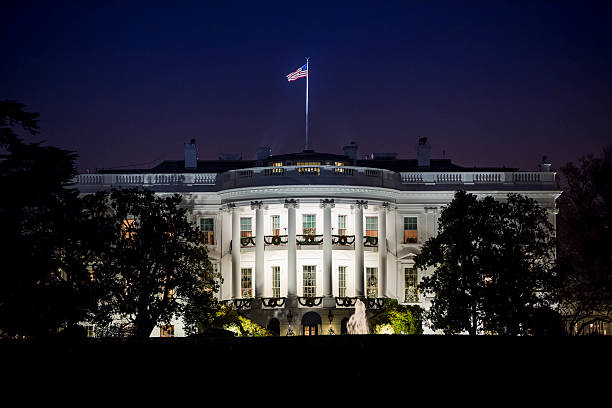
Trump Posts Image on Truth Social as Platform Courts Wall Street Traders
Trump shares a photo on the platform he largely owns, days after Trump Media unveils a paid feed selling faster access to his market-moving posts.

WASHINGTON D.C. — Donald Trump shared an image-only post on Truth Social, the platform he largely controls through the company that carries his name.
The post arrived without accompanying text, one of dozens of media items Trump has pushed to his 12.9 million followers on the site. He founded Truth Social as a response to his 2021 lockout from Twitter. Trump owns about 41% of the publicly traded Trump Media & Technology Group through a revocable trust, according to time.com.
Here is the full post on Truth Social: “Truth Social post containing one image.” on July 22, 2026 at 6:00 AM ET.
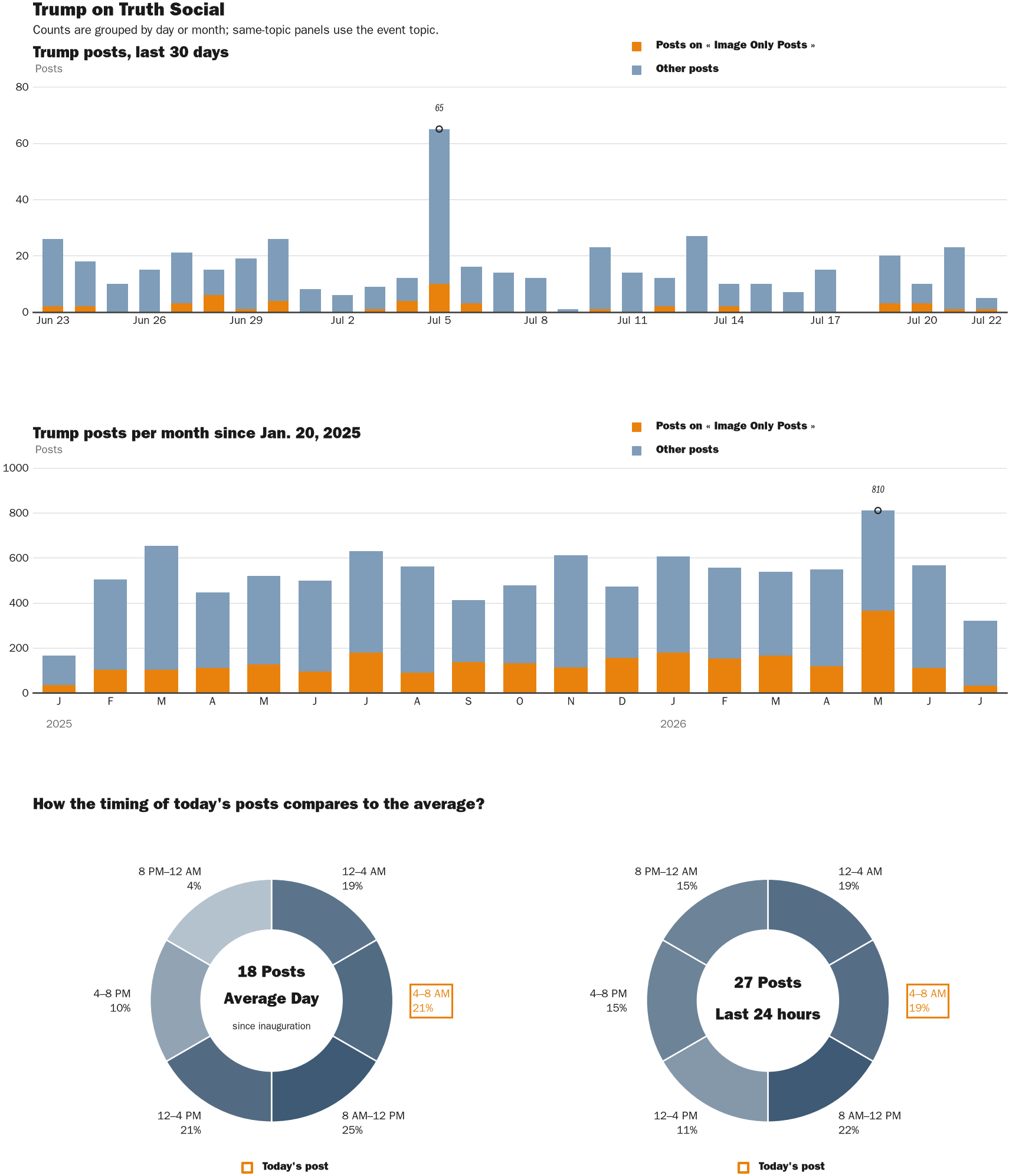
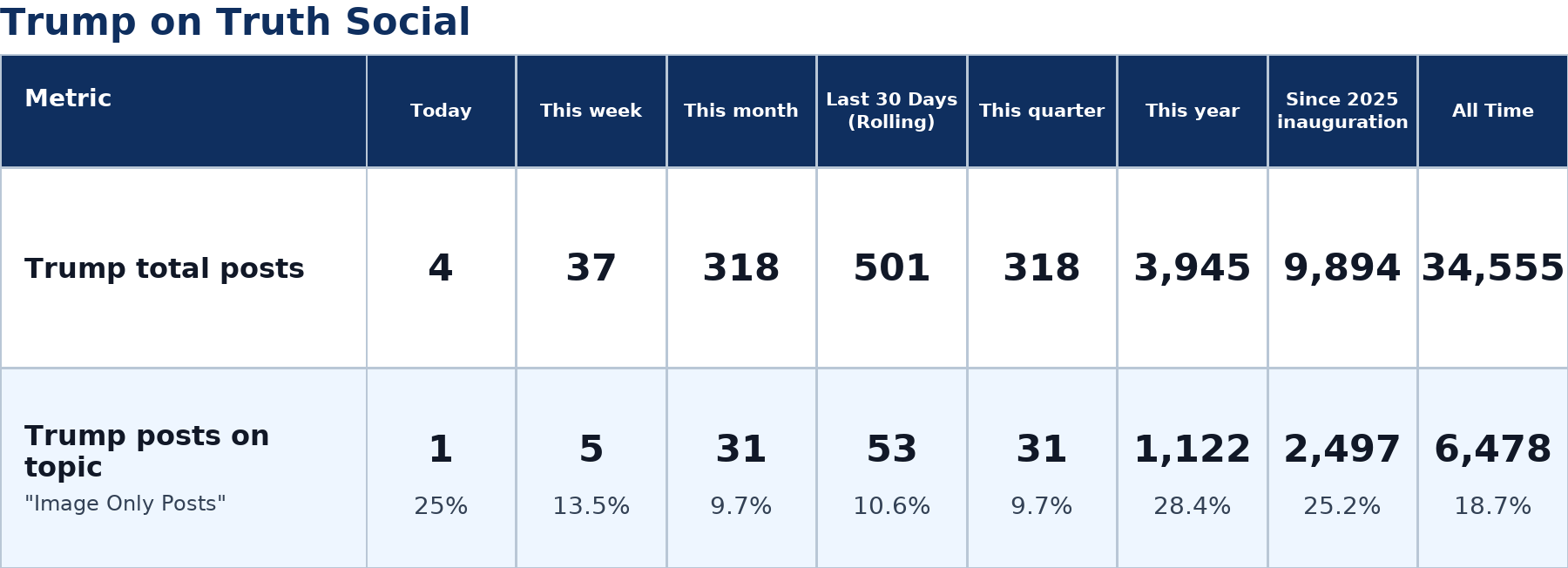
This is the first message released by Trump today. On average, Trump produces roughly 17 posts per day since his inauguration on January 20, 2025.
The move fits a broader pattern in Trump’s recent messaging, with 53 of his 501 posts over the last 30 days classified as image-only posts.
The image post lands as Trump Media & Technology Group, the parent company of Truth Social, pushes to turn the president’s output into a paid product. The company announced plans to launch “Truth API,” a data feed offering what it calls the “fastest” real-time access to posts from the platform’s highest-ranking accounts, according to time.com. A company spokesperson said the licensed service would deliver posts from Truth Social’s 10 most influential accounts to customers faster than a standard push notification, according to time.com.
The stakes reach beyond one photograph. Wall Street trading firms stand to gain millisecond advantages on statements that have repeatedly moved markets, while the revenue would benefit the Trump family directly. “Markets already move on Truth Social posts,” Kevin McGurn, Trump Media’s interim chief executive officer, said in a statement, according to time.com. “As adoption grows, we expect Truth API to become a meaningful, ongoing source of revenue for the company, creating lasting value for shareholders.”
Critics see a conflict. Senator Adam Schiff of California called the plan “yet another scheme, this time to save his failing social media business,” in a social media post, according to time.com. Senator Richard Blumenthal of Connecticut described the sale of “preferential access” as “flagrant corruption,” according to time.com. Under federal law, executive branch employees may not participate personally and substantially in a matter that predictably affects their own financial interests, though presidents and vice presidents are exempt from that code.
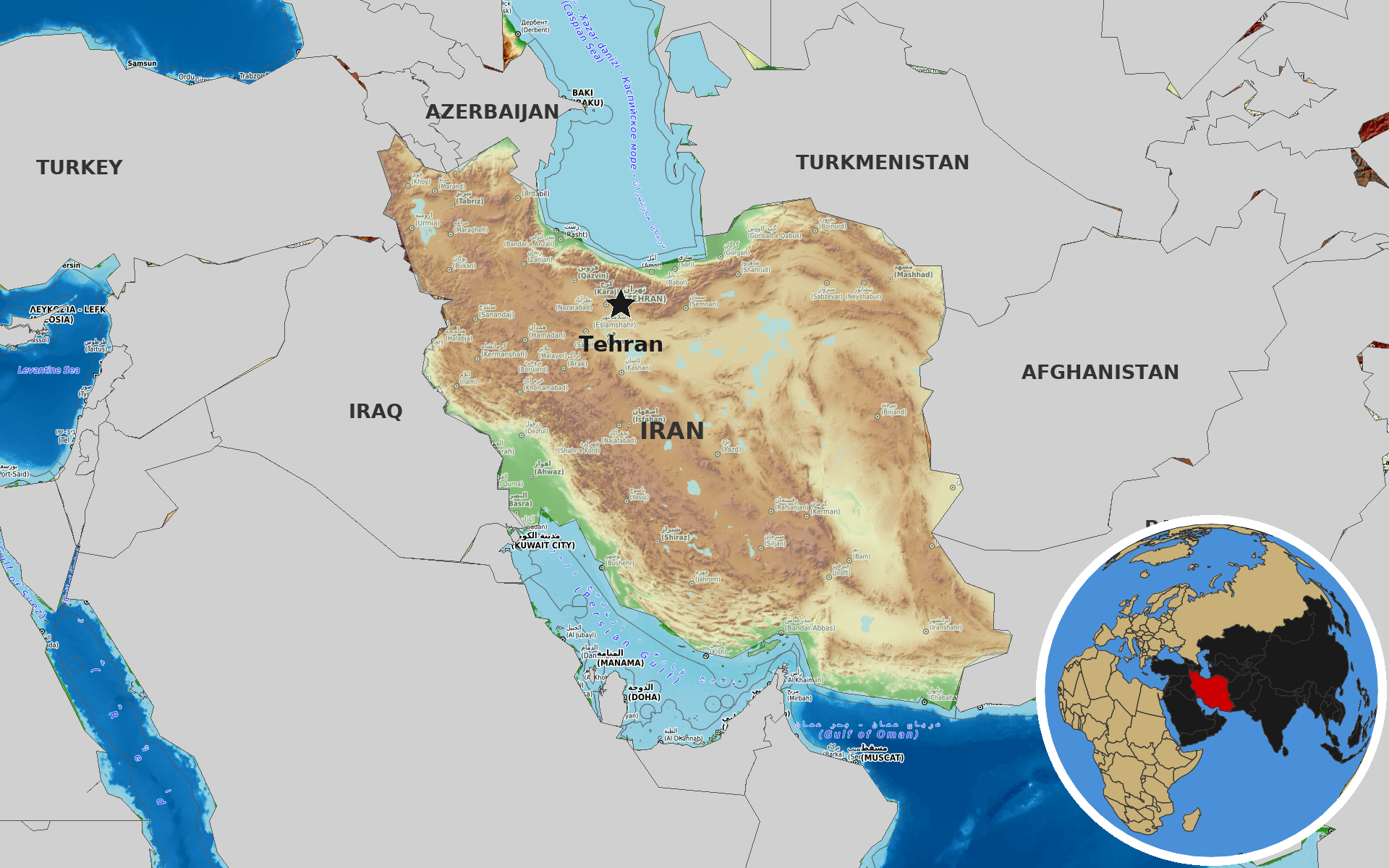
For an average reader, the practical effect is indirect but real. Posts like the president’s have swung the prices of oil, stocks and other assets that shape retirement accounts and fuel costs. In April 2024, hours before Trump announced a 90-day pause on most of his tariffs, he posted that it was a “GREAT TIME TO BUY,” according to time.com. His 2026 posts on the U.S.-Iran conflict moved oil prices up and down, according to time.com.
This has happened before. Trump’s Truth Social has served as a repository of market-moving statements since its 2022 launch, and the platform’s financial performance has lagged its influence. Trump Media closed at $57.99 per share when it debuted on the Nasdaq in March 2024, then slid into single digits. The company has lost more than $1 billion over the past two years, according to time.com.
The next decision rests with prospective clients and regulators. Trump Media said Truth API would become available to customers the month after its announcement, with some firms already signed up, according to time.com. No date for any regulatory review of the service has been announced.
Profiting from a communications channel is not new for those who hold the platform. William Randolph Hearst, who built a newspaper empire beginning with the San Francisco Examiner in 1887, used his chain of papers to shape opinion and press his political ambitions, winning two terms in Congress starting in 1903, according to Encyclopedia Britannica. His 1904 bid for the Democratic presidential nomination failed, as did his 1905 and 1909 runs for mayor of New York City. His fortune buckled under debt during the Great Depression, forcing the sale of assets. Hearst’s example showed that owning a powerful megaphone did not guarantee lasting political or financial success.

NewsFindr Chart Maker
Photo by Zenger real-time database of all Truth Social posts.
Zenger analysis
Photo by Zenger analysis
OpenTopoMap / Natural Earth – Iran
Photo by OpenTopoMap / Natural Earth – Iran