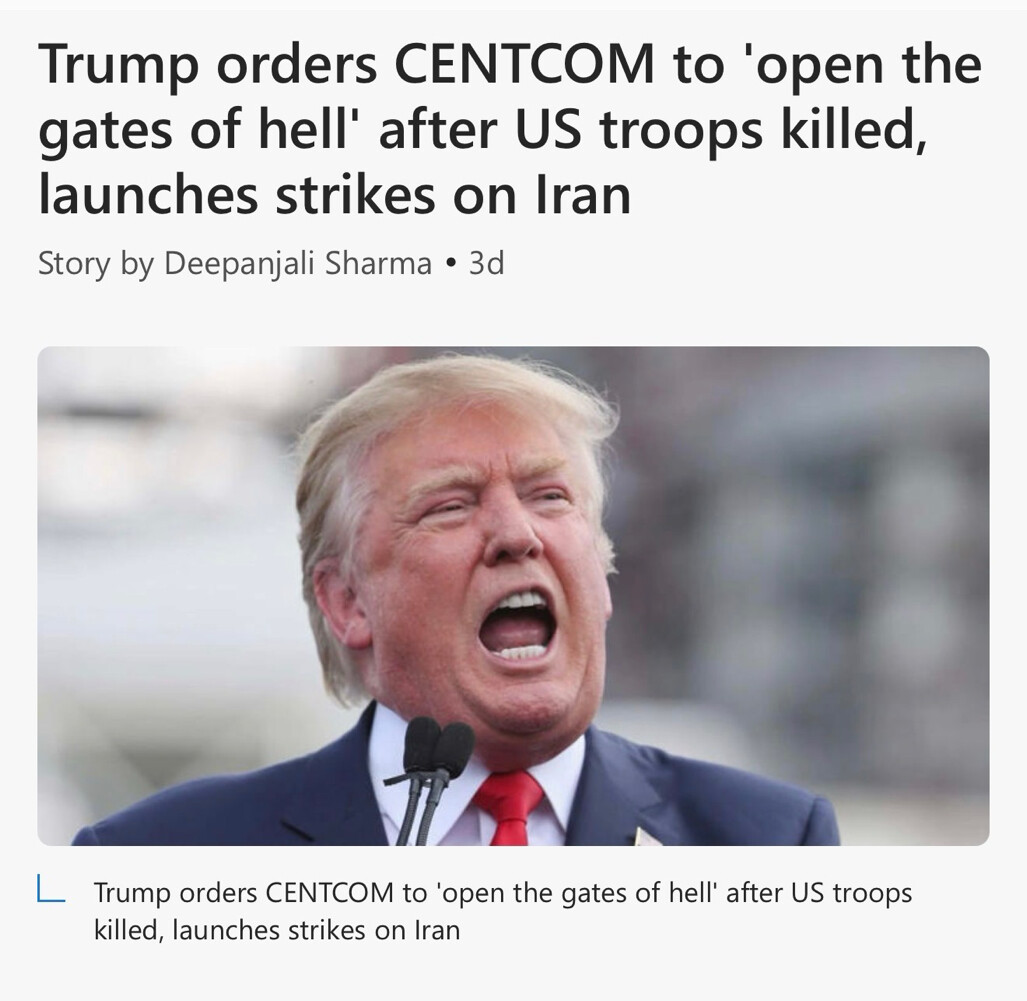
Trump Orders CENTCOM to “Open the Gates of Hell” After US Troops Killed in Iran Attack
Trump directs Central Command to intensify strikes on Iran after two American service members die in missile and drone attacks in Jordan, expanding a week of military action.

WASHINGTON D.C. — Donald J. Trump ordered US Central Command to escalate strikes on Iran after two American service members died in Jordan, sharing a news account of the directive to his followers.
The order told CENTCOM to “open the gates of hell” after missile and drone attacks killed the troops and left another service member missing, according to meaww.com. Trump amplified the coverage on Truth Social, marking more than a week of continuous US military action against Iranian targets.
“We hate to see it happen,” Trump told NewsNation of the deaths, calling the incident “a very sad thing,” according to meaww.com.
The escalation widens a confrontation that reignited after an earlier ceasefire between Washington and Tehran collapsed. It raises the risk of a broader war across the Persian Gulf and the vital shipping lanes that feed the global oil market.
Here is the full post on Truth Social: “Trump orders CENTCOM to “open the gates of hell” after US troops killed, launches strikes on Iran” on July 22, 2026 at 12:51 PM ET.
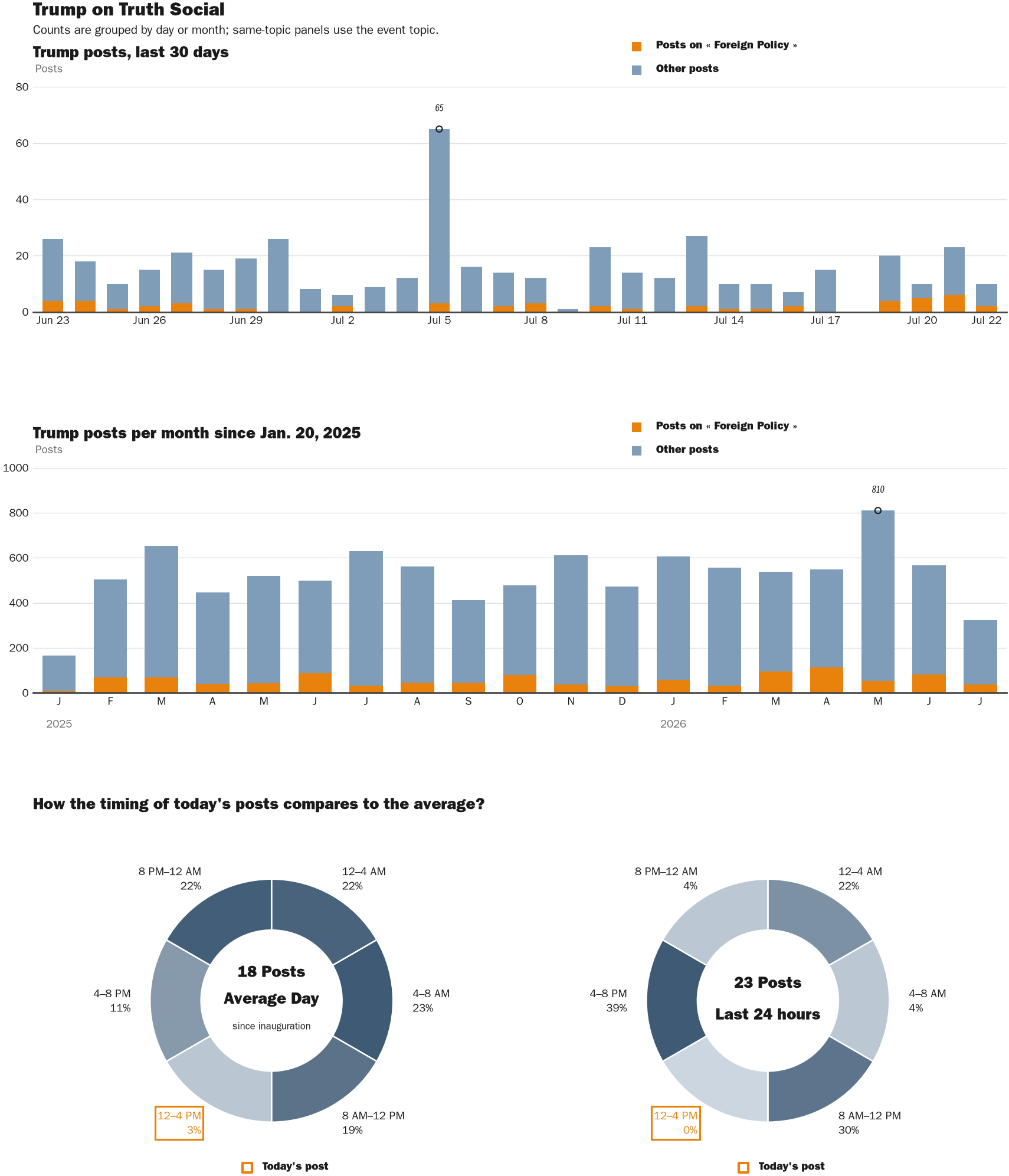
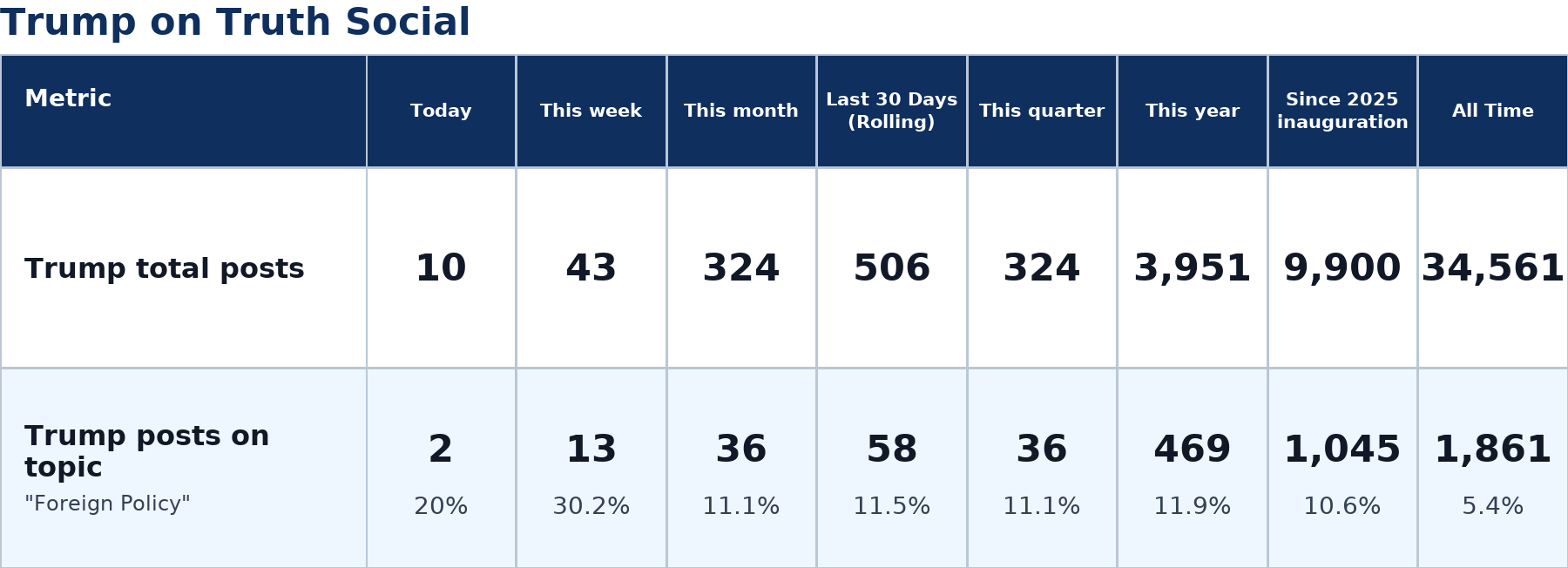
This is the first message released by Trump today. On average, Trump produces roughly 27 posts per day since his inauguration on January 20, 2025.
The move fits a broader pattern in Trump’s recent messaging, with 58 of his 506 posts over the last 30 days focused on Foreign Policy, according to Zenger analysis.
US Central Command confirmed a fresh round of airstrikes against Iran at Trump’s direction. “The strikes are designed to further degrade Iran’s ability to threaten commercial shipping in the Strait of Hormuz and swiftly punish Islamic Revolutionary Guard Corps forces who launched attacks against American service members in Jordan last night,” the command said in a statement, according to meaww.com. A US official said the operation would be “much more extensive and larger than previous nights.”

CENTCOM said Iranian ballistic missiles and drones killed two service members in Jordan as US and partner forces mounted a defense. Medics evacuated four additional service members to hospitals in Jordan and later discharged them, and others with minor injuries returned to duty, according to meaww.com. Officials withheld the identities of the dead until families were notified.
The stakes reach far beyond the battlefield. Iran’s Supreme Leader Mojtaba Khamenei said in a written statement that America’s “repeated breaches” of the agreement showed the “signature of the US president is utterly worthless and devoid of credibility,” according to meaww.com. He warned that Iran and its allies had “unforgettable lessons in store” for the United States if the conflict widened.
For the average US reader, the confrontation carries a direct cost. The Strait of Hormuz carries a large share of the world’s seaborne oil, and Tehran has declared the waterway closed while Washington reimposed its blockade of Iranian ports. Any prolonged disruption there tends to push gasoline and heating prices higher for American households.
This has happened before. US forces struck Iranian targets in June 2025 during an earlier phase of the standoff, and American and Iranian units have clashed repeatedly across the Gulf region for years. The current campaign differs in scale, following the first confirmed US combat deaths of this round of fighting.
The next decisions rest with Trump and Pentagon planners, who have not set a public timetable. US officials have not indicated how long the current military campaign will continue, and a date for any de-escalation has not been announced.
American confrontation with Iran over the Strait of Hormuz has flared many times, as history shows. In April 1988, US warships sank or crippled six Iranian vessels during Operation Praying Mantis after a US frigate struck an Iranian mine. Iran lost roughly half its operational navy in a single day of fighting, and one American helicopter crew of two died. Tehran quietly curbed its attacks on Gulf shipping in the months that followed, a pattern of pressure and pause that has repeated in the strait for nearly four decades.
NewsFindr Chart Maker
Photo by Zenger real-time database of all Truth Social posts.
Zenger analysis
Photo by Zenger analysis
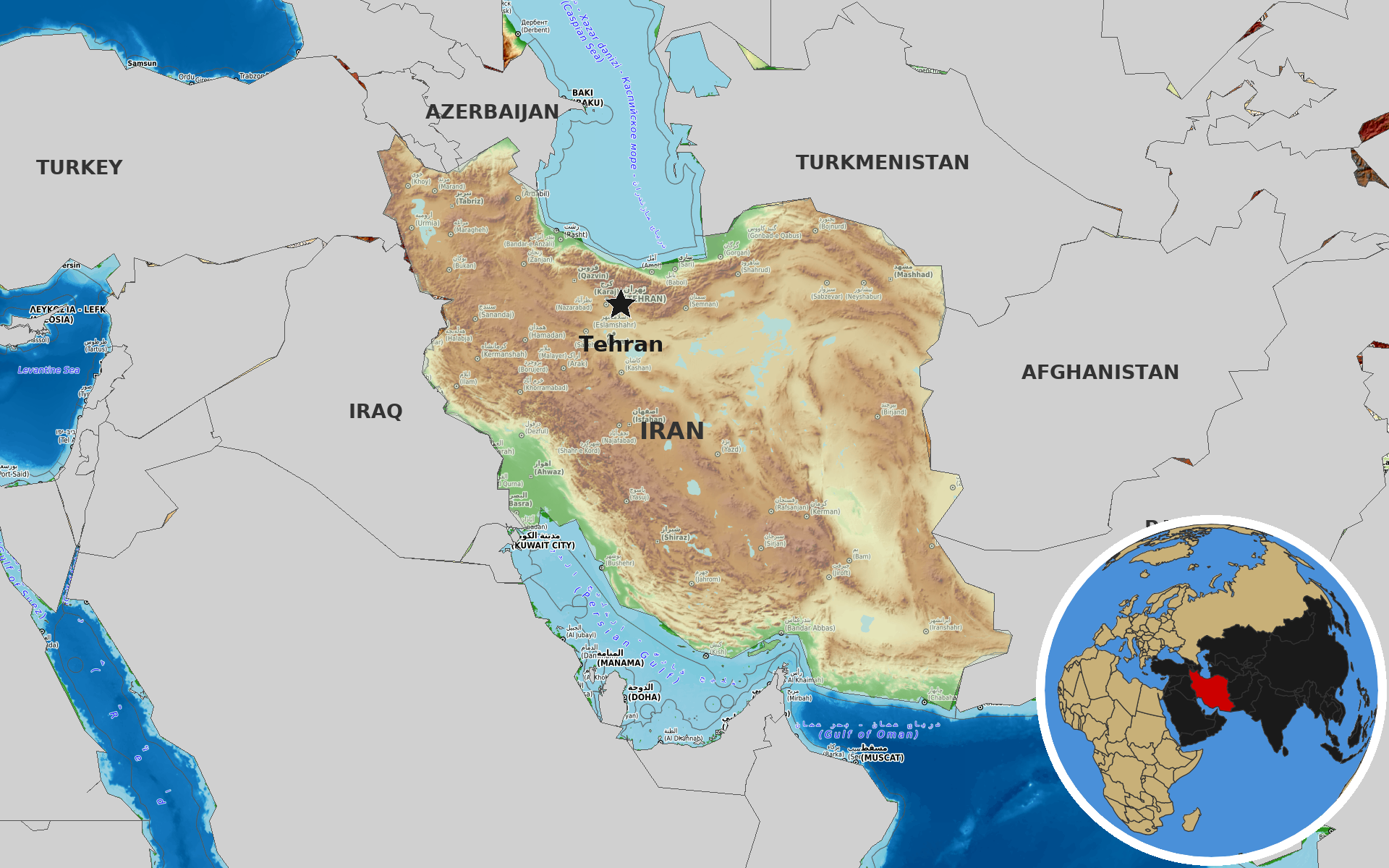
OpenTopoMap / Natural Earth – Iran
Photo by OpenTopoMap / Natural Earth – Iran