
Trump Claims 99% Win Rate for Endorsed Candidates in 2026 Republican Primaries
Trump touts a 183-of-185 record for his endorsed candidates across Senate, House and governor primaries in an infographic posted to Truth Social.

WASHINGTON D.C. — Donald J. Trump claimed his endorsed candidates won 183 of 185 Republican primary races in the 2026 cycle, a 99% success rate spanning Senate, House and governor contests.
The figures appeared in an infographic Trump shared on truthsocial, which broke the record into three categories. Endorsed Senate candidates went 17 for 17, House candidates 154 for 154, and governor candidates 12 of 14, according to the graphic. The two losses both fell in the governor column, leaving that category at 86%.
Here is the full post on truthsocial: “Endorsement Record in Republican Primaries 2026 Record U.S. Senate 183 of 185 endorsed candidates won U.S. House Governor” on August 4, 2026 at 5:48 PM ET.
This is Trump’s 17th message released today, and the last post was 6 minutes ago, and it is not part of a thread. On average, Trump produces 18 posts per day since his inauguration on January 20, 2025. The move fits a broader pattern in Trump’s recent messaging, with 97 of his 439 posts over the last 30 days classified as Elections posts.
The post carried no attribution identifying who compiled the numbers or which races counted. The graphic listed only aggregate totals, not the names of the candidates or the states where the primaries took place. Trump presented the win rate as a measure of his continuing influence over Republican nominations heading into the November general election.
A near-perfect primary record raises the stakes for the general election, where the same candidates now face Democratic opponents. Nominees who cleared their primaries with a Trump endorsement inherit his voter base but also his opponents, and their November results will test whether primary strength converts to general-election wins. Party strategists watch endorsement records closely because a strong showing signals which faction controls candidate selection.
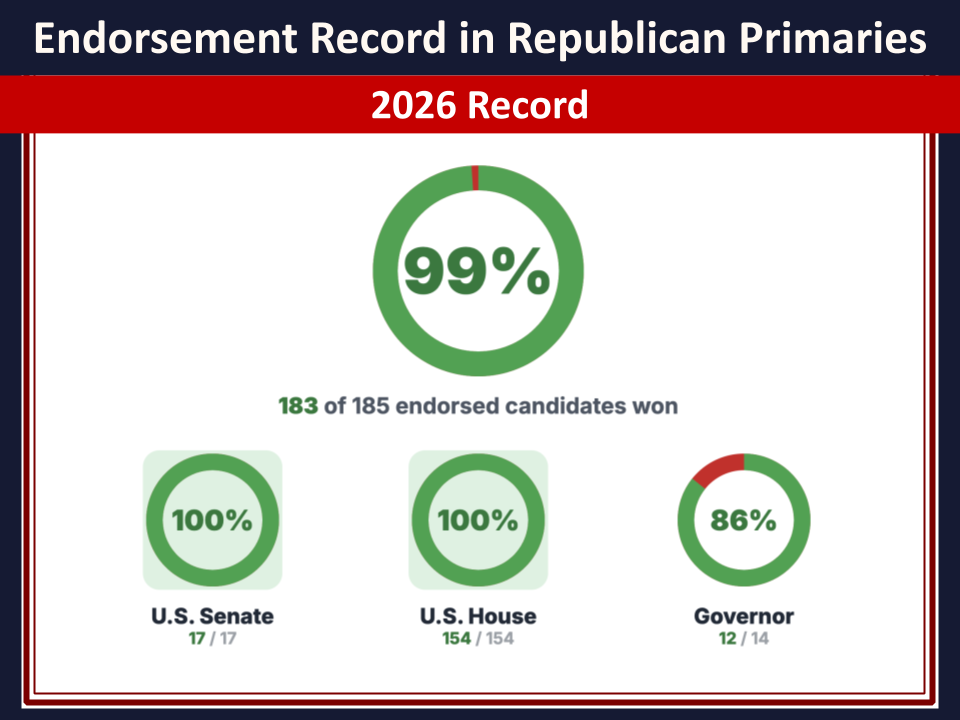

Donald J. Trump's social media post displays a graphic detailing endorsement records on Truth Social at Washington D.C.
© copyright Zenger.News
Trump has leaned on endorsement tallies before to argue that he steers the Republican Party. He made similar claims during the 2018, 2020 and 2022 cycles, and his win-rate boasts have long counted uncontested and safe-seat races alongside competitive ones. The distinction matters because a primary victory in a district with no serious challenger does not carry the same weight as one in a contested field.
For the average reader, primary endorsements shape the choices that appear on the general-election ballot. The candidates who advance out of these primaries will decide control of the U.S. Senate and House, the bodies that set tax, spending and immigration law that reaches household budgets.
This has happened before. Trump promoted his primary endorsement scorecard throughout his first term and his 2024 campaign, framing high win rates as proof of his grip on the party base. Independent reviews of those earlier claims noted that many endorsed candidates ran without meaningful primary opposition.
The next test comes at the ballot box. Voters decide the 2026 general election on November 3, 2026, when the endorsed nominees face their opponents and the true value of the primary record becomes clear.
Endorsement scorekeeping has shaped party politics long before this cycle, as happened before. Andrew Jackson built the Democratic Party in the 1820s by rewarding loyal candidates. Later party bosses in the 1900s controlled nominations through machines like Tammany Hall in New York, which handed out endorsements to fix outcomes across dozens of races. Those bosses eventually lost their grip when direct primaries spread after 1900, stripping party leaders of the power to anoint nominees and handing that choice to voters.
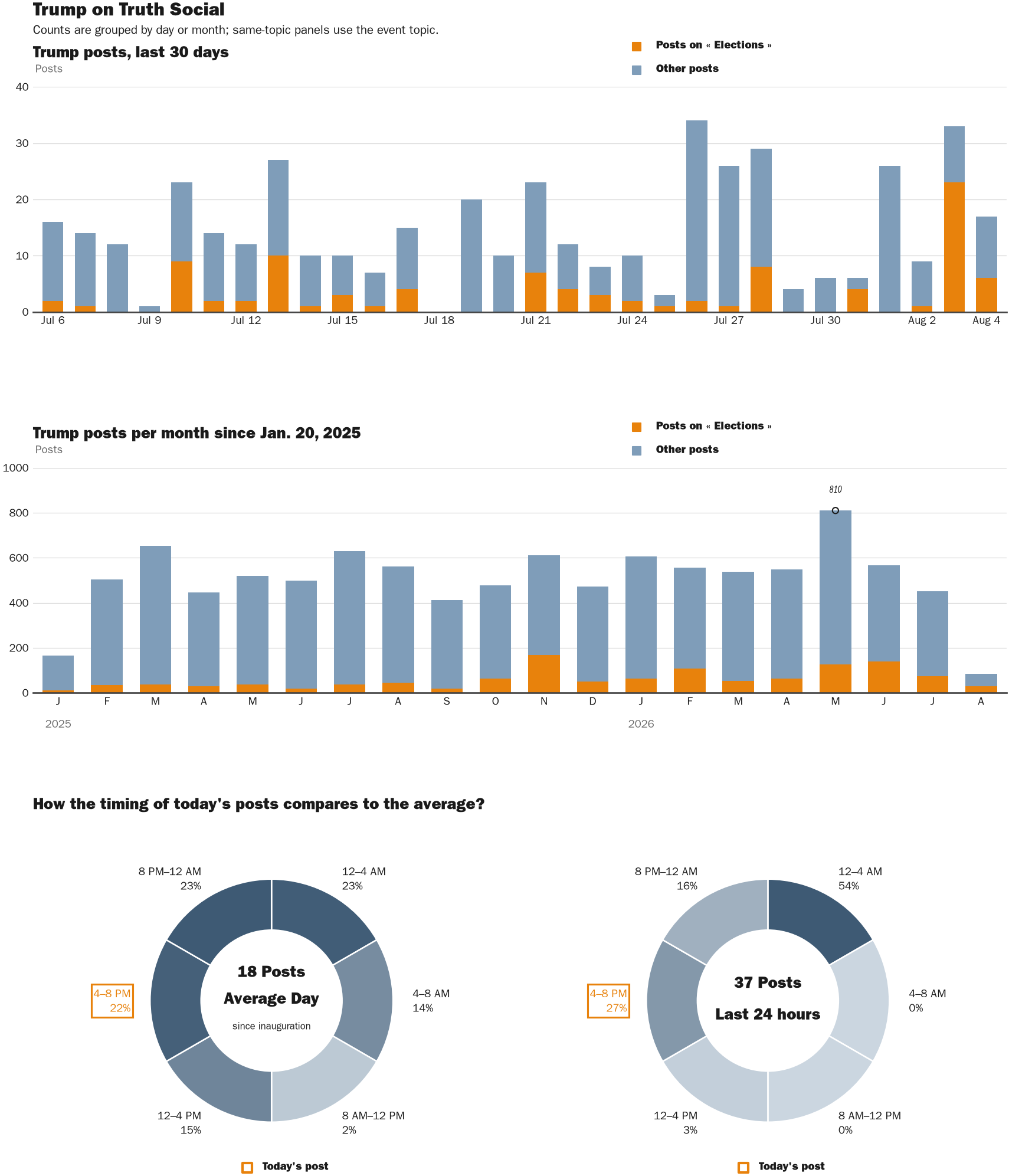
NewsFindr Chart Maker
Photo by Zenger real-time database of all Truth Social posts.
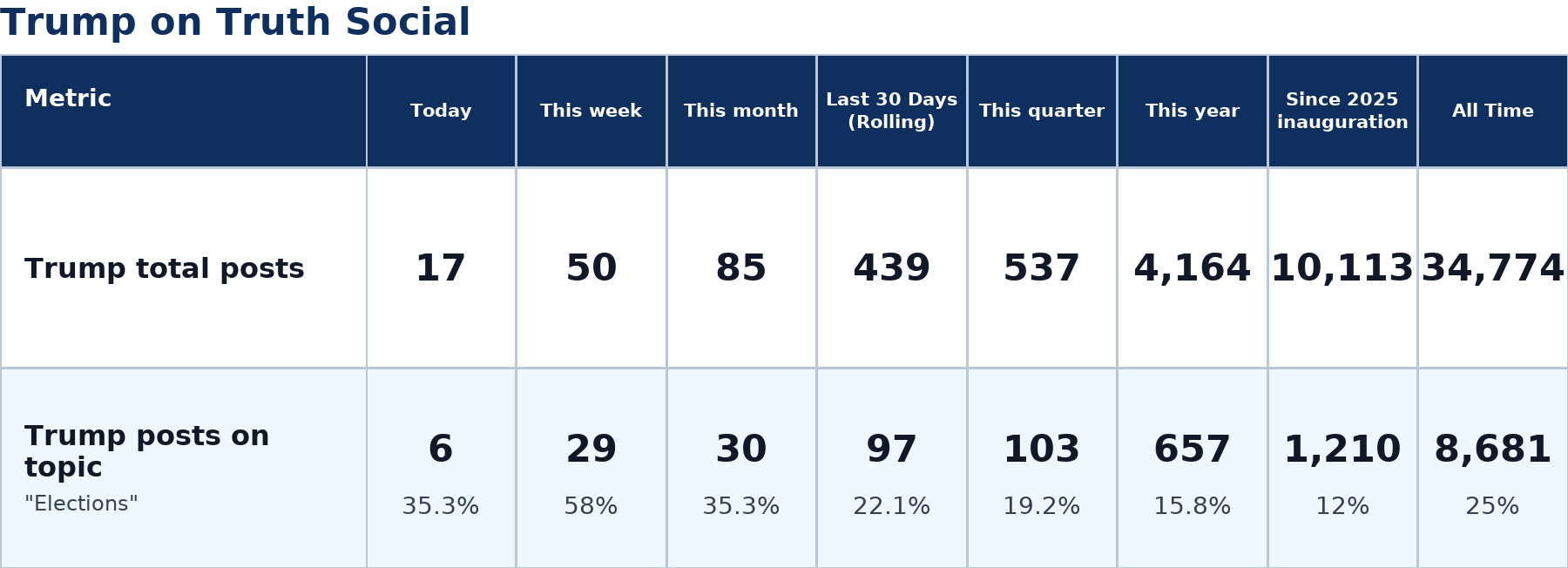
Zenger analysis
Photo by Zenger analysis