
Trump Demands Thune Kill Senate Filibuster to Pass SAVE America Act
Trump pressures Senate Majority Leader John Thune to keep the chamber in session until it passes the SAVE America Act or eliminates the 60-vote filibuster rule blocking Republican priorities.

WASHINGTON D.C. — Donald J. Trump demanded that Senate Majority Leader John Thune abolish the chamber’s filibuster to unlock passage of the stalled SAVE America Act and other Republican priorities.
The president said Thune should refuse to let the Senate adjourn until it approves the voting-restriction measure. In his preferred outcome, Thune would end the 60-vote threshold that has stopped the president’s election agenda. Republicans lack the votes to overcome that threshold, according to democracydocket.com.
Here is the full post on truthsocial: “John Thune should not allow the United States Senate to “leave town” until it passes The Save America Act or, far better still, TERMINATES THE FILIBUSTER, where Republicans can then quickly pass everything they ever dreamed of, including a full and deep throated SAVE AMERICA ACT, the Budget, and the ever looming Debt Ceiling disaster, 1929! The Dumocrats will do it on day one, and can’t believe how lucky they got with this Senate leadership. Remember, stupidity always brings LOSING & DEATH! President DJT” on July 27, 2026 at 9:01 AM ET.
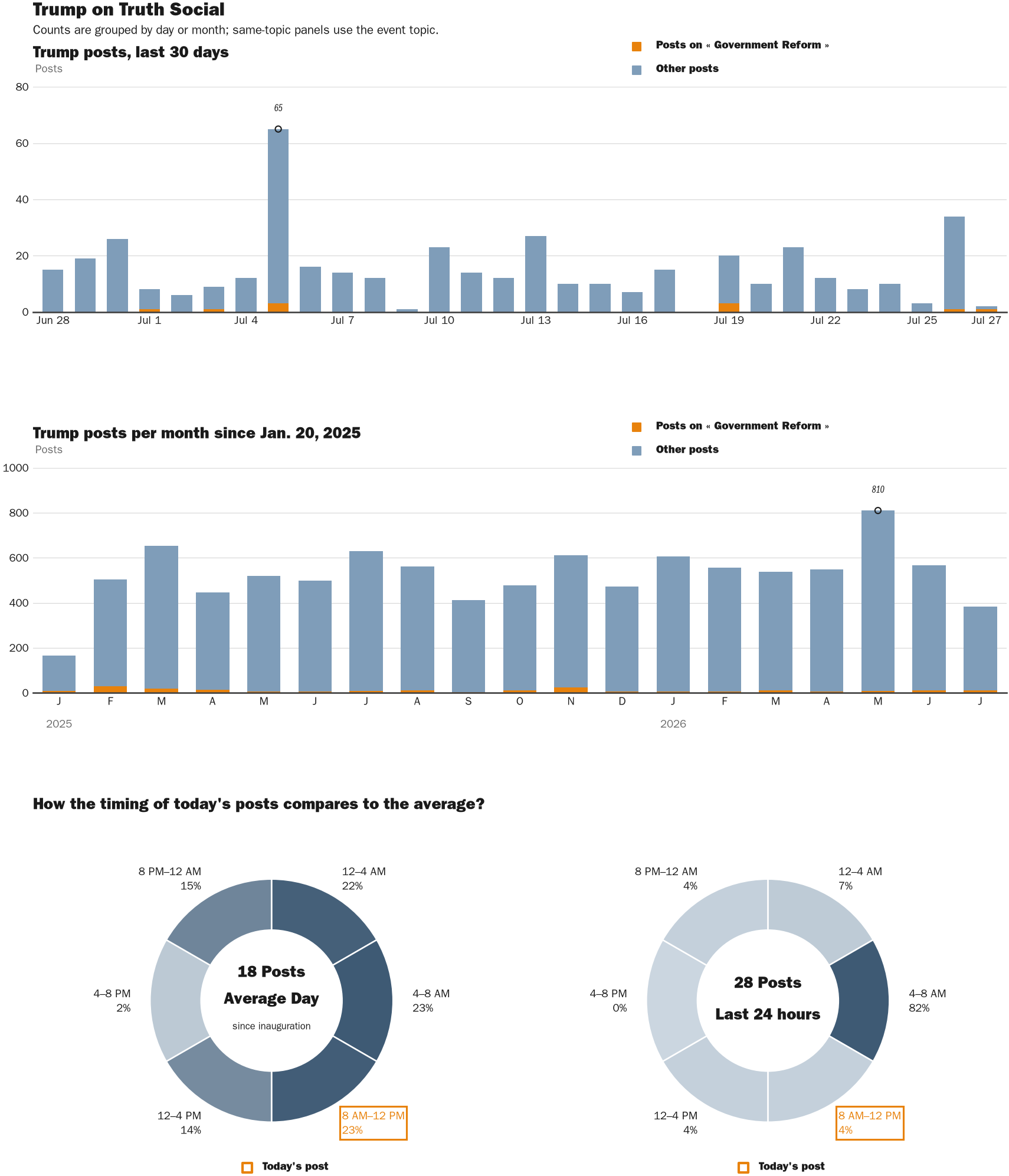
This is the first message released by Trump today. On average, Trump produces roughly 15 posts per day since his inauguration on January 20, 2025.
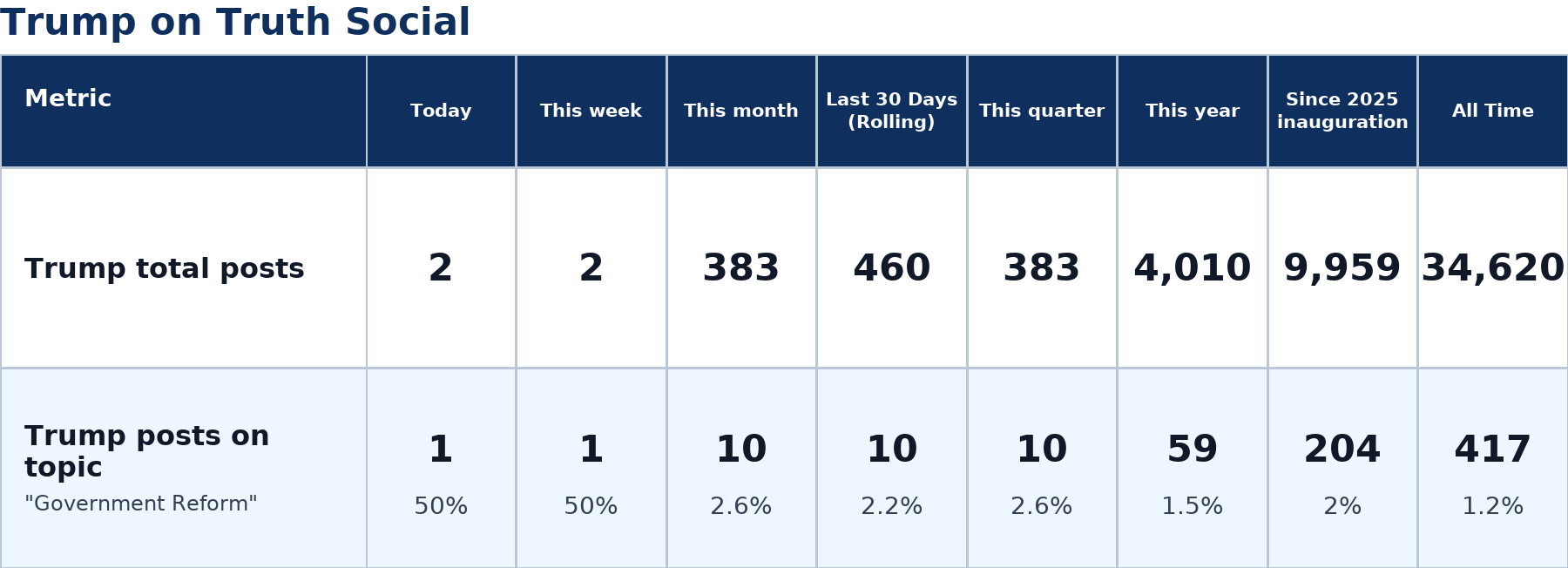
The move fits a broader pattern in Trump’s recent messaging, with 10 of his 460 posts over the last 30 days focused on “Government Reform.”
The SAVE America Act would impose strict proof-of-citizenship and photo ID requirements to register and vote, according to democracydocket.com. Voting rights advocates warn the bill could block millions of eligible Americans who lack easy access to passports, birth certificates or documents matching their current names, according to democracydocket.com. Supporters cast it as a safeguard against noncitizen voting, a practice that is already illegal and rare.
The stakes fall hardest on voters without ready documentation and on Republicans who see the bill as central to the party’s platform ahead of the midterms. Thune has repeatedly said the arithmetic ties his hands. “We don’t have the votes, either to proceed to a talking filibuster nor to sustain one if we got one,” Thune said last week, according to democracydocket.com. “That’s just a function of math. There isn’t anything I can do about that.”
Pressure on the majority leader has been building for weeks. South Dakota Republican delegates rejected a resolution to censure Thune over the stalled bill at the state party convention in June, according to democracydocket.com. The measure had cleared the party’s Resolutions Committee before failing on the convention floor. Trump escalated by canceling a planned signing ceremony for a bipartisan housing bill, tying that unrelated measure to his demand that Congress first pass the SAVE America Act.
The filibuster dispute reaches well beyond a single senator. Ending the rule would let a bare Senate majority pass legislation on budgets, the debt ceiling and election law, reshaping how Washington governs. Fellow Republicans have resisted the same idea when they sat in the minority, wary of handing future Democratic majorities the same unchecked power.
For the average reader, the outcome touches everyday routines. A rewritten registration standard could change what documents a citizen must produce to cast a ballot, while a debt-ceiling standoff carries risks to interest rates and federal payments.
This has happened before. Presidents of both parties have urged Senate leaders to gut the filibuster to advance stalled agendas, and leaders have generally declined, citing the same vote math Thune describes. The chamber has narrowed the rule for nominations but preserved it for most legislation.
Thune is the next figure positioned to decide whether the Senate stays in session or changes its rules. A date for any vote on the SAVE America Act or a filibuster change has not been announced.
Battles over the filibuster are as old as the modern Senate itself. The tactic traces to the 19th century, and senators did not adopt a formal way to end debate until the cloture rule of 1917. That rule first required a two-thirds vote before dropping to three-fifths, or 60 votes, in 1975. Southern senators famously used the tool to stall civil rights legislation for decades, including a filibuster of the Civil Rights Act of 1964 that ran 60 working days before cloture broke it. Leaders who tried to abolish the rule outright have repeatedly found their own colleagues unwilling to surrender a shield they expect to need in the minority.

NewsFindr Chart Maker
Photo by Zenger real-time database of all Truth Social posts.
Zenger analysis
Photo by Zenger analysis