Trump Marks One Year of Health Tech Push With 800 Partner Groups
Trump celebrates the first anniversary of his “Making Health Tech Great Again” initiative, which he says has grown from 60 organizations to more than 800 working to modernize care.

WASHINGTON D.C. — Donald J. Trump touted a health technology initiative that he said has grown from 60 to more than 800 partner organizations in its first year.
The effort, branded “Making Health Tech Great Again,” aims to modernize the healthcare system, empower patients and bring care into the 21st century, Trump said. He credited Health and Human Services Secretary Robert F. Kennedy Jr. as a partner in the push.
“What started with 60 organizations has grown into a movement of more than 800 organizations working together to modernize healthcare, empower patients, and bring our healthcare system into the 21st century,” Trump said in the post.
The milestone claim arrives as the administration presses private companies and providers to adopt shared digital standards, a shift that could touch how patients access records and how insurers and hospitals exchange data.
Here is the full post on truthsocial: “https://www.youtube.com/watch?v=m2FhDaxa2Fo .@SecKennedy and I are proud to celebrate one year of Making Health Tech Great Again. What started with 60 organizations has grown into a movement of more than 800 organizations working together to modernize healthcare, empower patients, and bring our healthcare system into the 21st century. Tune in now!” on July 27, 2026 at 7:47 PM ET.
This is the latest message released by Trump today. On average, Trump produces roughly 16 posts per day since his inauguration on January 20, 2025. The move fits a broader pattern in Trump’s recent messaging, with 57 of his 470 posts over the last 30 days focused on domestic policy truthsocial.
The post directed followers to a video, which Trump shared by mentioning the source (see youtube). The message echoed a companion statement from Mehmet Oz, the administrator of the Centers for Medicare and Medicaid Services, who framed the anniversary as a movement of organizations working to modernize care. Oz tagged Kennedy, who leads the Department of Health and Human Services, in that statement.
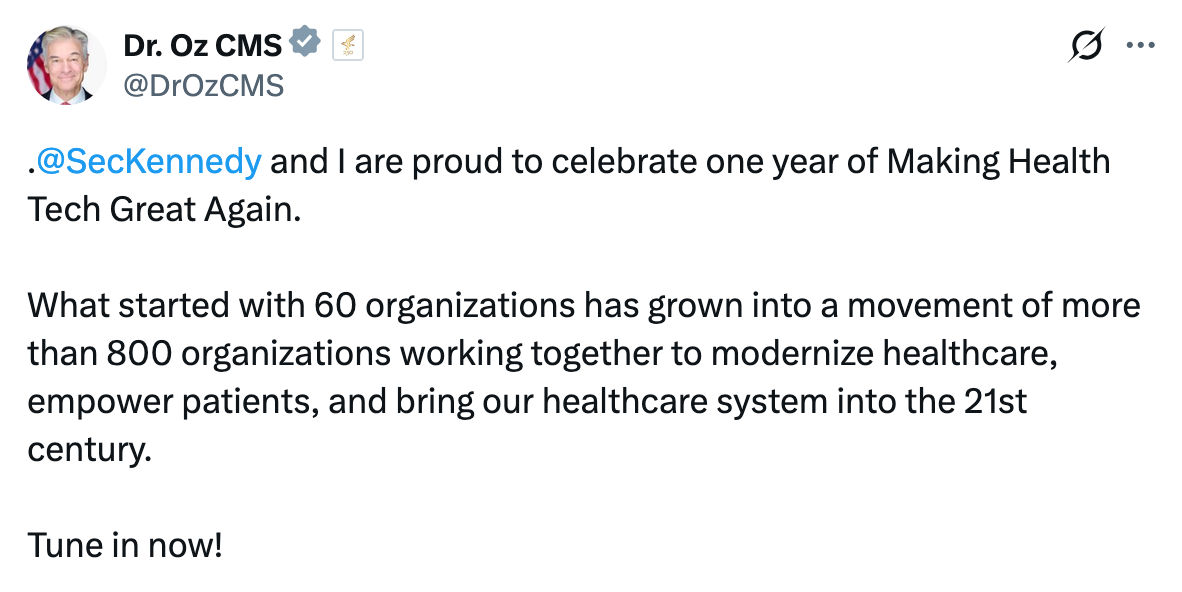

President Donald J. Trump's health technology initiative is highlighted in a social media post at WASHINGTON D.C.
© copyright Zenger.News
The stakes reach large parts of the healthcare economy. Wider data-sharing standards could benefit patients who want faster access to records and technology firms building tools that read those records. Providers and insurers that resist interoperability rules, or that guard proprietary systems, stand to face pressure to open their data. The claimed jump from 60 to more than 800 participating organizations, if accurate, would mark a rapid expansion in a sector where standards adoption often moves slowly.
Digital health records have been a federal priority across administrations. The 2009 HITECH Act committed tens of billions of dollars to spur electronic record adoption, and later interoperability rules sought to curb data blocking. The current effort continues that long arc toward shared standards, framing voluntary corporate commitments rather than a new statute as the vehicle for change.
For the average reader, the practical promise is simpler access to personal health information across doctors, hospitals and apps, along with fewer barriers when switching providers. The benefits depend on whether pledged participants deliver working tools, not just commitments.
This has happened before in the sense that federal officials have repeatedly rallied industry around digital health goals. Prior pushes leaned on regulation and funding, while this campaign leans on public commitments and a growing roster of named partners.
Who acts next, and when, remains unsettled. Trump pointed viewers to a video presentation, but a date for any formal rule or binding milestone tied to the anniversary has not been announced.
Health technology campaigns have drawn presidential attention before, as happened during earlier modernization drives. Federal incentives under the 2009 HITECH Act helped raise electronic health record use among office-based physicians from about 42 percent in 2008 toward roughly 86 percent within a decade. Regulators cited that jump as evidence that funding and standards could move a slow-changing sector. The lesson for officials who champion such efforts is that adoption milestones, once claimed, invite scrutiny over whether the promised interoperability follows.
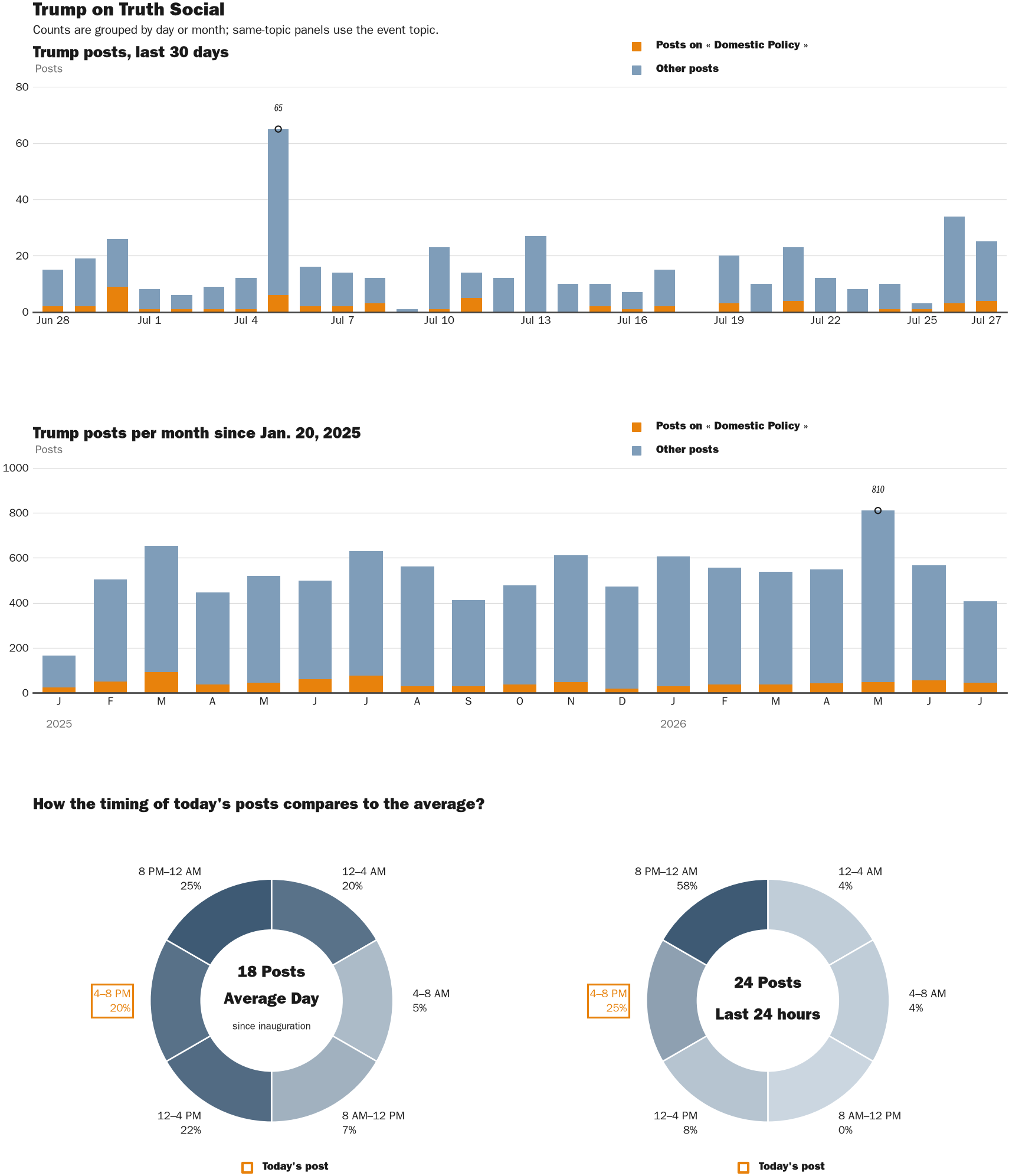
NewsFindr Chart Maker
Photo by Zenger real-time database of all Truth Social posts.
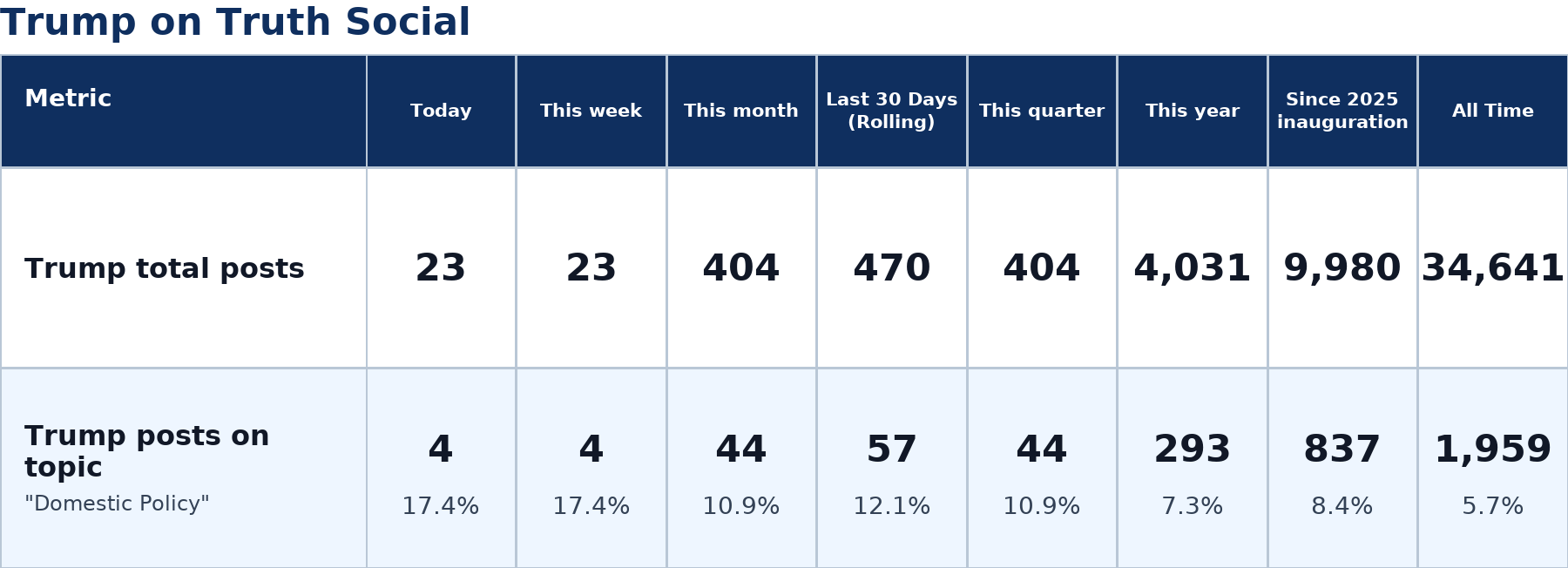
Zenger analysis
Photo by Zenger analysis