Trump Amplifies Post Calling Murkowski’s Voter-ID Stance “Draconian”
Trump shares a post accusing Senator Lisa Murkowski of branding ID and proof-of-citizenship voting rules as exceedingly harsh, escalating the election-integrity fight.

WASHINGTON D.C. — Donald Trump elevated a social-media post accusing Senator Lisa Murkowski, the senior Republican from Alaska, of calling voter-ID and proof-of-citizenship requirements “draconian.”
The reshared message frames identification and citizenship documents as a mainstream election-integrity measure. It casts Murkowski’s reported objection as extreme and builds on Trump’s long-running push for stricter documentation at the ballot box.
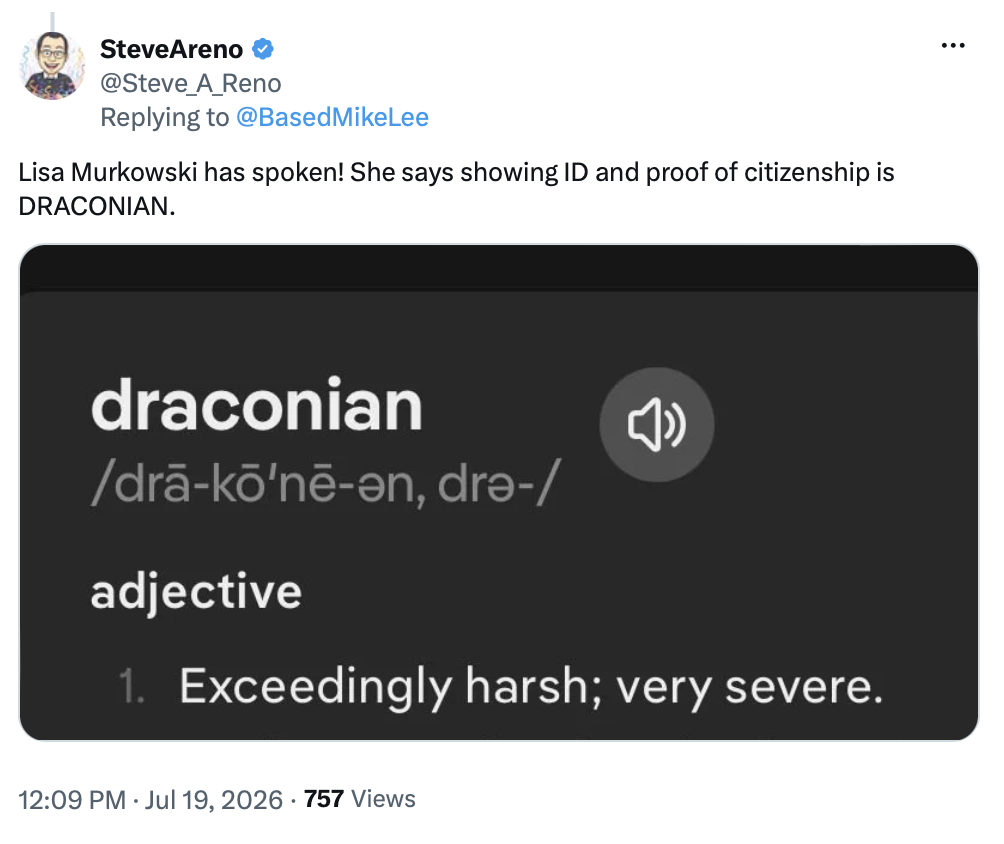
“Lisa Murkowski has spoken! She says showing ID and proof of citizenship is DRACONIAN,” read the post amplified by Trump, which paired the claim with a dictionary definition describing the word as “Exceedingly harsh; very severe.”
Here is the full post on Truth Social: “SteveAreno @Steve_A_Reno Replying to @BasedMikeLee Lisa Murkowski has spoken! She says showing ID and proof of citizenship is DRACONIAN. draconian /drā-kō’nē-ǝn, drǝ-/ adjective 1. Exceedingly harsh; very severe.” on July 21, 2026 at 11:47 PM ET.
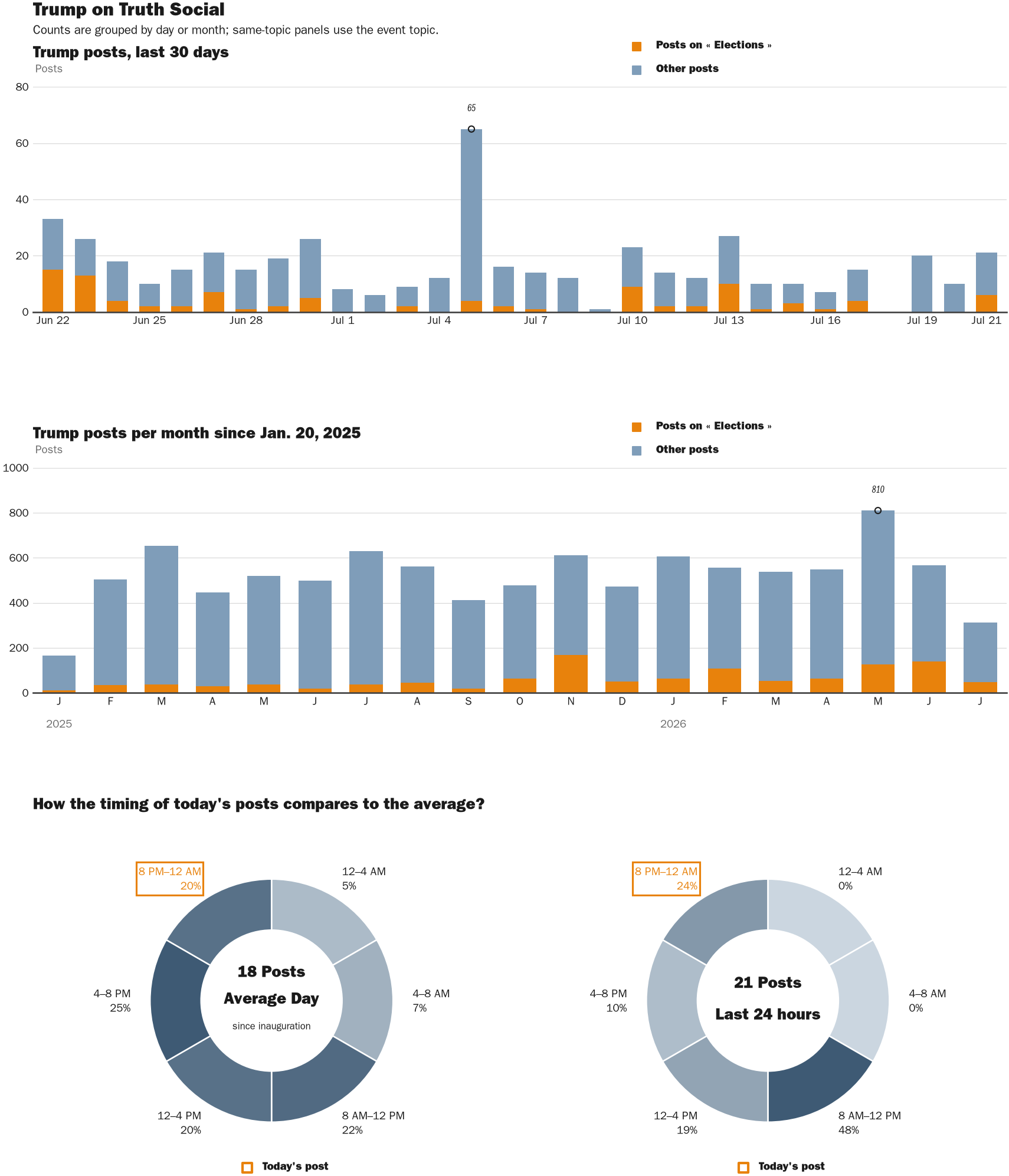
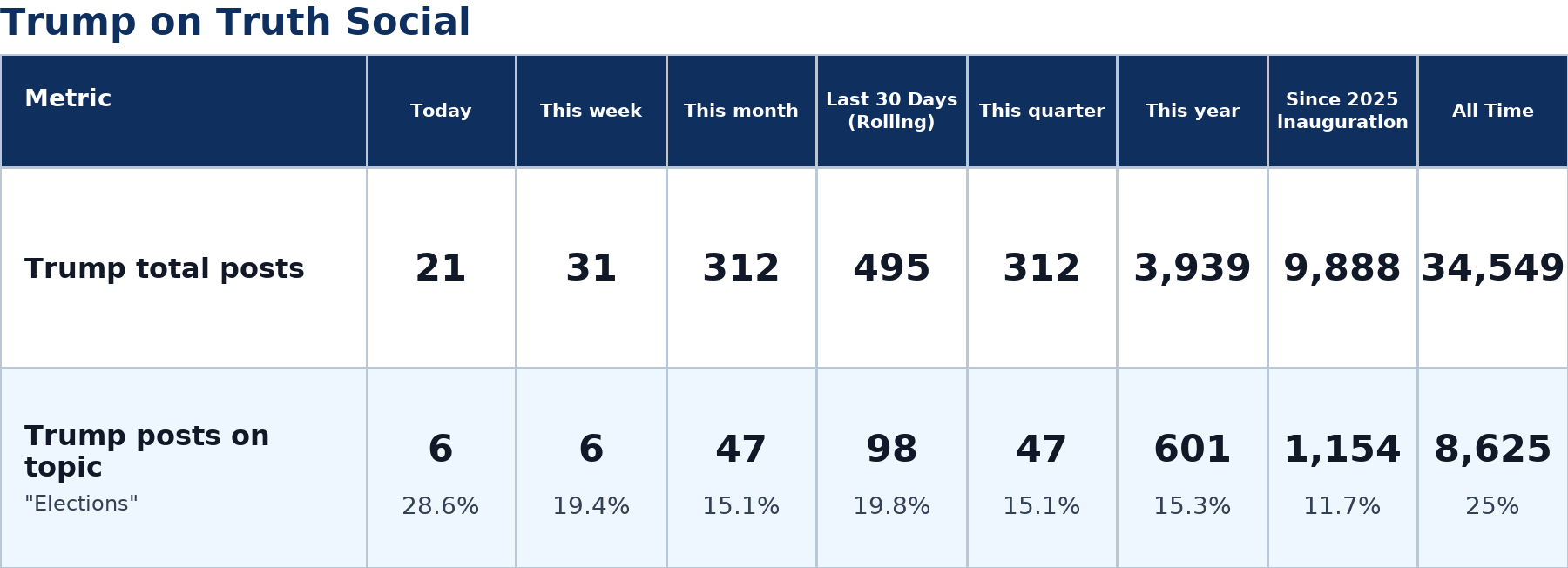
This is the first message released by Trump today. On average, Trump produces about 15 posts per day since his inauguration on January 20, 2025.
The move fits a broader pattern in Trump’s recent messaging, with 98 of his 495 posts over the last 30 days focused on elections, according to Zenger analysis.
The post repackages commentary from an active online account rather than an official statement, according to redlegnation.com. The characterization attributed to Murkowski appears in the poster’s paraphrase, not in a verified direct quote from the senator. The underlying screenshot carries a July 19, 2026 timestamp.

President Donald J. Trump amplifies a social media post at Washington D.C.
© copyright Zenger.News
The stakes fall on both parties in the voting-rules debate. Supporters of documentation requirements argue they protect ballot integrity and deter noncitizen voting. Opponents argue such rules burden eligible citizens who lack ready access to identity documents, particularly rural, elderly, and lower-income voters. Alaska, with its remote communities and limited road access, features prominently in that argument.
Context matters here. Federal law already bars noncitizens from voting in federal elections, and states have layered their own identification rules on top of registration systems for years. Courts have repeatedly weighed voter-ID statutes, with outcomes splitting on whether a rule imposes an undue burden on the right to vote. Those disputes have produced mixed rulings, some upholding strict identification laws and others striking pieces of them.
For the average reader, the fight touches the mechanics of casting a ballot. A tightened documentation rule could require voters to produce a passport, birth certificate, or naturalization paperwork before registering. That would add a step for millions who currently rely on a driver’s license alone.
This has happened before. Trump has repeatedly targeted Republican senators who break with him on procedure or policy, using his platform to pressure them publicly. Murkowski, who won reelection in 2022 under Alaska’s ranked-choice system, has drawn his criticism before for votes that diverged from his positions.
The next move rests with Congress and the courts. Any national proof-of-citizenship mandate would require legislation and likely face legal challenge, and no date for a vote or ruling on such a measure has been announced.
Disputes over who may cast a ballot in America stretch back generations, as happened before. Poll taxes and literacy tests once gated access to the vote across numerous states until the Voting Rights Act of 1965 outlawed such barriers, following decades of legal and political struggle. The Supreme Court reshaped that landscape in Shelby County v. Holder in 2013, freeing several states from federal preclearance and reopening fights over identification and registration rules. Lawmakers who pressed those changes saw both courtroom victories and defeats, a reminder that battles over ballot access rarely end with a single post.
NewsFindr Chart Maker
Photo by Zenger real-time database of all Truth Social posts.
Zenger analysis
Photo by Zenger analysis