
Trump Threatens to Bomb Tehran Bridges, Power Plants Over Strait of Hormuz Attacks
Trump warns that any Iranian strike on ships in the Strait of Hormuz will trigger U.S. destruction of a bridge or power plant, including targets in Tehran.

WASHINGTON D.C. — Donald J. Trump threatened to destroy a bridge or power plant in Iran, including sites in or near Tehran, in retaliation for any Iranian attack on shipping in the Strait of Hormuz.
The warning ties a single, defined U.S. strike to each Iranian shot fired at a vessel in the waterway. Trump framed the pledge as automatic and open-ended, and he extended it to infrastructure in the Iranian capital. The threat covers any weapon, including missiles, rockets, and drones.
“From this point forward, any time the Islamic Republic of Iran shoots at a ship in the Strait of Hormuz, whether it be by Missile, Rocket, Drone, or any other device or weapon, the United States will bomb and destroy ONE BRIDGE OR POWER PLANT, including those located next to, or in, the Capital City of Tehran,” Trump said. “Thank you for your attention to this matter!”
Here is the full post on Truth Social: “From this point forward, any time the Islamic Republic of Iran shoots at a ship in the Strait of Hormuz, whether it be by Missile, Rocket, Drone, or any other device or weapon, the United States will bomb and destroy ONE BRIDGE OR POWER PLANT, including those located next to, or in, the Capital City of Tehran. Thank you for your attention to this matter! Trump” on July 22, 2026 at 8:56 AM ET.
This is the first message released by Trump today. On average, Trump produces roughly 17 posts per day since his inauguration on January 20, 2025.
The move fits a broader pattern in Trump’s recent messaging, with 57 of his 506 posts over the last 30 days focused on foreign policy.
The Strait of Hormuz is the world’s most important oil transit chokepoint, with roughly a fifth of global petroleum consumption passing through it, according to eia.gov. The channel narrows to about 21 miles at its tightest point, and the shipping lanes run only about two miles wide in each direction, according to eia.gov. Iran borders the strait’s northern shore, giving it geographic leverage over traffic bound for the Gulf.
The stakes reach far beyond the region. A disruption in the strait would ripple through crude and liquefied natural gas markets, raising prices for buyers in Asia, Europe, and the United States. Iran benefits from the threat of closure as a bargaining tool, while shippers, insurers, and energy importers bear the cost of any escalation.
For the average U.S. reader, sustained conflict in the strait could push up gasoline and heating prices. Higher energy costs feed into transportation, food, and manufacturing, tightening household budgets even for people far from the Persian Gulf.
This has happened before. Iran has repeatedly threatened to close the strait during periods of tension, and attackers have seized or struck vessels there in past disputes. The U.S. Navy’s Fifth Fleet, based in Bahrain, patrols the waterway and has escorted commercial ships through it during earlier confrontations, according to navy.mil.
No date for any further decision has been announced. Iran’s government had not issued a formal response at the time of the post, and any next step rests with Tehran’s leadership and the U.S. military command in the region.
The Strait of Hormuz has long drawn armed conflict to its narrow waters, as history shows. During the 1980s Tanker War, Iran and Iraq attacked commercial vessels moving through the Persian Gulf, and the United States reflagged Kuwaiti tankers to protect them, according to britannica.com. In 1988, U.S. Navy forces clashed with Iranian units in Operation Praying Mantis, sinking or damaging several Iranian vessels in a single day, according to britannica.com. That confrontation pushed both sides toward the end of the broader Iran-Iraq war within months.
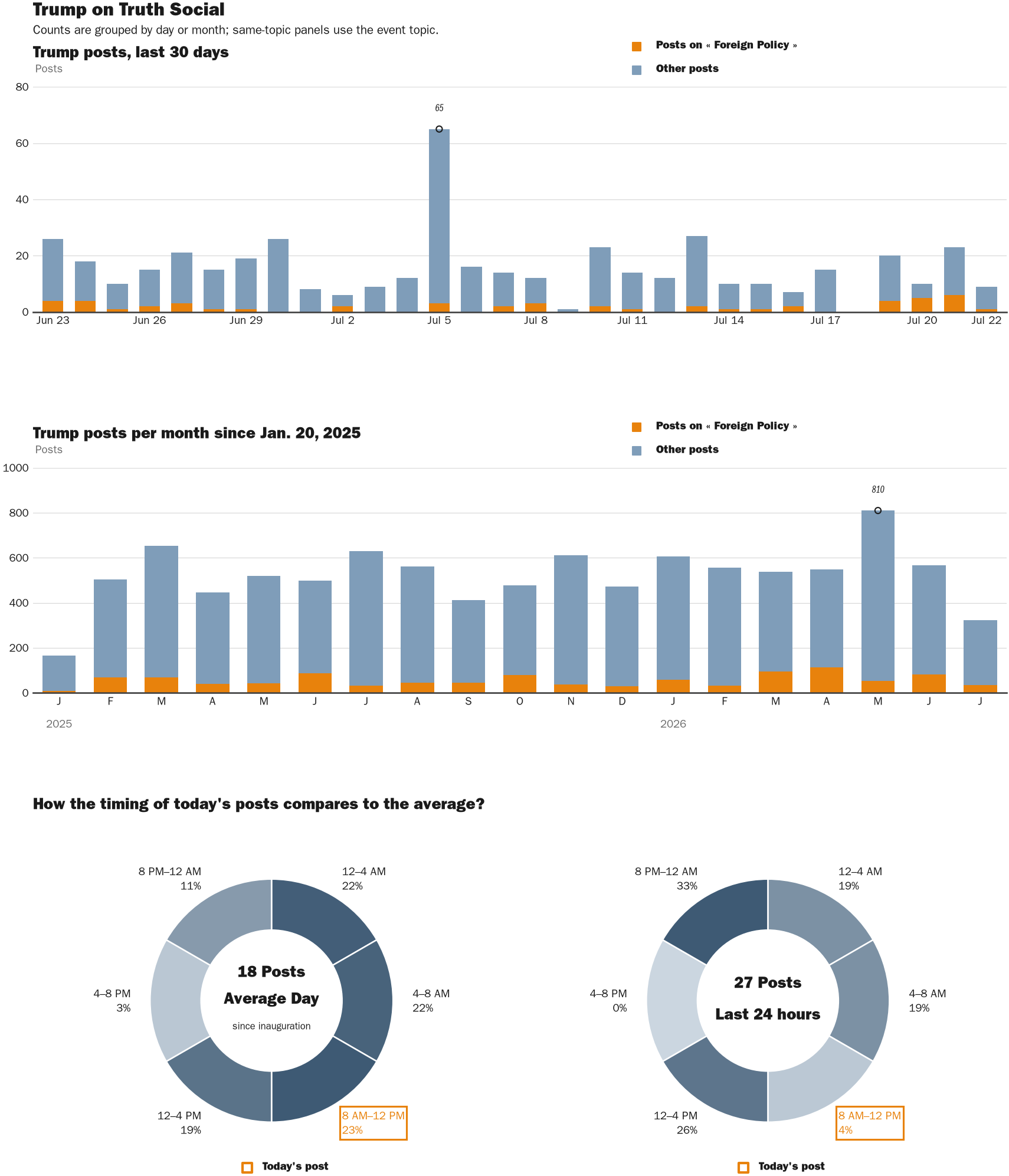

NewsFindr Chart Maker
Photo by Zenger real-time database of all Truth Social posts.
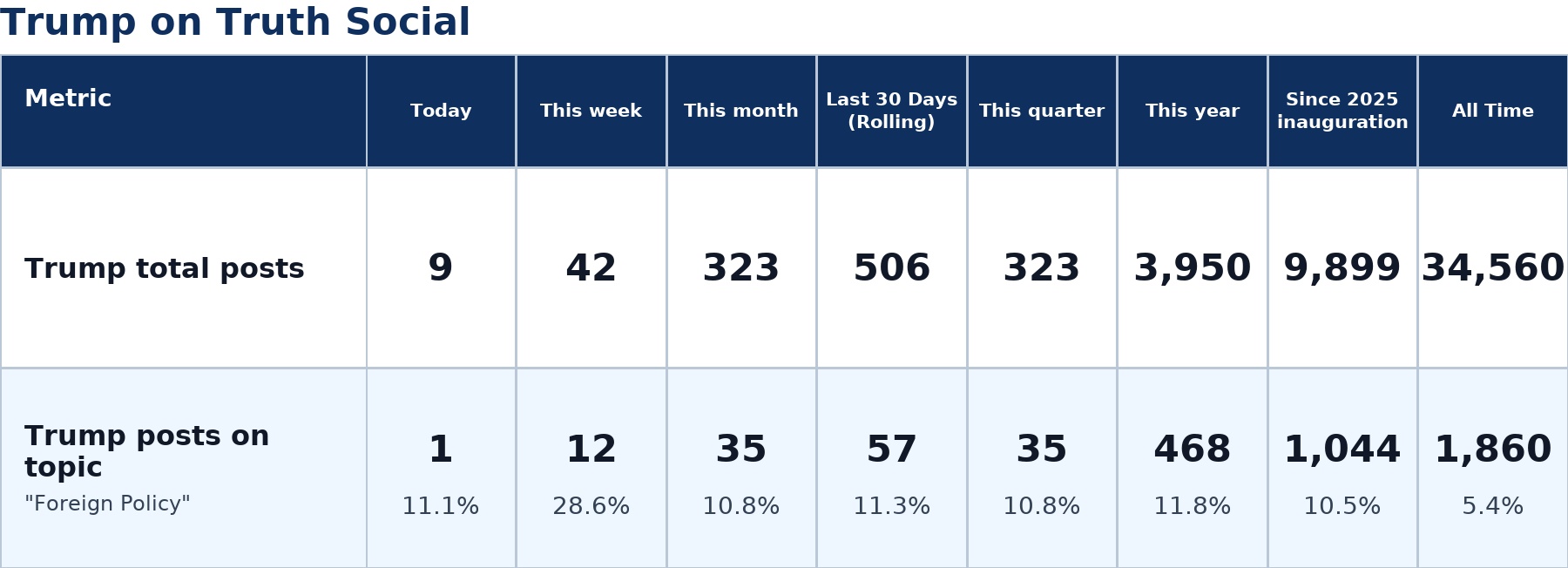
Zenger analysis
Photo by Zenger analysis
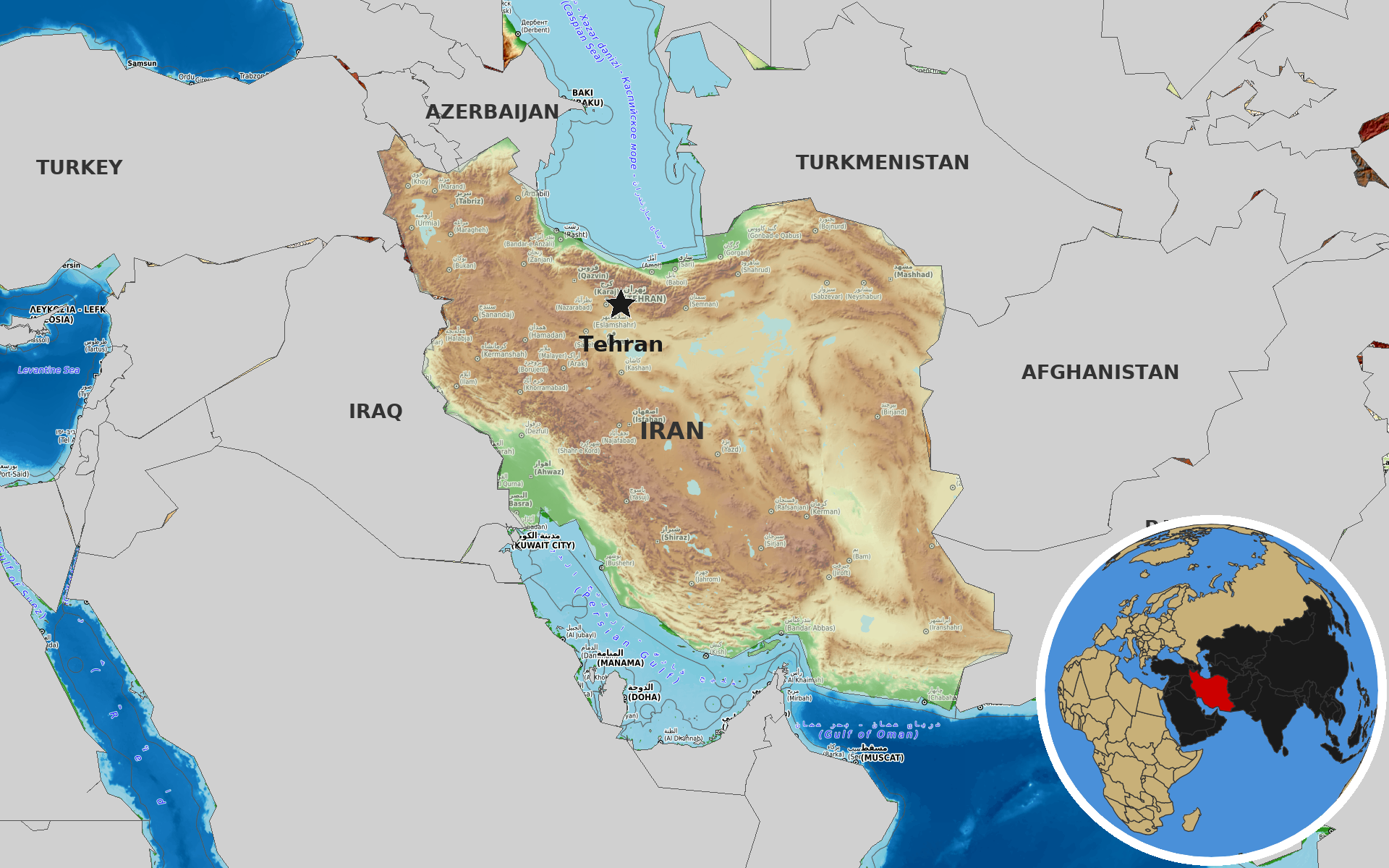
OpenTopoMap / Natural Earth – Islamic Republic Of Iran
Photo by OpenTopoMap / Natural Earth – Islamic Republic Of Iran
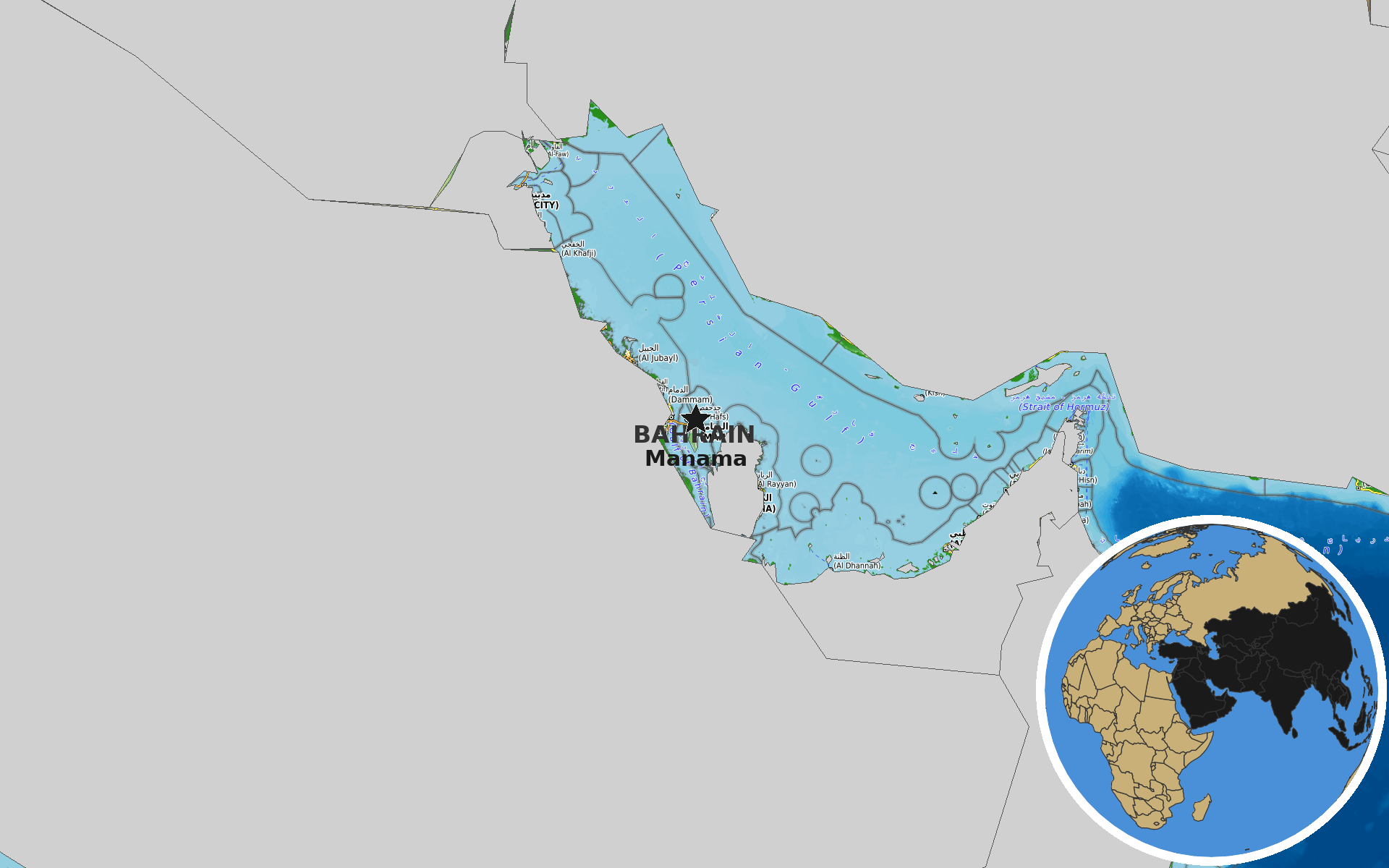
OpenTopoMap / Natural Earth – Bahrain
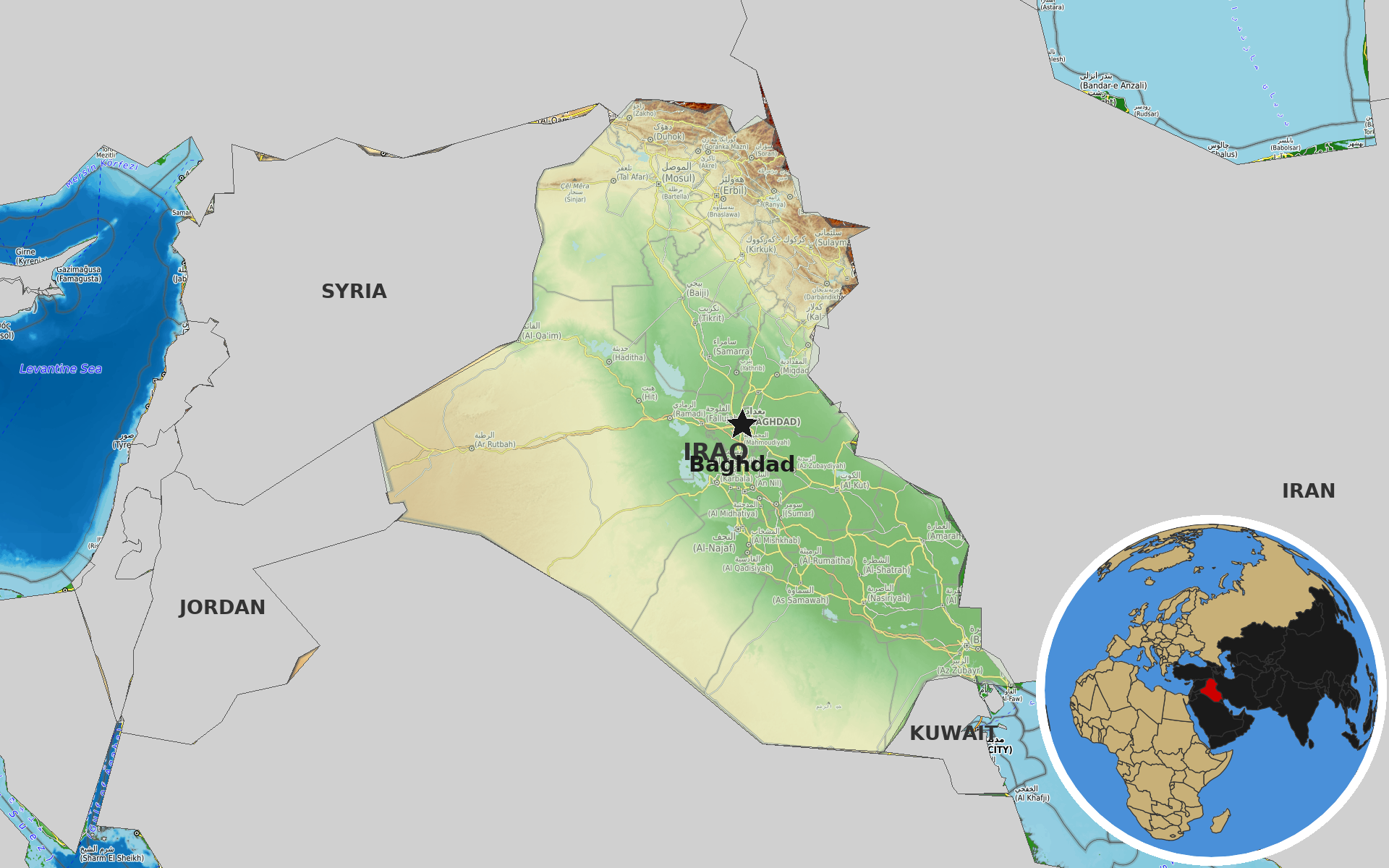
OpenTopoMap / Natural Earth – Iraq
Photo by OpenTopoMap / Natural Earth – Iraq